The war in West Asia has gone beyond 19 days now. It signals the end of Washington’s prolonged topsy-turvy approach to Iran. However, the spectacle of chaos rather than any breakthrough is the dominant trend. Whether post-Iran order would be based on the paradigm of regime change is only a nebulous spectre to conjecture. Barring a few turns and twists, we have not observed anything stunningly spectacular yet. So far, it’s been a lateral proliferation in terms of the compass of the confrontation initially from a few Arab States immediately bordering Iran to more than 13 states being subject to Iranian attacks. Also, the degree of exchange of ammunition plus certain new technological innovations and maybe their AI-generated optics now infiltrate the social media platforms that are increasingly less capable of enticing the worldwide audience because the simple rule is more days lapsed, the more attention to the battlefield would be lost unless something dramatic occurs.
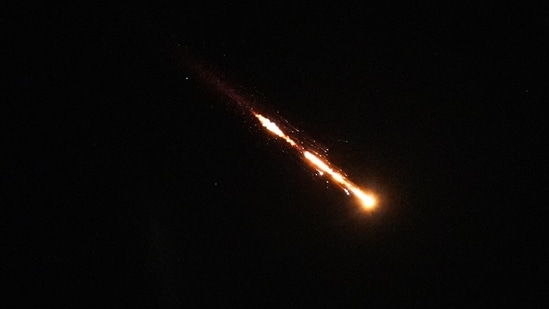
The battlefield chemistry is also going to take a drastic turn on and from March 22. It is not a naive claim but a host of reasons given below are sufficient to draw the point home:
First, in our opinion the watershed moment is reached on March 22 because Eid is going to be celebrated on March 20 in Saudi Arabia. Hence, the Arab States would be freed from the constraints of the rituals of month-long prayer and fasting that acted as a veritable brake on their rising resentment.
Second, it is clear from the statements made by Saudi ministers and officials that Iran’s latest attacks on Saudi Arabia clearly suggested that Iran was not interested in diplomacy. Moreover, the nature of Iran’s attack was economic assets and resources of the contiguous Arab States. The reasons could be two-fold: One was that Iran’s Arab neighbours housed the military bases cum launch-pads of the US strikes on Iran and the other being the relative luxury and material affluence attained by the Arab States which they don’t want to fritter way.
Third, it is evident by now that the Saudi-Iran relations have reached at a low point because Iran’s attack has created substantial strain which they have so far endured. It seems that the threshold of Saudi patience has run out and the battlefield might expand and retaliatory attacks against Iran might take place: US-Israeli strikes will continue while a series of strikes from Arab States would commence.
{{/usCountry}}Third, it is evident by now that the Saudi-Iran relations have reached at a low point because Iran’s attack has created substantial strain which they have so far endured. It seems that the threshold of Saudi patience has run out and the battlefield might expand and retaliatory attacks against Iran might take place: US-Israeli strikes will continue while a series of strikes from Arab States would commence.
{{/usCountry}}Fourth, at this new juncture, the US-Israeli forces, in all probability, would not leave the battlefield as Trump has rejected the option of cessation of military action. However, the new strategic calibration might be forthcoming when the US operation would be to aid and abet the Arab States from the sidelines. So, the battlefield would show new polarisation and configuration when it scales up to a new phase to witness another wave of military escalation largely unforeseen.
Fifth, the nature of the new escalation would be altogether different from the hitherto aerial strikes against key military installations of Iran. Already the US-Israeli joint bombardment has caused Iran too much casualties including the loss of life of its Supreme Leader and its army commanders who were crucial to direct the asymmetric warfare. The modern hi-tech war is not fought on the strength of ideology or religious commands to evoke and enforce loyalty. It depends on technology and efficient warlords equipped with genius. Hence the loss of leading commanders of the Basij forces has undoubtedly weakened Iran from within.
Sixth, the war stands at the threshold of another deadly phase when land force mobilisation by the contiguous Arab countries is likely to mount pressure on Iran. Already Iran seems to be outmanoeuvred by Israel’s IDF that conducted the secret operation culminating into the assassination of Ayatollah Ali Khamenei. It clearly shows that despite its resolve and robust theo-political and military network, Iran cannot effectively challenge either Israel or the US on the military front. Of course, it has large standing armies but once land invasion takes place it is bound to capitulate and collapse within a short time. It is because ground operation would be more sanguinary, costly and swift. However, in the ongoing attrition warfare Iran’s air force and navy in the Persian Gulf are already in shambles. Its air defence tier and radar systems are also functioning under severe stress. It can only utilise its standing reserve—the infantry of the Basij forces numbering several lakhs. But if there is rapid deployment of US carrier strike groups plus ground troops from regional Arab players and Kurdish militia to prop up an American ground invasion simultaneously from different sides and territorial locations, the situation would come to signal a veritable nemesis for Iran. As such, the strategic vulnerability of Iran’s regime would be accentuated without falling back on Trump’s call for Nato’s burden-sharing or helping to open the Strait of Hormuz.
This article is authored by Prof. Jajati K Pattnaik, professor, the Centre for West Asian Studies, SIS, JNU, New Delhi and Prof. Gouri Sankar Nag, professor & head, Department of Political Science, SKB University, West Bengal.