Saudi Arabia reportedly plans to sign a regional non-aggression pact with Iran. Though nothing has been officially done, the reasons suggested are to ensure the safety of economic infrastructures and to stabilise West Asia in the wake of the devastating conflict between Iran and the US-Israel joint offensive. Saudi infrastructure have also been hit by the Islamic Revolutionary Guard Corps (IRGC) during the latter's conflict with the US and Israel. The Saudi economy depends heavily on crude oil exports. It has not fully diversified its economy. The Neom city project and Vision 2030 have not decoupled the Saudi economy from conventional reliance on fossil fuel exports.
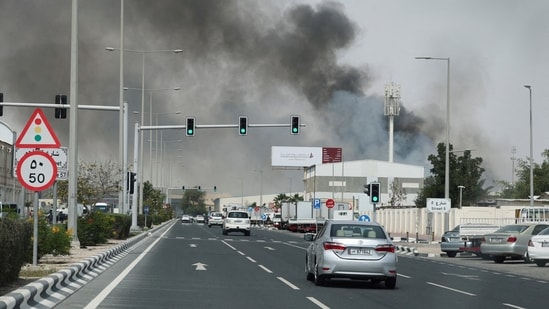
The US-Israel and Iran conflict will not end very soon. It is going to be inconclusive like the Russian-Ukrainian war. The Iranian war is not confined to Iran. The spill-over effects affect the region and have global repercussions. The consequences spread far and wide. The chokepoint Strait of Hormuz has been weaponised by the IRGC to disrupt the supply chain and export-import connectivity. The shipping route is critical for energy connectivity and a supply corridor. Any disruption along the Straits will have wider ramifications. The global energy shortage and inflation are spreading shockwaves worldwide. Iran has deliberately targeted the critical assets in Qatar, Saudi Arabia, the UAE, Jordan and others, affecting the economic activity in the region. Saudi Arabia is an export economy and not a match to the missile and drone powers of the IRGC. If the war lingers, Saudi business and trade interests will be severely affected. It will develop internal frictions.
Riyadh reportedly pursues a Cold War-style framework and seeks inspiration from the 1975 Helsinki Accords. Post-war security architecture is expected to be the prime reason behind the plan to sign a non-aggression pact with Iran. Stable West Asia marks uninterrupted trade, export-import, and a healthy economy. Like the Gulf States, Saudi Arabia is wary of the consequences of a longer war between the US, Israel, and Iran. It will not benefit the Gulf economy. The IRGC is unpredictable and will go to any length to protect its interests. Despite being leaderless, it confronts the US and Israel. It has lashed out at its rich Gulf neighbours. The non-aggression pact is a tactical geopolitical move to ensure mutual safety guarantees. The Gulf energy infrastructure is vulnerable to Iranian drones and missile strikes. The regional hostilities have exposed the unprotected economic infrastructures in the Gulf countries. It is extremely expensive to protect them through an air defence protective shield.
{{/usCountry}}Riyadh reportedly pursues a Cold War-style framework and seeks inspiration from the 1975 Helsinki Accords. Post-war security architecture is expected to be the prime reason behind the plan to sign a non-aggression pact with Iran. Stable West Asia marks uninterrupted trade, export-import, and a healthy economy. Like the Gulf States, Saudi Arabia is wary of the consequences of a longer war between the US, Israel, and Iran. It will not benefit the Gulf economy. The IRGC is unpredictable and will go to any length to protect its interests. Despite being leaderless, it confronts the US and Israel. It has lashed out at its rich Gulf neighbours. The non-aggression pact is a tactical geopolitical move to ensure mutual safety guarantees. The Gulf energy infrastructure is vulnerable to Iranian drones and missile strikes. The regional hostilities have exposed the unprotected economic infrastructures in the Gulf countries. It is extremely expensive to protect them through an air defence protective shield.
{{/usCountry}}The chronic regional conflict and kinetic action will severely impact Crown Prince Mohammed bin Salman’s ambitious Vision 2030 economic diversification programme. Vision 2030 depends on tourism and uninterrupted foreign investment, for which regional stability and peace are pivotal. Missile threats will not benefit Vision 2030. Therefore, Riyadh tilts towards the non-aggression pact. The US's security umbrella in the Gulf has come under criticism because of Iranian aggression. Traditional western military guarantees are undergoing a serious reset due to Donald Trump's America first policy. Given these developments, Riyadh intends to decouple from its complete dependence on Washington and find ways to engage Iran directly on regional security. Sovereignty and non-interference are Riyadh's main objectives. But the question remains whether this bilateralism will really work, given the complexity of conditions and increasing volatility in West Asia.
The Helsinki Model is ambitious, but will it work in the West Asian context? Geopolitics in 1975 is not the same as it is today. The imitation of an old model may not work. The Helsinki Accords (1975) encouraged structured dialogue between the US and the erstwhile Soviet Union. It mitigated the risk of nuclear war. Riyadh presumably pursues the Helsinki blueprint. But replicating the Helsinki Model is difficult. The non-aggression pact is a good initiative, but it is difficult to translate it into reality.
Competing regional ambitions, structural conflicts, Shia-Sunni sectarian tension and strategic distrust fundamentally impede the possibility of developing the scope of the Saudi non-aggression pact with Iran. The hurdles are insurmountable, making it difficult to replicate the Helsinki model. Sectarian competition and ideological rivalry will restrict dramatic reversals in diplomacy. Saudi Arabia and Iran severed ties in 2016. Religious conflict and ideological differences act as an antithesis to the non-aggression pact.
The IRGC has a different game plan for the region. It uses its strong proxy network through Hamas, Hezbollah and Houthis to exercise its leverage and ideological hegemony. The Islamic regime in Iran specialises in grey zone warfare through proxies. It may attack the neighbours through them despite a non-aggression pact and other formalities. The IRGC has its own independent strategy, and regional hegemony is its prime interest. It will not bend its policies to accommodate Saudi interests. The history of the ideological rivalry between the two countries cannot be forgotten with a stroke of opportunistic diplomacy. The IRGC understands Saudi interests. It will not go along with the Saudi scheme of things.
The Saudi-Iran cooperation through the non-aggression pact will irk Israel. The Riyadh-Tel Aviv rivalry will begin. The Israeli Prime Minister Netanyahu wants to completely weaken the Iranian regime at any cost. The Saudi-Iran diplomatic closeness may invite Netanyahu's ire. The UAE is hostile towards Iran, given the aggression Iran has exhibited against the UAE. A unified regional approach is impossible. Saudi Arabia may develop a new axis in cooperation with Iran and Turkey. Will this axis be possible? It is complex and difficult to predict its future.
The US holds military bases in the UAE and Saudi Arabia. The IRGC considers them as direct threats to Iran. The non-aggression pact with Iran may necessitate the removal of the American bases from Saudi Arabia. Saudi Arabia cannot simply do it. Many Arab Gulf states do not accept Iranian hegemony over the Strait of Hormuz and increasing regional dominance through its proxy architecture.
The Saudi non-aggression pact will also isolate Saudi Arabia in the region. With the rise of the IRGC, the regional ambitions and competitions will be largely affected. Iran's nuclear and ballistic missile programs and nuclear enrichment program spread concerns over the regional peace. The US and Israel will strongly react to the Saudi non-aggression pact. Can Saudi Arabia withstand American and Israeli pressure?
Saudi Arabia, Pakistan, Turkey, and Egypt are also planning a geopolitical alignment to counterbalance Iran and Israel. They are engaging in security consultation, defence coordination and foreign policy cooperation. However, the military alliance among them has not been formally forged. This power bloc is active, but they have internal contradictions. It is important to see how far they can go. The only adhesive is the Sunni factor. Will that be compelling enough to bind them together for an enduring alliance? It is a Sunni axis. Will Iran trust them and their ideological asymmetry? Pakistan is unreliable, and it changes its colour depending on where the money comes from.
A quadrilateral Alignment involving Egypt, Pakistan, Saudi Arabia, and Turkey has been thought of. Nothing has been done formally. Can Pakistan turn away from the American sphere of influence? It is practically impossible. The prospect of an Islamic NATO merges Turkish defence technology, Saudi oil wealth and Pakistan's nuclear capabilities. Will Iran join them to form a formidable Islamic NATO and a unity of 500 million Islamic people, forgetting the competing interests, regional rivalries and sectarian and theological tensions and contradictions?
The West Asian Quad involves the I2U2 Group. The I2U2 Group is an important strategic partnership between India, Israel, the UAE and the US. The group promotes regional stability and economic cooperation. It is a marriage of Israel's technology, India's manufacturing, the UAE's investment capital, and the US's innovation. This combination is formidable and has been very effective in the region. The group is a vital factor in ensuring regional peace. Saudi Arabia cannot ignore the I2U2 Group while signing a pact with the IRGC. Therefore, the Saudi non-aggression pact with Iran is no really in the realm of possibility at the moment. There are unavoidable constraints that Saudi Arabia cannot overcome.
(The views expressed are personal)
This article is authored by Jajati K Pattnaik, professor and chairperson, Centre for West Asian Studies, School of International Studies, Jawaharlal Nehru University, New Delhi and Chandan Panda, professor, Central University of Karnataka, Karnataka.