
 E-Paper



Muttaqi's visit: India's tactical and pragmatic move
This article is authored by Prabhu Dayal, former ambassador, New Delhi.

 Prefer HTon Google


Afghanistan's foreign minister Amir Khan Muttaqi's ground-breaking eight-day visit to India which began on October 9 is the first high-level diplomatic engagement since the Taliban took power in 2021. Muttaqi, like other senior Taliban leaders, is subject to a UN travel ban. India secured a waiver from the UN Security Council's 1988 sanctions committee. This was a critical step in enabling the meeting to take place.
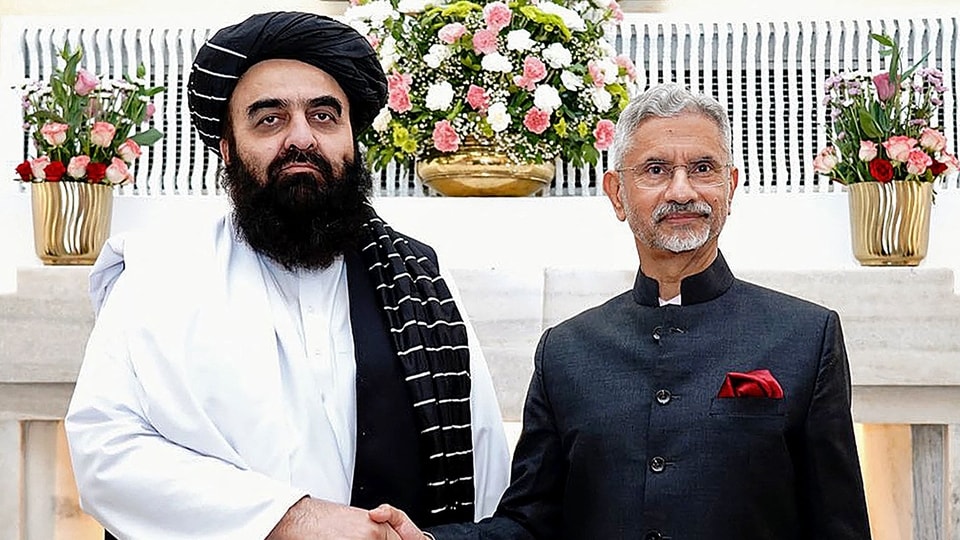
The visit signifies a major shift in India's policy toward the Taliban and has regional and domestic implications. It marks a pragmatic turn in India's foreign policy, prioritising engagement with the de facto rulers of Afghanistan over its initial non-recognition stance. This shift is influenced by regional dynamics and the desire to protect India's security and economic interests.
India's engagement with the Taliban follows increasing friction between the Taliban and Pakistan, including border clashes. Significantly, coinciding with Muttaqi's visit, Kabul was rocked by explosions for which the Taliban has blamed Pakistan. The Afghan government has accused Pakistan for violating Kabul's "sovereign territory", describing it as an "unprecedented, violent, and provocative act". The incident is the latest event amidst escalating violence and deep mistrust between the two nations, which includes border clashes and accusations of harbouring militant groups.
Pakistan has long accused the Afghan Taliban of permitting the Pakistan Taliban, also known as the TTP, to operate from their territory. The Taliban government has always denied this. Rumours had circulated that the blasts in Kabul were part of a targeted attack on the TTP's leader, Noor Wali Mehsud. The Taliban defence ministry warned in its statement that, should the situation become worse, "the consequences will be attributable to the Pakistani army".
While Afghanistan's relations with Pakistan are deteriorating, India is strategically strengthening its ties with the Taliban. During Muttaqi's visit, India announced that it would upgrade its technical mission in Kabul to a full embassy, effectively elevating diplomatic relations with the Taliban administration. This elevates diplomatic engagement to its highest level since the Taliban's takeover. India's deepening of ties with the Taliban is seen as a strategic move to counter Pakistan, which earlier had close links to the Taliban.
Thus, the geopolitical dynamics of the region are changing. The core shift is the deterioration of relations between Pakistan and Afghanistan on the one hand and a pragmatic pivot by India toward the Taliban on the other. Reopening the embassy allows India to regain a diplomatic foothold and better monitor developments in Afghanistan after its initial withdrawal in 2021. This enables direct engagement with the Taliban on security concerns like terrorism and extremist groups.
During the discussions, the Indian side emphasised the need for both nations to coordinate efforts against cross-border terrorism. Muttaqi assured India that Afghanistan would not allow its territory to be used against New Delhi's interests. This is important in the context of the fact that the Taliban has historically maintained links with Lashkar-e-Taiba (LeT) and Jaish-e-Mohammed (JeM), both of which have carried out numerous terror attacks against India. The LeT and JeM are both considered ideological allies of the Taliban due to their shared adherence to the extremist Deobandi school of Sunni Islam. This common foundation has historically fostered strong connections between them. During the Taliban's previous rule in the 1990s, the groups operated from Afghan territory. Both JeM and LeT have continued to leverage the Taliban's networks for sanctuary and logistical support.
The Taliban government, facing severe economic challenges, is actively seeking foreign investment and economic ties to stabilize Afghanistan. India's commitment to trade and development projects offers a vital lifeline. By reaching out to India, the Taliban demonstrates an effort to diversify its regional alliances and assert a more independent foreign policy, especially in its tense relationship with Pakistan.
India reaffirmed its commitment to humanitarian assistance for the Afghan people. New aid packages were announced, including reconstruction assistance for earthquake-affected regions, additional food grains and other relief materials and cooperation on health care, including the provision of vaccines and medical equipment.
The two sides agreed to strengthen the India-Afghanistan Air Freight Corridor to enhance trade and commerce. Muttaqi also invited Indian investment, particularly in Afghanistan's mining sector. Strengthening people-to-people relations was also discussed during the visit. Both countries discussed cooperation in sports, especially cricket, and agreed to issue more visas for Afghan students, businesspeople, and those needing medical treatment.
There are many critics who have said that inviting the Afghan Minister was not desirable. The Taliban's actions, especially severe restrictions on women and girls' rights to education and employment, amount to gender persecution, according to human rights organisations and the UN. Inviting the foreign minister and upgrading diplomatic ties risks legitimising these abuses.
Critics also argue that engaging with an oppressive regime undermines democratic values. The Taliban has violently suppressed dissent and freedom of expression. Journalists and media outlets face arbitrary detention, beatings, threats, and censorship. Activists advocating for human rights and women's education have been reportedly detained and tortured. Public floggings and other corporal punishments are carried out regularly.
The fact that female journalists were barred from Muttaqi's press conference in Delhi sparked significant backlash and underscored the Taliban's misogynistic policies. Critics suggest that while engaging with the Taliban might seem politically astute, it risks compromising India's relationship with democratic-minded Afghans and other international partners who oppose the Taliban's oppressive rule.
There are also some critics who assert that despite the Taliban's assurances, its historical ties to international terror groups like LeT and JeM pose a risk to regional security. The potential for backsliding or shifting allegiances means relying on the Taliban's promises could be a miscalculation. Despite this, engaging with the Taliban is considered a pragmatic necessity by India to prevent Afghanistan from becoming a hub for terrorism directed against India.
There are other important reasons which need to be kept in mind. Afghanistan, with its significant mineral resources, offers new economic opportunities for investment. The Taliban has specifically invited India to invest in its mining sector. Engaging with the Taliban is also crucial for India to secure access to Central Asian markets, which are otherwise blocked by Pakistan.
Continued engagement allows India to oversee its significant development investments in Afghanistan, including projects like the Salma Dam and the Afghan parliament building constructed during the previous government. India has committed to projects like the Shahtoot Dam and drinking water project for Kabul, which will also facilitate irrigation. Plans are in place for road connectivity to promote tourism, such as the road to Band-e-Amir in Bamyan Province. India is also supporting infrastructure development in this sector.
There are humanitarian reasons also. India's longstanding ties with the Afghan people are rooted in centuries of shared history. India's engagement has prioritized the Afghan people, regardless of the government in power. Engagement with the Taliban ensures that India can provide essential humanitarian aid to the Afghan people, who are facing a severe crisis. India has already supplied vaccines, wheat, and other relief materials. India has pledged to assist with housing and aid for Afghan refugees who were forcibly repatriated from Pakistan.
Muttaqi's visit has a lot of importance for the Taliban. The visit is a significant step toward breaking the Taliban's international diplomatic isolation. Engaging with a major regional power like India helps the group gain legitimacy and international recognition, which remains limited. The Taliban government, facing severe economic challenges, is actively seeking foreign investment and economic ties to stabilise its country. India's commitment to trade and development projects offers a vital lifeline. By reaching out to India, the Taliban government has demonstrated a desire to diversify its regional alliances and assert a more independent foreign policy, especially in view of the tense relationship with Pakistan.
India's decision to invite Muttaqi reflected a recalibration of India's foreign policy to adapt to the new ground realities in Afghanistan, prioritising national security and strategic interests in the face of shifting regional dynamics.
This article is authored by Prabhu Dayal, former ambassador, New Delhi.


