Within days of swearing in as Myanmar’s President, Min Aung Hlaing first step was to release more than 4,000 prisoners including the former President Win Myint and reduce the term of Aung San Suu Kyi. This act of amnesty is in response to his commitments made during his inaugural address, i.e. he would prioritise peace and democracy, along with attracting foreign investments, as well as enhancing international relations and normalising ties with Asean.
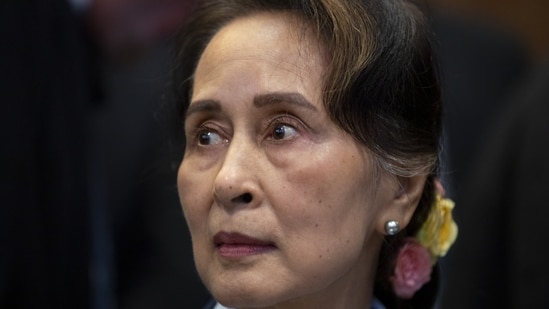
But is this an act of genuine amnesty? Does this mean Myanmar has finally transitioned to a democratic State? Or merely just measures to reduce domestic and international pressure. In principle, the conduct of elections, Min Aung Hlaing election as president and these acts may seem constitutional and legal. Min Aung Hlaing, as the Commander in Chief, staged the 2021 military takeover and continued with the civil war for almost five years, resigned from his position just to take a civilian role to continue with his position of power.
The present parliament is dominated by the Union Solidarity and Development Party, which is backed by the military, following elections only held in one-third of the country's townships as well as in exclusion of 40 political parties. In addition, more than two-thirds of the 30 ministers in the cabinet are either retired or serving members of the military. So, the winning of the USDP party in these elections, the election of Min Hlaing as its president and a cabinet with a dominant presence of military representatives was quite certain. However, what is worrying is that with this political transition Myanmar is again at "risk of becoming a forgotten crisis", a phrase used by UN Special Envoy Julie Bishop.
The three-phase elections of December 2025 and January 2026 were executed largely to give Min Aung Hlaing the exit of his not-so-successful strategy of military takeover and build an institutional cover which seems like a transitional government. The operations led by the opposition EAOs had exposed vulnerabilities within the military whether it is territorial losses, recruitment struggles, collapsing morale in frontline units. The election was, in part, a response to this crisis of legitimacy.
{{/usCountry}}The three-phase elections of December 2025 and January 2026 were executed largely to give Min Aung Hlaing the exit of his not-so-successful strategy of military takeover and build an institutional cover which seems like a transitional government. The operations led by the opposition EAOs had exposed vulnerabilities within the military whether it is territorial losses, recruitment struggles, collapsing morale in frontline units. The election was, in part, a response to this crisis of legitimacy.
{{/usCountry}}The opposition forces, i.e. NUG, PDFs and many EAOs especially in the bordering areas continue to resist the military staged transition. For instance, the Kachin Independence Army continues to fight in the north, and the Arakan Army controls 15 of Rakhine state's 17 major townships. But there are fractures within the opposition forces, including issues of corruption, transparency accountability as well as coordination.
What is further worrying is that the post-election period the violence and conflicts have continued between the military, the EAOs and PDFs across multiple theatres. The use of FPV suicide drones, attacks on airports, and attempted strikes on civilian infrastructure illustrate the increasing sophistication and intensity of warfare.
The international responses to the political transition in Myanmar have been fragmented and mixed--from formally recognising and endorsing, pragmatically engaging, non-interference, opposition and diplomatic isolation. The most consequential has been China's support to the military in facilitating these elections and ensuring legitimacy to the ruling government. Chinese Special Envoy Deng Xijun was present in Naypyidaw during the polls. During Vice-Senior General Soe Win meeting with the Chinese ambassador, both sides reaffirming the "Pauk-Phaw" spirit, commitment to BRI projects. On the other hand, China has supported the EAOs to continue their fight against the military.
Russia has been another consistent supporter of the military via providing them fighter jets and drones. For the elections, Russia even sent its observers and has fully endorsed the results as legitimate and Russia's secretary of the Security Council personally conveyed Putin's congratulations to Min Aung Hlaing following the polls. The US policy of imposing sanctions didn’t yield results. Therefore, in the second term of Trump there were signs of change in policy towards Myanmar, with banning the entry of Myanmar nationals, terminating protective status of refugees, exchanging letters with Min Hlaing over tariffs and work on curbing cyber frauds.
The elections have, in effect, rendered the Five Point Consensus irrelevant. Thailand, Laos, Cambodia, and Vietnam, all with economic interests as well as security interests to ensure stability along the Mekong corridor, have continued to maintain ties with the military.
For India, with a 1643 km land border and maritime border, any transition has far further impact in ways that demand a broader geostrategic understanding, one that moves beyond the political or diplomatic relations but its own security and strategic interests. And the recent arrest by the NIA reinforces the concerns in India’s northeast.
To curb insurgent activities, the Indian Army also conducted drone strikes on ULFA-I and NSCN-K camps in Myanmar's Sagaing region in July 2025. These are a series of tactical responses to the immediate pressures that the country faces and it is crucial to note that engagement with Myanmar's new government is not optional, but a strategic necessity. India has donated advanced seismic building inspection equipment to Myanmar's engineering bodies. And Myanmar's navy participated in India's International Fleet Review (IFR 2026) and MILAN exercise in Visakhapatnam.
The government controls the urban and central regions and India needs to maintain ties for economic and diplomatic reasons. Also, India wants to avoid the past mistake of leaving the region to China. On the other hand, the EAOs continue to control the periphery and, therefore, India has adopted a two-track policy and must continue to engage them to protect Indian infrastructure, manage refugee flows, and prevent our Northeast from becoming a battleground for foreign proxy contests. The Kaladan Multi-Modal project and the Sittwe port, the Trilateral Highway, all require working arrangements with the Arakan army.
The uniform has changed but the crisis in the country continues. The economy is weak, with the IMF forecasting only 3% growth rate with 28% inflation and weakened supply chain. The political landscape of Myanmar today is fragmented, with the split between the newly installed parliament and a number of opposition forces, NUG and NLD loyalists to the decentralised Anyar and Spring Revolution Alliance (SRA) groups. As a result, the conflict continues and around three million are internally displaced.
There are underlying tensions which need immediate attention, and to start with it is imminent to immediately stop the ongoing conflict and provide humanitarian support. Even the release of the former president and reduction in the term of Aung San Suu Kyi is too late, too little. The country’s diverse ethnic groups' needs and demands must be addressed via engaging in an all-inclusive dialogue.
(The views expressed are personal)
This article is authored by Cchavi Vasisht, associate fellow, Chintan Research Foundation, New Delhi.