
 E-Paper



Nepal’s new dawn: RSP’s mandate for change
This article is authored by Cchavi Vasisht, associate fellow, Chintan Research Foundation, New Delhi.

 Prefer HTon Google


The newly elected government in Nepal convened its first parliamentary session on April 2. The lawmakers elected in March represent the most significant realignment in Nepal's post-1990 democratic history with the Rastriya Swatantra Party (RSP), founded only in 2022, winning a landslide victory. As we all know, the elections were a result of the youth-led uprising aka Gen Z revolts which was a result of an unprecedented amount of corruption, nepotism, lack of employment opportunities among youth resulting in migration and distance between the elites and masses. And the final nail in the coffin was the government regulation to ban 26 social media sites.
As the new parliament convenes, it is important to reflect on the immense economic, political and social challenges the country faces along with fragile geopolitical developments. The structural challenges coupled with modest growth, fiscal strain and a wide trade deficit. Youth unemployment, at 20.6%, is the highest in South and Southeast Asia according to World Bank data. Around 1500 young Nepalis leave the country for foreign employment. The interim government slashed the national budget by 14%, acknowledging a consolidated fund deficit of ₹130 billion and projecting ₹275 billion in unspent allocations. A sign of relief was the Nepal Rastra Bank's mid-term monetary policy review which showed subdued inflation at 1.7% and foreign exchange reserves covering 18 months of imports, well above the seven-month target.
In addition, corruption has remained a persistent concern. Nepal scored 34 in the 2025 Corruption Perceptions Index (CPI), ranking 109th globally, same as previous year. Further, the political and bureaucratic landscape was marked by red tapism and nepotism which the new government must address. In foreign policy, the new government needs to balance between the two powers, China and India. Even the ongoing Gulf crisis since early March 2026, triggered by US-Israel military action on Iran, have elevated concerns in Nepal as an estimated 1.9 million Nepalis are employed across Gulf countries.
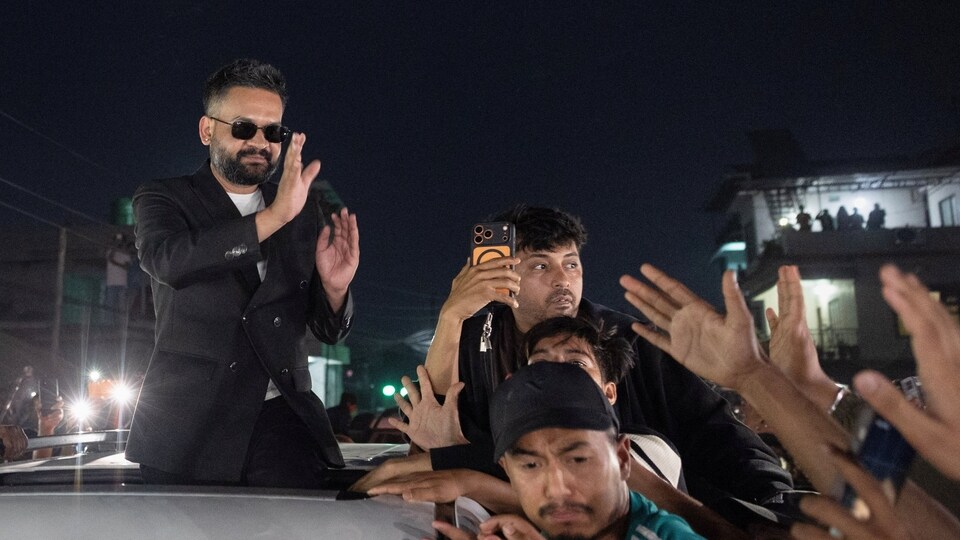
As a result, the RSP has committed to address all these challenges along with the concerns raised by the Gen Z protests. Prime Minister (PM) Balendra Shah rose to prominence for his work as a former Mayor of Kathmandu between 2022 and 2026. He removed illegal structures, improved waste management, and challenged vested interests in urban governance. Having sworn in as the PM he is committed to delivering on the promises made in the election manifesto- to name a few, become $100 billion economy within five years, sustained GDP growth of around 8% annually, anti-corruption probes of public officials dating back to 1990, meritocracy in civil services, a single-window service delivery system, direct election of the PM, and a National Knowledge Bank to connect diaspora expertise with domestic development priorities.
Within hours of being sworn in, the Shah cabinet moved a series of decisions signaling that it was serious about delivering on its mandate. First and foremost, the cabinet implemented the Gauri Bahadur Karki Commission’s report which had investigated the September 2025 Gen Z crackdown. The report recommended criminal investigation against them, the then-police chief, and several senior security officials. Based on the findings, former PM KP Sharma Oli and former home minister Ramesh Lekhak were arrested on March 28 under Sections 181 and 182 of the National Penal Code, related to criminal negligence in the use of lethal force during the protests. In addition, a high-level investigation committee will be formed within a week.
The RSP's flagship pledge was initiating an investigation of the assets of all elected officials since 1990 and the nationalisation of illegally acquired wealth. For this, the cabinet approved the formation of a Property Investigation Committee to investigate the assets of political leaders and senior government employees from 2006-07 onwards in the first phase and the period from 1991 to 2004-05 to be covered in the second phase. One of the most significant decisions was the framework for Delivery-Based Governance to ensure that each ministry prepares an action plan with ten major deliverables within a week, and achieve them within deadlines so that accountability could be assured. Furthermore, the National Vigilance Centre is to be restructured within 30 days. Also, the bureaucratic procedures were simplified, and issued a clear statement warning civil servants against political partisanship, reiterating that their duty must be to be committed to public service.
Another foundational grievance during the Gen Z protests was youth unemployment and the new government has emphasised on reducing the outward labour migration by creating domestic job opportunities, diaspora engagement, and IT sector expansion under its 100 priority agenda. Additionally, the RSP prioritises private-sector-led growth, improved investment climate, and energy exports. There are commitments to technology-driven agricultural productivity and export sector development.
Nepal's strategic position demands balanced ties with India, China, and the West. Both Indian and Chinese leaders have welcomed the incoming government. Nepal-India relations in early 2026 were characterised by positive momentum at the institutional level, even as some underlying tensions persisted. The most significant development was the February 18 signing of a Mutual Legal Assistance Treaty on Criminal Matters. Both sides had been working on this for years, and the signing under the interim government sent a signal of continuity in bilateral engagement. The new government is expected to address the issues of stalled hydropower projects, India's High Impact Community Development Projects (HICDP) programme, as well as border management. Additionally, Balen Shah's decision to drop the BRI-linked Nepal-China Friendship Industrial Park in Jhapa from his election manifesto drew attention from Indian observers, given the park's proximity to the strategically sensitive Siliguri Corridor. The incoming RSP government's stance on India-sensitive BRI projects will be an early indicator of its foreign policy orientation.
On the other hand, Nepal-China relations progressed within a framework of diplomatic engagement, with the incoming RSP government inheriting significant commitments from the Oli period. The new Chinese ambassador Zhang Maoming met interim government PM Karki and had separate discussions with foreign secretary Rai on bilateral cooperation. The Ring Road second section expansion received Cabinet approval for tax waivers on construction equipment and materials, advancing a key Chinese-assisted infrastructure project in Kathmandu. The government also approved E10 ethanol blending, though this is a domestic energy policy. The Dudhkoshi 670MW hydroelectric project represents another area of alignment between Nepal's development finance needs and China's regional infrastructure agenda.
Finally, given the crisis in the gulf region and Nepal's response to the US-Israel strikes on Iran was diplomatic and measured. The foreign ministry called for restraint, adherence to the UN Charter, and a diplomatic resolution. It is expected that the RSP-led government will inherit this strategic ambiguity as its 1.9 million migrant workers are in the region and therefore, overall, stability-focused diplomacy is key to avoid flux. As a response, Nepal launched an Emergency Response Team under the foreign secretary, suspended new Gulf labour permits, and worked to evacuate stranded nationals.
The government in Nepal dominated by younger representatives marked a dramatic shift challenging the elite party dynasties that have dominated Nepali politics. The central challenge for an RSP-led government in the upcoming months will be to translate the electoral momentum into sustained governance. There is a need to focus on a durable shift toward performance-based politics, where promises made must be fulfilled with institutional and governance reforms. And very aptly, steps have been initiated in the same direction. In addition, there is a need to address the economic vulnerabilities that the country faces, especially in terms of youth unemployment and youth migrating for job opportunities.
Internationally, the incoming government inherits a delicate balancing act between India and China. The Gulf crisis has exposed Nepal's structural dependence on labour remittances, approximately 25-28% of GDP, and will require active diplomacy. The Gen Z mandate demands economic change, but change in a country with Nepal's infrastructure deficit, weak state capacity, and complex federal architecture will require patience, coherence, and political will that previous governments have repeatedly failed to sustain and the incoming government promises to deliver on.
This article is authored by Cchavi Vasisht, associate fellow, Chintan Research Foundation, New Delhi.


