
 E-Paper



Why Nepal’s Gen Z is back on the streets
This article is authored by Brabim Karki, author and columnist, Nepal.

 Prefer HTon Google


Ten months ago, Nepal’s young anti-corruption protesters ousted a prime minister (PM) from office, and the Gen Z–backed rapper, Balendra Shah formed a government after a landslide election victory. Now, hundreds of those same protesters have returned to the streets, protesting against the government they once helped bring to power. Shah vowed to bring sweeping reforms in the country, but 100 days have passed, and the youth have not seen the change they expected. Just three months may not be enough to judge a government, but youth of Nepal are becoming increasingly frustrated as their expectations are very high.
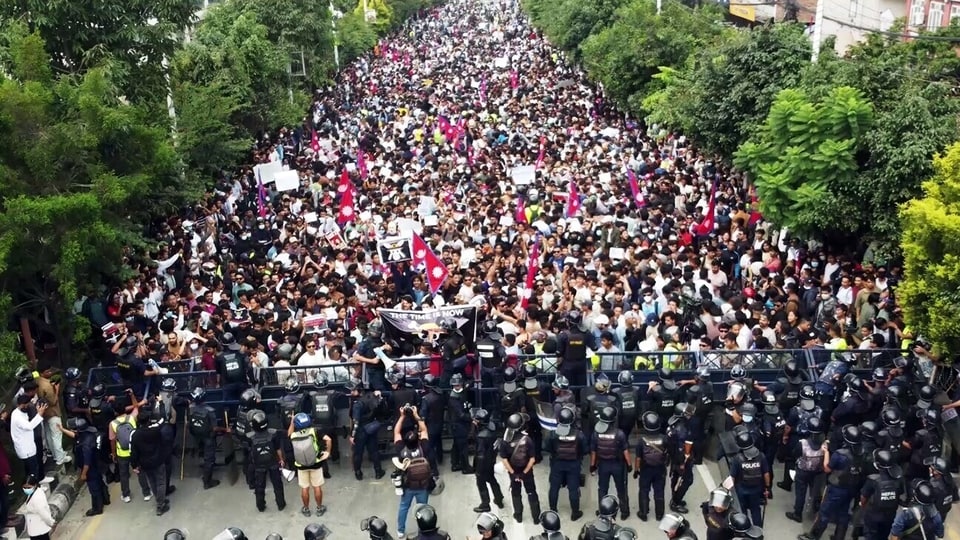
Last Sunday, hundreds of protesters gathered outside the Singhadurbar Secretariat carrying placards that read “End atrocity against the poor” and “Respect human rights.” The chants were not for the old guard. They were for Shah. Opposition leaders and demonstrators, mostly youths, demanded the resignation of the PM.
The protest was triggered after a ride-sharing driver set himself on fire. On July 9, a 25-year-old ride-hailing driver named Ganesh Nepali set himself on fire outside Kathmandu’s passport office, in what witnesses described as a dispute with municipal police over a wheel lock placed on his parked motorcycle. He died the next day. It is the kind of small, absurd cruelty that a country recognises as being about something much larger than a wheel clamp. In the following two days, two more individuals, Ashwin Raut from Buddha Nagar and Vivek Mandal from Sarlahi district, also attempted self-immolation. Traffic police have since publicly disputed the account that a fine or clamp prompted Nepali’s act, saying no citation was issued and that a formal investigation into the actual cause is underway.
This incident opened up a wound that was already raw. A nationwide eviction drive launched in April has cleared riverbank settlements and displaced more than 2,600 families, often before any resettlement plan existed to receive them. The government defends the drive itself as overdue: The settlements sit on public land and flood-prone riverbanks that decades of governments were too timid to clear. Shah’s administration argues it is finally doing what earlier ones would not. The complaint of protesters and opposition MPs is not that the land was cleared but how — holding centres meant to be temporary, including one in Kirtipur, are flooded. When Gen Z activists went to inspect conditions there, they were baton-charged and arrested. Two days later, vehicles were mysteriously parked to block the entrances of three major Kathmandu media houses — an episode now under investigation and raised in parliament.
And layered underneath all of it is a piece of bureaucratic absurdity: The municipal police and national traffic police enforce two separate laws, with two separate fines, for the identical offence of illegal parking. That confusion is not incidental. It is the very seam along which Ganesh Nepali’s fatal dispute tore open — even if, as the traffic police now insist, no fine was actually the proximate cause that day.
Kathmandu’s tangle of overlapping police jurisdictions, its unresolved squatter law, and its riverbank settlements are inheritances from past governments. But Shah’s administration should have provided better alternatives before the eviction. Now people are in holding centres and are protesting against the government
An administration elected to clear the old rot of the country has an obligation to act, and quickly. Even critics of the government largely accept that illegal encroachment on public riverbanks needed addressing. The failure was the sequence — eviction first, shelter later, if at all.
The Shah government should stop defending the sequence of its eviction drive and start correcting it: Pause further clearances until verified housing exists to receive the displaced, resolve the jurisdictional standoff between its own police force and the national one, and treat the investigation into who blockaded three newsrooms as a test of how seriously it takes press freedom.
Nepal’s Gen Z did not march last year to install a government it would never question. It marched to install one it could question and be heard. That it is back on the streets so soon is not evidence the experiment has failed. It is evidence that the experiment is still being run. The expectations of people are high but the government shouldn’t rush on everything and make hasty decisions. The government should address this frustrations and genuine demands of people before another deadly protest takes place.
(The views expressed are personal)
This article is authored by Brabim Karki, author and columnist, Nepal.


