
 E-Paper



Lessons for rebuilding Gaza
This article is authored by Ananya Raj Kakoti, scholar, international relations, Jawaharlal Nehru University, New Delhi.

 Prefer HTon Google


When the guns finally fall silent in Gaza, the urgency to rebuild will be overwhelming. Hospitals must reopen, schools must welcome children again, and families need roofs over their heads. Yet if history is any guide, the instinct to build quickly can be as dangerous as the instinct to bomb. Unless reconstruction is anchored in long-term vision and local ownership, it risks becoming just another cycle of ruin and repair.
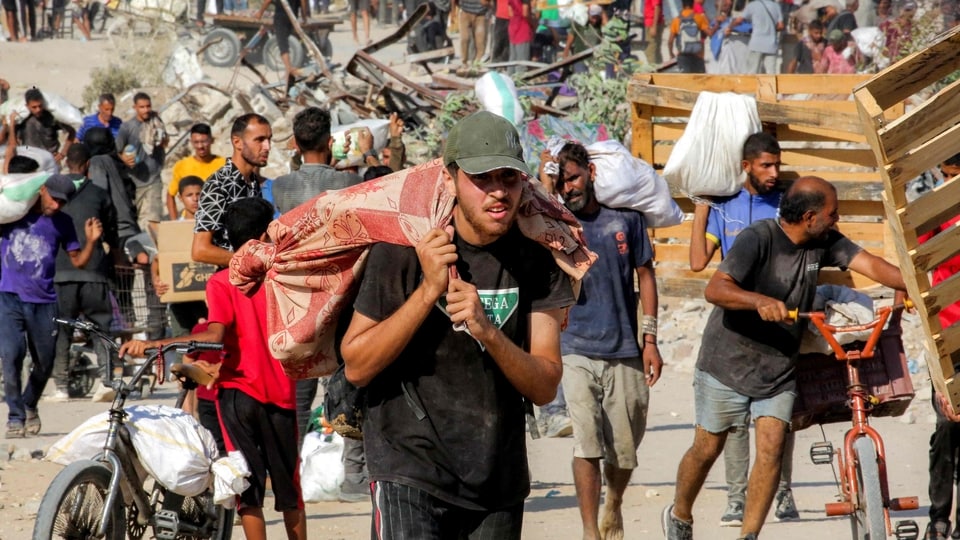
The numbers are staggering. By mid-2025, around 70% of Gaza’s buildings had been damaged or destroyed. Surveys suggest that nearly nine out of ten commercial and industrial sites are unusable. The economy, once fragile, has been reduced to rubble. At the same time, famine thresholds have been crossed across most of the territory, and in Gaza City acute child malnutrition has surged past critical levels. Reconstruction in this context cannot begin with cranes and cement mixers. It must begin with calories, clean water, functioning clinics, and psychological care. Without these basics, rebuilding walls and roads will simply entomb a lost generation.
The lessons from other conflicts are clear. In Lebanon in 2006, generous reconstruction funds flowed quickly, but they were channelled through partisan networks that deepened political divides. In Bosnia, recovery was hindered by fragmented governance and donor fatigue. In Afghanistan, billions of dollars built infrastructure that lacked legitimacy because foreign agendas overshadowed local priorities. Gaza does not need to repeat these mistakes.
The first condition for reconstruction is security. Without a durable truce, hospitals will be rebuilt only to be bombed again, and schools reopened only to be shuttered by the next offensive. The second is funding stability. Enthusiasm peaks in the aftermath of conflict but wanes within months. UNRWA is already warning of collapse despite EU and Gulf injections. If the world is serious about reconstruction, it must provide multi-year commitments, not one-off pledges at donor conferences. The third is local ownership. Planning must involve Palestinian engineers, utilities, community leaders, and small businesses, not only international contractors. It is local hands that will ultimately sustain the rebuilt infrastructure.
Economic recovery must accompany physical reconstruction. With nearly 90% of Gaza’s industrial and commercial base destroyed, early investment in livelihoods is vital. That means cash-for-work schemes to clear debris, grants for small workshops, seed funding for agriculture and agro-processing, and training for construction apprenticeships. Without jobs, reconstruction will produce walls without life.
Justice must also be part of the picture. Investigations into disproportionate strikes, starvation tactics, and obstruction of aid are not luxuries to be delayed until ‘later.’ They are conditions for trust. People will not return to rebuilt clinics if they believe those same clinics could be destroyed again without consequence.
The experience of Iraq should also serve as a caution. After the 2003 invasion, billions were poured into reconstruction projects, but a combination of corruption, insecurity, and over-reliance on foreign contractors meant much of the money produced little sustainable change. Ghost hospitals and unused infrastructure dotted the country, while ordinary Iraqis saw little improvement in daily life. Gaza cannot afford this kind of misallocation. Transparency, community oversight, and international monitoring will be essential if aid is to reach the people it is meant for rather than vanishing into bureaucratic or corrupt channels.
There is also the question of memory and trauma. In societies scarred by conflict, reconstruction that focuses solely on physical infrastructure overlooks the deep wounds left behind. Bosnia’s experience shows how unresolved trauma and divisions can haunt generations. In Gaza, the rebuilding of schools and community centres must go hand in hand with psychosocial support, opportunities for youth, and cultural spaces where people can reclaim dignity. To rebuild without healing risks leaving behind hollow shells of both buildings and people.
The practical roadmap is not complicated. In the first 90 days of a truce, nutrition programmes, water networks, and primary healthcare must be scaled up while debris is cleared and cash assistance flows. Within six months, municipal services such as sewage and electricity need to be restored, and schools should resume double-shift learning to catch up an entire generation. Within two years, small businesses must be operating again, supported by transparent procurement processes that favour local firms. International donors should pool their contributions through a fund jointly managed by the UN, the World Bank, and regional development banks, with public project pipelines to prevent duplication and corruption.
The world has made the same mistakes too many times: pledging billions in conference halls while checkpoints remain shut, rushing reconstruction without securing peace, and sidelining local voices in favour of external contractors. Gaza’s recovery cannot afford another cycle of wasted opportunity. What is needed is not just rebuilding but rethinking and anchoring reconstruction in dignity, sustainability, and accountability.
The international community knows what works. It has learned the lessons, even if it rarely applies them. The question now is not whether the world understands what Gaza needs, but whether it has the courage to do it.
This article is authored by Ananya Raj Kakoti, scholar, international relations, Jawaharlal Nehru University, New Delhi.


