
 E-Paper



India's first dengue vaccine is an important step, not a standalone solution
This article is authored by Dr K Madan Gopal, senior health sector expert and former senior consultant, health, NITI Aayog.

 Prefer HTon Google


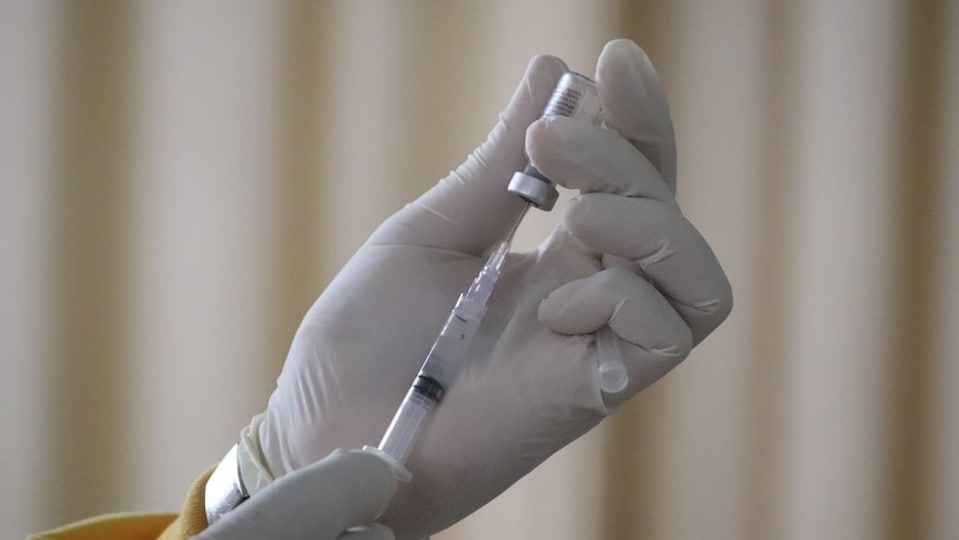
India's approval of its first dengue vaccine adds an important new tool to the country's response to a persistent public-health challenge. The Central Drugs Standard Control Organisation has granted marketing authorisation for a live attenuated tetravalent dengue vaccine for individuals aged 4-60 years. The approval deserves recognition, but it should not be interpreted as the arrival of a stand-alone solution. Dengue is shaped by the interaction of the virus, the mosquito, the environment, human behaviour and the capacity of health systems to detect and manage disease. The vaccine's real value will therefore depend on how well it is incorporated into an integrated dengue prevention and management strategy.
The scale of the challenge explains why an additional preventive tool matters. The World Health Organization estimates that 100-400 million dengue infections occur every year, while more than half of the world's population is now at risk. In 2024, countries reported more than 14.4 million cases, over 52,000 severe cases and 11,201 deaths--the highest global transmission recorded to date. India's official surveillance system recorded 233,519 cases and 297 deaths in 2024, after 289,235 cases and 485 deaths in 2023. These are reported cases and do not capture the full burden of mild, asymptomatic, undiagnosed or privately treated infections.
India is especially vulnerable because dengue is endemic across much of the country, all four viral serotypes circulate, and recurrent outbreaks affect both densely populated cities and expanding peri-urban and rural areas. A recent review described India as carrying a disproportionately high share of the global dengue burden. Climate-based modelling suggests that by the 2050s, approximately 1.5 billion people in India could be living in areas environmentally suitable for dengue transmission. Such projections are not forecasts of actual illness, but they underline how rapidly the geography of risk may expand.
Dengue is difficult to control through any single intervention. Infection with one serotype generally provides long-term protection against that serotype but not against the other three; a later infection with a different serotype may be associated with a higher risk of severe disease. At the same time, Aedes aegypti has adapted remarkably well to urban life. It breeds in small collections of water around homes, construction sites, markets, institutions and public spaces, and it can sustain transmission even where periodic fogging or spraying is undertaken. Rapid urbanisation, water-storage practices, weak solid-waste management, mobility, changing rainfall and temperature patterns, and insecticide resistance all influence transmission.
The vaccine can add a valuable layer of protection, particularly by reducing symptomatic disease and hospitalisation. In the pivotal phase 3 trial involving more than 20,000 children and adolescents aged 4-16 years in dengue-endemic countries, vaccine efficacy was 80.2% against virologically confirmed dengue during the primary analysis period and 90.4% against hospitalised dengue over the secondary endpoint period. Longer follow-up showed cumulative efficacy of 62.1% against symptomatic dengue and 84.1% against hospitalised dengue over 4.5 years. These results are encouraging, but they also show why vaccine performance should not be reduced to a single headline figure: efficacy changed over time and varied by serotype, age and previous dengue exposure.
Regulatory approval and public-programme introduction are, therefore, different decisions. Approval establishes that a vaccine meets the regulator's requirements for quality, safety and efficacy for its authorised indication. A decision to introduce it through a public programme must additionally consider the country's age-specific disease burden, local seroprevalence and serotype patterns, duration of protection, impact on hospitalisation and severe disease, cost-effectiveness, affordability, supply, delivery capacity, equity and post-introduction safety monitoring. WHO currently recommends programmatic use of this vaccine in children aged 6-16 years in settings with high dengue transmission intensity, using two doses three months apart. It also states that vaccination should form part of an integrated dengue-control strategy and does not prevent all cases.
Operational feasibility is an important consideration when assessing whether a vaccine is suitable for inclusion in a public-health programme. The ability to administer the dengue vaccine without individual pre-vaccination serological testing removes a significant implementation barrier. In a country of India’s size and diversity, population-wide screening before vaccination would add substantial cost, time and logistical complexity, particularly in areas with limited laboratory capacity.
This advantage, however, should not be interpreted as eliminating the need for epidemiological assessment. Decisions on programme introduction must still be guided by local dengue burden, transmission intensity, circulating serotypes, age-specific evidence, affordability, cost-effectiveness and the capacity to complete the two-dose schedule and monitor safety. The absence of individual testing, therefore, makes delivery more feasible, but it is only one of several considerations that should determine whether, where and among whom vaccination is introduced.
For India, integrated dengue management should begin with stronger surveillance. Case reporting, laboratory confirmation, hospital admissions, circulating serotypes, vector density, weather and local environmental conditions need to be brought together at district and city level. Surveillance should not merely count cases after an outbreak has begun; it should support early warning, identify high-risk neighbourhoods and guide the timing and intensity of interventions. Better estimates of age-specific seroprevalence and hospitalisation would also help determine where vaccination could generate the greatest public-health value.
Vector control remains indispensable. The emphasis must move from episodic, highly visible responses during outbreaks to sustained source reduction throughout the year. Urban local bodies, health departments, housing societies, schools, workplaces, construction agencies and communities all have a role. Regular removal or covering of water containers, management of discarded tyres and solid waste, inspection of construction sites, improved drainage, safe water-storage practices and targeted larval control are more effective when implemented continuously and locally. Insecticide use should be guided by entomological surveillance and resistance data rather than relied upon as a routine substitute for environmental management.
Clinical preparedness is equally important. There is still no specific antiviral treatment for dengue, but early recognition, correct triage, careful fluid management, timely referral and monitoring for warning signs can substantially reduce preventable deaths. Primary-care facilities and emergency departments need standard protocols, trained teams, adequate diagnostics, referral linkages and surge plans before the seasonal rise in cases. Public communication should help people recognise warning signs and seek care promptly, while also discouraging unnecessary platelet transfusions, irrational antibiotic use and self-medication with drugs that may increase bleeding risk.
Community participation cannot be treated as a seasonal awareness campaign. Because many breeding sites are located in and around homes and workplaces, household and institutional action is central to dengue prevention. Communication should be practical, repeated and locally adapted: what residents should inspect, how frequently they should do it, when to seek care, and why fogging alone cannot protect a community. Engagement is more likely to be sustained when municipalities provide reliable waste collection, water supply, drainage and responsive grievance mechanisms alongside behaviour-change messages.
The vaccine should be introduced with the same discipline. India could use burden, seroprevalence and hospitalisation data to identify high-transmission settings, assess targeted introduction, monitor effectiveness under local conditions and build robust adverse-event surveillance. Because anaphylaxis and other rare events may become visible only after large-scale use, vaccination sites must have trained staff, observation protocols and the capacity to manage acute reactions. Transparent communication about benefits, limitations and uncertainties will be essential for public confidence.
The central policy message is therefore straightforward: the vaccine is an addition, not a replacement. It cannot compensate for delayed case detection, fragmented surveillance, poor urban services, weak vector control or inadequate clinical preparedness. Nor should its arrival divert resources from the foundational measures that protect people of every age, including those who may not be eligible for vaccination.
India's first dengue vaccine can mark a new chapter--but only if it catalyses a stronger overall response. Success should not be measured simply by the number of doses administered. Fewer infections, fewer hospitalisations, fewer deaths, earlier outbreak detection, better-managed urban environments and greater community participation should measure it. Vaccination, surveillance, vector control, environmental management, clinical care and public engagement must operate as one integrated system. That is how a promising scientific advance can be translated into durable public-health progress.
(The views expressed are personal)
This article is authored by Dr K Madan Gopal, senior health sector expert and former senior consultant, health, NITI Aayog.


