“Fatty liver” is one of the most common lines on an Indian health check-up report, and one of the most ignored. When researchers in Thiruvananthapuram district studied 2,373 adults aged 18 to 30, none of them obese and few of them drinkers, about one in four had it. The finding, published in 2024, essentially presents two warnings: fat in the liver signals a higher risk of heart disease and diabetes, while scarring, if it follows, threatens the liver itself.
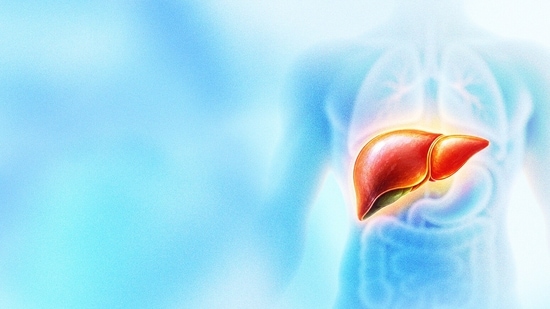
The condition of fatty liver in people of healthy weight, renamed in 2023 as metabolic dysfunction-associated steatotic liver disease (MASLD), is driven by insulin resistance. Insulin normally tells fat tissue to hold on to its stores, so when the body stops responding to it, fat cells keep releasing fatty acids into the blood, and the liver takes them up and stores what it cannot burn. Indians reach that point while thinner: a Yale study of lean young men found insulin resistance three to four times as common among Asian-Indians, who carried about twice the liver fat of white men (PNAS, 2006). Dr Shiv K Sarin, director of the Institute of Liver and Biliary Sciences (ILBS), Delhi, estimates that young, normal-weight people make up about 10% of those with fatty liver, and says they often have high blood fats and blood sugar in the prediabetic range.
Also Read | The evolving science around longevity, and its unknowns
{{/usCountry}}Also Read | The evolving science around longevity, and its unknowns
{{/usCountry}}When the disease progresses, fat comes in faster than liver cells can burn or store it, toxic by-products build up, cells die and immune cells respond with inflammation. Dying cells switch on stellate cells, which normally sit dormant storing vitamin A, and they begin laying down collagen, the tough protein of scar tissue. This scarring is graded F0 to F4, and F4 is cirrhosis. Most people with fat alone never progress, and for most patients, Sarin says, the larger threat is to the heart. Scarring is the liver’s own risk: across 17,301 biopsied patients, the risk of dying of liver disease was 7.6 times higher at F3 than with no scarring, and 15 times higher at F4 (Clinical Gastroenterology and Hepatology, 2023).
“We have to check two things, liver fat and liver fibrosis,” Sarin said.
Scarring can retreat, because once the injury stops, stellate cells return to dormancy or die off and the liver’s enzymes gradually break down the collagen. Two drugs have now been shown to help. Resmetirom, a pill that activates the thyroid hormone receptor THR-beta in the liver and raises the rate at which its cells burn fat, improved scarring by a stage or more in about a quarter of patients after 52 weeks, against 14.2% on placebo (NEJM, 2024). Semaglutide, which mimics the gut hormone GLP-1 and acts on the liver mainly through weight loss, improved scarring in 36.8% after 72 weeks, against 22.4% (NEJM, 2025). Both are approved in the US on biopsy results, neither has yet shown that it prevents cirrhosis or death, and the trials enrolled patients far heavier than most Indians, with average BMI of about 35.
Also Read | The disorder that hides in ordinary, everyday tiredness
Efruxifermin, which copies FGF21, a hormone that raises fat-burning and dampens the signals behind scarring, is the first drug with randomised evidence of partly reversing cirrhosis: 29% improved at 96 weeks, against 11% on placebo, in a phase 2 trial of 181 patients. India approved its own drug, saroglitazar, in 2020 on a single company-sponsored trial of 102 patients that measured disease activity and did not measure scarring. Resmetirom is not approved here.
Weight loss still has the deepest evidence. Among patients who lost a tenth of their weight in a year, inflammation resolved in 90% and scarring regressed in 45%. None of the drugs, Sarin says, “is a substitute for low carb and fat diet and regular exercise”. Finding the scar is its own problem. FIB-4, the blood-based score guidelines use first, leans heavily on age, so it runs low in the young and, by the European guideline’s own account, “performs poorly” under 35.
Also Read | Heart of tomorrow: The therapies shaping the cholesterol control battle
Sarin wants trials that judge a drug on the whole metabolic picture. “I would like to start basket trials, where a drug can improve metabolism- reduce liver fat, lipids, diabetes, heart disease and CVD risk and longevity,” he said. No study has yet followed lean young Indians with fatty liver long enough to show whether they reach cirrhosis faster or more slowly than the heavier Western patients on whom the evidence was built.