...
...
Next Story

Photos: Life in some of Earth’s most extreme environments

From the Thar Desert to the poles and ice-covered oceans, see images from photographers and filmmakers who have spent extended periods in some of Earth’s most extreme environments

Published on: Jul 29, 2021 06:38 PM IST
Advertisement
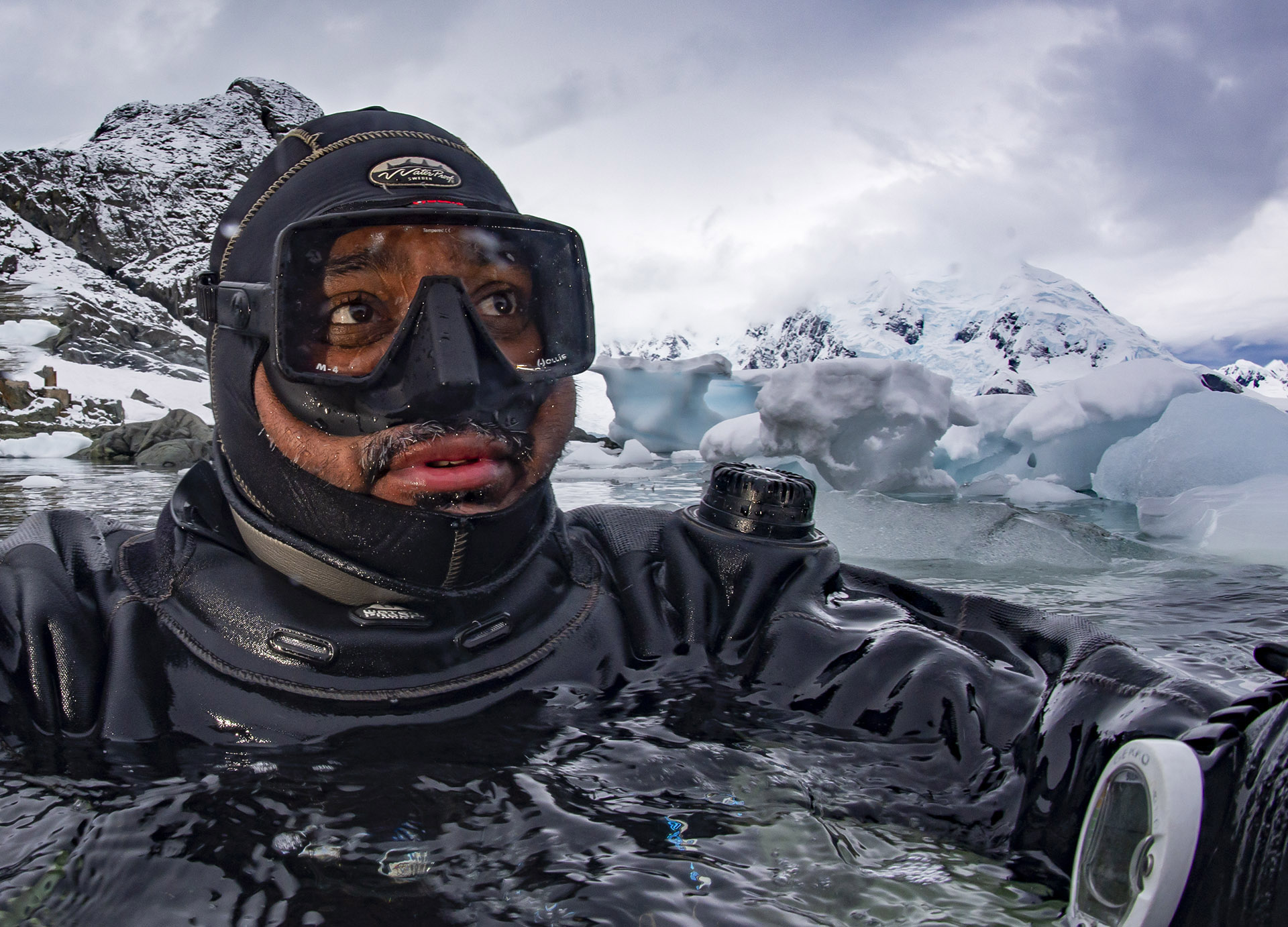
Dhritiman Mukherjee, 46, a photographer from Kolkata, dives beneath the ice, in the ocean around Antarctica. Divers descend through a hole, with a tether around their waists. The tether is their only link to the surface. “If I lose the rope, there would be really very little chance of me finding my way back to the hole, under that vast expanse of ice,” Mukherjee says.
Beneath the ice is an entirely different world. Little light penetrates the metre-thick frozen seawater that forms the surface. Sometimes, it’s not ice but moving icebergs that divers must watch out for. Beneath it all, alien-looking creatures reveal themselves. Here Mukherjee's lens has captured a variety of starfish off the coast of Antarctica.
A spiny- tailed lizard, a rare herbivorous reptile, in the Thar Desert of Rajasthan. To get this shot, and others like it, wildlife filmmaker Pradeep Hegde, 27, from Sirsi, Karnataka, had to lie on the ground, dead still, for hours, in temperatures that reached 40 degrees Celsius.
Hegde had been commissioned to make a series of films for RoundGlass Sustain, a digital storytelling platform focussed on India’s wildlife. In his time in the Thar, he caught up with a swarm of desert locusts from across the oceans in Africa, outside the Desert National Park. “Cameras tend to overheat and shut down, so it’s always good to travel with more than one camera body or you have to take it out of the sun and wait for it to cool down,” he says.
Kalyan Varma, 40, a Bengaluru-based wildlife photographer, has been documenting the monsoon in India for almost a decade. Varma worked on the 2014 BBC documentary Wonders of the Monsoon, racing ahead of the massive rain clouds as they made their way across the subcontinent. He travelled from Kovalam in Kerala, where the south-west monsoon first hits, to Rajasthan, always arriving a day or two in advance of the rains, so he could capture their arrival.
Varma is used to the difficulties of his profession. “When shooting in Agumbe in the Western Ghats, we would dismantle the cameras at night and surround them with halogen lamps, to allow the heat to dissipate any moisture,” Varma says. Ensuring the equipment stays dry is the only way to keep fungus away in a humid climate. He and his crew, meanwhile, spent so much of their day in damp clothes and sticky rain gear that their skin was peeling by the end of it.
 
Unlock a world of Benefits with HT! From insightful newsletters to real-time news alerts and a personalized news feed – it's all here, just a click away! -Login Now!
SHARE THIS ARTICLE ON
Hindustantimes wants to start sending you push notifications. Click allow to subscribe