In Delhi, the room wasn't talking about the box office. At the press conference of crime thriller Daayra, which was followed by a special screening, everyone kept circling the same question: what do you do when the law can't move fast enough, and someone decides they will? Meghna Gulzar, Kareena Kapoor Khan and Prithviraj Sukumaran didn't come with answers. They came with a film that leaves you pondering in the middle of that question and doesn't let you off easy. An encounter that might be self-defence, or might be something else. Daayra doesn't tell you which. It just makes you sit with it.
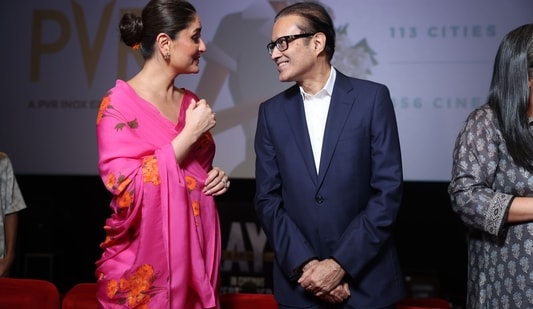
“For me, as a director of Daayra, it was difficult to pick sides. Because the moral conundrum is overlapping on both. On the law as well as the delivery of justice, right? So, it is difficult to pick sides and therefore to raise the question: how do we make it easier? That's the purpose,” said Meghna.
That tension also runs through the two central police characters. Kareena Kapoor Khan plays DCP Ajooni Kohli, a police officer who approaches the question of justice through the framework of the law, while Prithviraj Sukumaran plays DCP Raman Kumar, whose understanding of justice is shaped by a very different set of circumstances.
Prithviraj was asked who he believed had a fairer approach, Raman or Ajooni. His answer captured the film’s moral dilemma and how our response can change when an incident hits closer to home. “Far away from where you are, a world that you do not know of, maybe you would want Ajooni to handle that. But the closer it gets to home, to someone you know, to someone you've heard of, a friend, a relative, a neighbour, then you definitely want Raman,” he said.
{{/usCountry}}Prithviraj was asked who he believed had a fairer approach, Raman or Ajooni. His answer captured the film’s moral dilemma and how our response can change when an incident hits closer to home. “Far away from where you are, a world that you do not know of, maybe you would want Ajooni to handle that. But the closer it gets to home, to someone you know, to someone you've heard of, a friend, a relative, a neighbour, then you definitely want Raman,” he said.
{{/usCountry}}For Meghna, getting the casting right was part of building that tension. She wanted Ajooni to move away from the familiar image of the female police officer often seen in Hindi films, and Kareena’s public persona was one reason she felt the actor could bring an unexpected quality to the role. Her choice of Prithviraj was equally deliberate. Since Daayra does not attach its story to a particular state or city, Meghna wanted an actor from outside Hindi cinema to reinforce that sense of universality.
“I did not want to have a regional or a geographic identity to the film because these are incidents which happen everywhere across the country. So I wanted an actor who is not from Hindi cinema and from one of the South Indian cinemas,” Meghna added. For Kareena, the film also represented a different kind of acting challenge after more than two decades in the industry. She said, “This character will always be remembered in my filmography.”
At the special screening, Daayra’s questions of law and justice drew prominent figures from the worlds of law, justice and activism.
Times Group MD Vineet Jain spoke about cinema’s ability to take difficult questions to a mass audience. “Stories, especially cinema, are a very powerful medium to reach millions of people and can influence the way they think. For us at Junglee Pictures, movies are not just entertainment, but a strong cultural medium,” he said.
“When I first heard the script of Daayra, I found it flawless. It’s rooted in reality and makes powerful cinema. It raises a lot of disturbing questions and will provoke thoughts. I’m sure that when people leave the cinema hall, these disturbing thoughts will stay with them. They will have conversations, debates and dialogue. This is one of the reasons I made the movie,” Jain added.
Justice B R Gavai, former Chief Justice of India, who was also present at the screening, was asked about the debate surrounding Daayra. His response brought the discussion firmly back to the constitutional question at the centre of the film. “I have always been a strong believer that constitutional principles must prevail and that the rule of law is very close to our Constitution. Article 14 embodies the rule of law in our constitutional scheme. Therefore, we always believe that no person, however high he may be, can take the law into his own hands,” he said.