
 E-Paper



Harmonies Redefined – The Trailblazers series: The Uncharted Journey of Pt Vishwa Mohan Bhatt
Final part of the series on artistes, who have been trendsetters in the world of Indian classical arts, in the words of authors Shantanu Das and Sapna Narayan.

 Prefer HTon Google


On a quiet street in Jaipur, where the desert wind hums a tune older than time, a child once sat cross-legged beside his mother, Vidhushi Chandrakala Bhatt — a classical vocalist who broke every rule society had written for women of her time. He was listening, watching her mouth shape ancient notes, soaking in raagas before he could even spell them. In her shadow, the child found music, but not the kind he was told to pursue, and grew up to be known as one and only – Pandit Vishwa Mohan Bhatt.
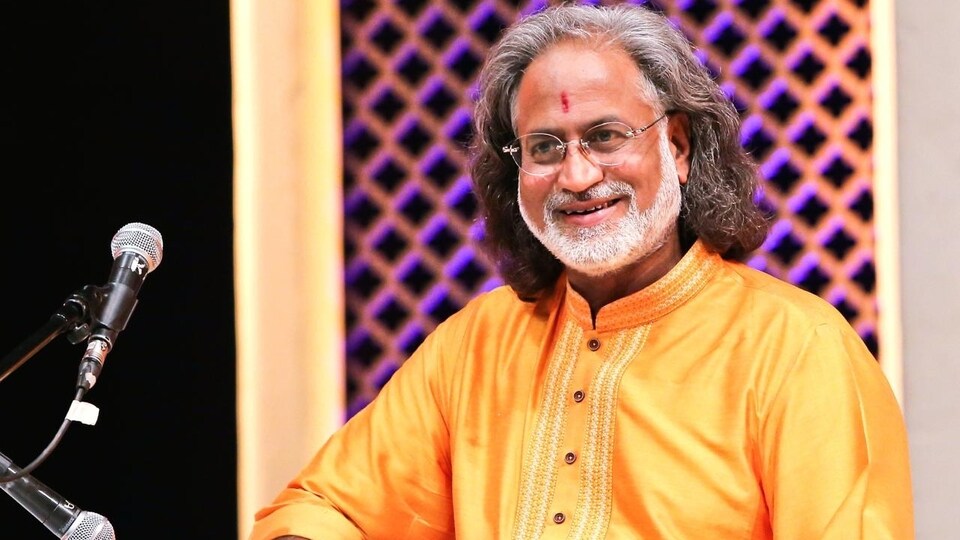
That child grew up to be known as Pandit Vishwa Mohan Bhatt — a Grammy Award winner, musical inventor, and the creator of an entirely new voice in Indian classical music: the Mohan Veena. In a world rooted in tradition, where lineage often dictates legacy, Bhatt chose to reinvent his inheritance. And in doing so, he redefined what it means to stay true to one’s roots while still reaching for the sky.
In a family of sitarists and vocalists, Vishwa Mohan Bhatt could have easily walked the tried-and-tested path. His elder brother, Pandit Shashi Mohan Bhatt, was a revered sitar player and one of the earliest disciples of Bharat Ratna Pandit Ravi Shankar. His sister, Manju Mehta, a noted sitarist, had already performed in Germany in the 1960s; which was unheard of for women in classical music at the time. His family, in fact, carries a 500 years old musical lineage. From the courts of Rajasthan to the coronation of Shivaji Maharaj, his ancestors were priests, scholars, and musicians. But, Bhatt didn’t just inherit this legacy — he repurposed it.
He looked at a Hawaiian guitar, gifted to his sister, Vidushi Manju Mehta in 1968, and saw something else. Not six strings and its foreign origins but the potential waiting to be unlocked in ancestral echoes. The answer, it turned out, wasn’t in the books. It was in obsession. He began modifying the guitar, adding sympathetic strings, reworking its bridge, tuning, and even its body structure. The process spanned through decades. Most luthiers scoffed. The instrument often returned to him as unusable junk. However, with the stubbornness of a saint and the vision of a scientist, he finally gave birth to what the world now knows as the Mohan Veena.
In 1993, Bhatt recorded an album with American blues legend Ry Cooder. It was called Meeting by the River, and it didn’t sound like anything the world had heard before. East met West, but not in a forced fusion. It was a soulful, flowing, almost sacred union. The album won a Grammy Award. More importantly, it gave voice to the veena that Bhatt had crafted with his own hands. That's when a river met the desert, and both changed course. This wasn’t a one-off experiment as Bhatt continued to collaborate across continents and cultures including his collaborations with Chinese erhu players, African drummers, and jazz saxophonists. Yet, his every note carried the soil of Rajasthan, the voice of his ancestors, and the calm clarity of his guru, Pandit Ravi Shankar.
Ask anyone who has played with him, and they’ll say the same: he doesn’t perform, he meditates. Thus, Bhatt’s journey is shaped by the grandeur of tradition and the fire of individualism. He believes in fasting before a concert, but not for religious reasons. It's for musical clarity. “You can’t reach the higher frequencies on a full stomach,” he often jokes. He treats his Veena like a living being, changing its strings like dressing a friend, and whispers to it before stepping on the stage. His son, Salil Bhatt is now a torchbearer in his own right, and once shared a story from a roadside Janmashtami event: There, in the dust and din of a Jaipur tea vendor’s parking lot, Panditji performed for rickshaw pullers and street vendors. A drunk man stumbled to the stage mid-performance and tried to offer crumpled notes in devotion. The crowd gasped, unsure of what would happen. But Panditji simply smiled, accepted the offering with grace, and continued to play.
His instrument, the Mohan Veena, is not a guitar. It’s a symbol of defiance, devotion, and discovery. He didn’t simply introduce a new sound, by inventing this instrument, but redefined what classical music could sound like. The instrument now carries over 19 strings. Its tuning system allows for deep resonance and emotional range that mimics vocal nuances. Meend, gamak, and andolan are all possible on this instrument; something traditional guitars were never designed to do. And yet, his music remains classically pure as Bhatt never diluted his foundation for fame.
There’s a story his family shares often. When Bhatt was about to perform on All India Radio (AIR) for the first time using the Mohan Veena, the sound engineers and producers hesitated. ‘What is this instrument?’ they asked. ‘It’s not listed on our formats.’ Bhatt simply smiled, tuned his Veena, and began to play. After the recording, there was silence. Then came applause. No questions asked henceforth.
Today, the Mohan Veena is recognised across the world. The UNESCO, global music festivals, and prestigious institutions have celebrated it. And yet, Bhatt remains humble as he sits in his music room that still smells of sandalwood and rosin, his veena still rests on the same cloth as it did decades ago. Perhaps the most beautiful aspect of Bhatt’s story is that he never set out to become famous. He just followed a sound that no one else could hear — until the world finally did. He didn’t want to stand out. He wanted to belong to a deeper tradition, a richer silence, a more honest music.
He continues to perform, teach, travel, and inspire. His disciples include not just musicians, but thinkers, poets, filmmakers, and dreamers. He walks quietly but leaves echoes wherever he goes. And like the river in his Grammy-winning album, he never pushes. He flows through genres, geographies, and generations.
This is not just the story of an instrument, or merely the biography of a musician. It's the story of what happens when an old world meets a brave heart. Of how music, when held gently and fiercely, can transcend all boundaries. It is the story of Pandit Vishwa Mohan Bhatt — the man who made a guitar sing like a Veena, and in doing so, taught the world to listen again.
Authors can be contacted at shrd7746@gmail.com and sapna.narayan@gmail.com


