
 E-Paper



Threads of heritage: Tangail and Pabna sarees take center stage in Delhi
The inauguration of ‘Celebrating The Art of Saree-Weaving From Bangladesh’ saw a gathering of textile lovers who emphasised that saree is more than just fabric

 Prefer HTon Google


The Bangladesh High Commission in New Delhi is currently transformed into a vibrant gallery of handwoven stories.
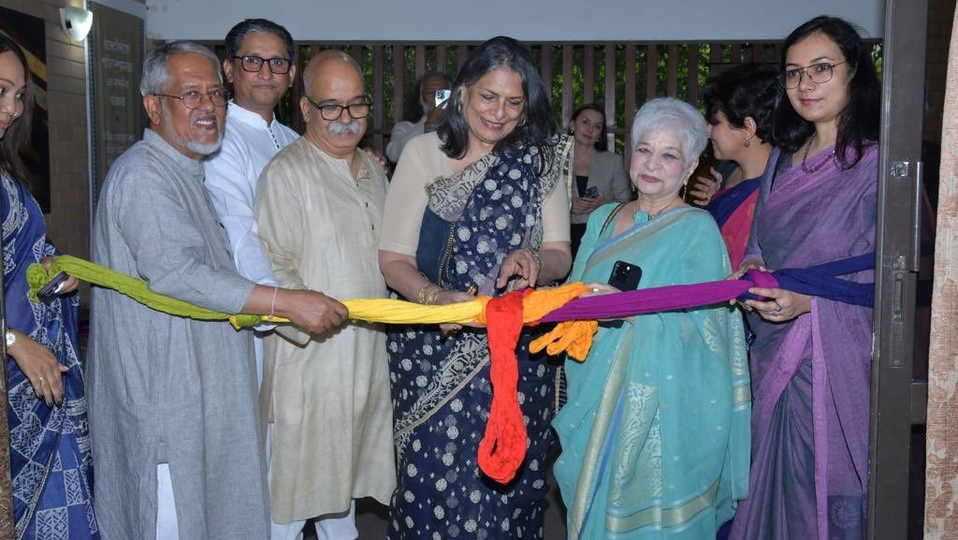
Following the success of last year’s Jamdani showcase, a new exposition, titled, 'Celebrating The Art of Saree-Weaving From Bangladesh' running until April 21, shifts the spotlight to the refined elegance of Tangail and Pabna weaving.
The timing is landmark: in November 2025, Tangail weaving was officially recognised as a UNESCO Intangible Cultural Heritage, sparking a global revival of interest in the craft.
The inauguration saw a gathering of cultural stalwarts who emphasised that these six yards are more than just fabric, they are a shared language.
On the occasion, Riaz Hamidullah, Bangladesh High Commissioner to India said, "This is not an act of diplomacy. This is a pure celebration of craftsmanship... Each saree carries a unique emotional expression and a story of 'obstinacy'—the stubborn refusal of these artists to let a beautiful tradition die."
Curated by veterans Chandra Shekhar Shaha (Bangladesh) and Chandra Shekhar Veda (India), the display features over 300 curated sarees that bridge the gap between rural artisan hubs and urban connoisseurs.
Dressed in a beautiful Jamdani, architectural restorer Sunita Kohli who inaugurated the event, shared, "The saree is perhaps unique in the world. It is the only garment that has survived, largely unchanged, for over 4,000 years, with its traces stretching back to the Indus Valley Civilization."
Echoing similar sentiment, craftswoman and designer Laila Tyabji who also opened the exposition to public said, "Looking around this room, it is clear that while we may be discussing different regions and techniques, there is a common language in our crafts... This closeness is a major strength."
Politician and activist Jaya Jaitley who was also present at the event shared that the saree is magical. She said, "It creates a unique silhouette that makes every woman beautiful. I am immensely proud of this as our heritage. The most special treat of all, however, is having the master weavers themselves here with us. To see the hands that create such beauty is a privilege."
Chavanart Thangsumphant, Ambassador of Thailand to India, purchased a cotton saree, and said, “I chose to buy this white colour today because I am still in mourning period over the death of Queen Sirikit.”
Legacy of the Tangail weavers
“I come from master weavers in Tangail. Some of these pieces are family heirlooms, some 60 to 70 years old. I represent the ninth generation of the family to carry on this craft. When you touch these fabrics, you aren’t just touching silk or cotton; you are touching nine generations of history,” shared artisan Khokan Basak.


