Should your home be less hyper-organised, pristine and perfect? Broadcaster and podcaster Jo Whiley certainly thinks so. After visiting actor Judi Dench and seeing a home overflowing with family photos, kids’ artwork, and personal mementos, Whiley was inspired to stop hiding her own sentimental items away in cupboards. This approach, dubbed “reverse decluttering”, advocates for bringing meaningful treasures out of storage to give a space heart and personality.
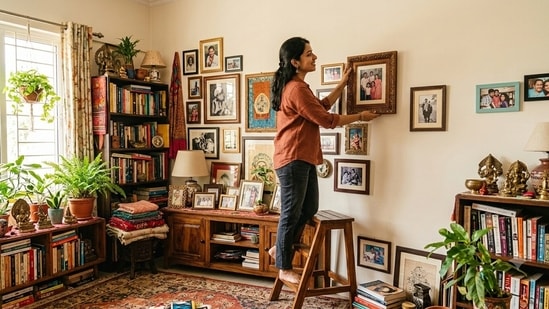
Sparked by Whiley’s podcast discussion, the trend has surged in popularity, with global Google search interest for the phrase exploding by over 5,000% in recent weeks. On Instagram, recent reverse decluttering content has also pulled big numbers, with a wardrobe-focused Reel by @the.closet.coach crossing 318K views, while a garage-focused ‘re-cluttering’ Reel from @noworganizing has clocked 2.8 million views.
What is reverse decluttering?
As homes increasingly draw from the same AI-generated inspiration, Pinterest mood boards and mass-produced décor, designers say there is a growing desire for spaces that feel less formulaic. “Reverse decluttering is bringing meaningful things back into the home instead of automatically hiding, storing or minimising them,” says Amita Trehan, Founder & Principal Designer, Bravura Design Solutions. Unlike traditional decluttering, which often focuses on reducing possessions, this approach asks people to reconsider what they may have put away simply because it did not fit a particular aesthetic.
“They don’t necessarily have to be valuable; their value can be entirely sentimental. Ask yourself, “Does this object mean something to me and does it add to the way I want my home to feel?,” suggests Aashi Gupta, Founder and Principal Designer of Aashi Gupta Designs.
What you can keep when reverse decluttering
- Antique decor pieces
- Books and journals
- A hand knit loose throw
- Old photographs
- Inherited furniture
- Travel souvenirs
- Artwork
How to reverse declutter
{{/usCountry}}“They don’t necessarily have to be valuable; their value can be entirely sentimental. Ask yourself, “Does this object mean something to me and does it add to the way I want my home to feel?,” suggests Aashi Gupta, Founder and Principal Designer of Aashi Gupta Designs.
What you can keep when reverse decluttering
- Antique decor pieces
- Books and journals
- A hand knit loose throw
- Old photographs
- Inherited furniture
- Travel souvenirs
- Artwork
How to reverse declutter
{{/usCountry}}Interior designer Punam Kalra, Creative Director, I’m the Centre for Applied Arts says:
1. Start small: Don’t tackle the entire house at once. Take one area like a cabinet or room at a time.
2. Keep what you love: Prioritise objects that have emotional value, are useful or simply make you happy
3. Bring forgotten favourites back into rotation: Look through cupboards, lofts and storage spaces for pieces that have been packed away but still mean something to you
4. Know when old is just old: If an object is genuinely damaged and no longer serves a purpose, its age or sentimental value alone doesn’t necessarily make it worth displaying
5. Make the display intentional: For mismatched objects, play with height and layers on shelves, using platforms or pedestals on sideboards, and adding spotlights or textiles to create depth.