In just two weeks, India has managed to reduce its coronavirus disease (Covid-19) hot spots, or red zones, from 170 to 130 districts, according to a revised list of issued to states by the Union health ministry on Thursday.
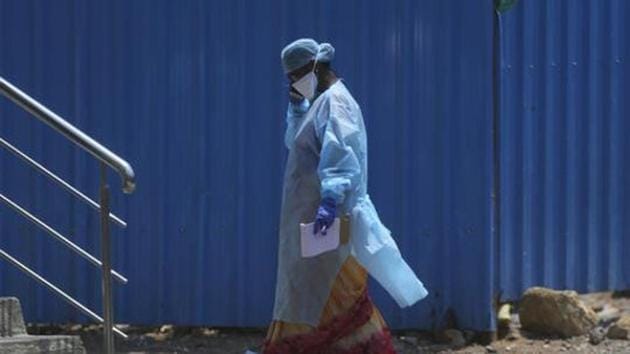
All major metropolitan cities such as Delhi, Mumbai, Chennai, Kolkata, Hyderabad, Bengaluru and Ahmedabad, however, are now in red zones as these have been reporting high caseloads and clusters of cases.
The zones have been divided on the basis of areas: red zones are those where the numbers of Covid-19 infections are high; orange zones have fewer cases; and the green zones are those where no cases have been reported so far or where no case has been detected in the last 21 days.
The number of orange zones has gone up to 284 from the earlier 207 districts. The number of green zones has seen a drop from 353 to the current 319, implying some district where there were no cases earlier might have reported cases.
Uttar Pradesh and Maharashtra have the highest number of red zones at 19 and 14 respectively, followed by Tamil Nadu at 12. All of Delhi’s 11 districts are red zones.
{{/usCountry}}Uttar Pradesh and Maharashtra have the highest number of red zones at 19 and 14 respectively, followed by Tamil Nadu at 12. All of Delhi’s 11 districts are red zones.
{{/usCountry}}Also, Faridabad, Gautam Buddha Nagar and Meerut have been classified as red zones, while Gurugram and Ghaziabad are designated as orange zones.
“The ministry has been regularly revising the situation on the basis of feedback it receives from ground. It is an evolving situation, and we are closely monitoring even till the block level. The IDSP units are active on ground, and generating data on a daily basis. The measures will have to continue till all red zones are converted to orange zones and then green ones,” said a senior health ministry official, requesting not to be identified.
The ministry has clarified that they have also revised the criteria for designating zones.
“The districts were earlier designated as hotspots / red-zones, orange zones and green zones primarily based on the cumulative cases reported and the doubling rate. Since recovery rates have gone up, the districts are now being designated across various zones duly broad-basing the criteria. This classification is multi-factorial and takes into consideration incidence of cases, doubling rate, extent of testing and surveillance feedback to classify the districts. A district will be considered under green zone, if there are no confirmed cases so far or there is no reported case since last 21 days in the district.”
“It is important to ensure that we identify pockets of critical interventions for a focused management of Covid-19 at the field level, said health secretary Preeti Sudan in a letter to States.
In all containment areas, stringent perimeter control and measures such as establishing clear entry and exit points, no movement except for medical emergencies and essential goods and services, no unchecked influx of population, active search for cases through house to house surveillance, testing of all cases, contact tracing and clinical management of all confirmed cases, is to be done.
In buffer zones, extensive surveillance for cases through monitoring of cases of influenza-like illnesses and severe acute respiratory infections in hospitals and health centres will be conducted.
“It is further highlighted that based on field feedback and additional analysis at state level, states may designate additional red or orange zones as appropriate. However, states may not relax the zonal classification of districts classified as red/orange as communicated by the ministry,” the letter further reads.
“It is critical to ensure that necessary action for containment so as to break the chain of transmission of virus is initiated in both red and orange zone districts reporting confirmed cases.”
Infectious disease experts say that lockdown has help and now is the time to consolidate the gains.
“It is useful if we are to utilize the time gained in identifying infected individuals isolating them, tracing contacts and quarantining them to interrupt the chain of transmission. We should be able to identify cluster transmission as people are confined to homes. Mathematical models have shown how extended periods of lockdown can decrease the peak. But if infected individuals are not identified and contained, then as soon as the lockdown is lifted, there would be a spurt of cases,” said Dr Lalit Kant, infectious disease specialist and former head of the Indian Council of Medical Research.