
 E-Paper



2 security personnel killed in gunfight with splinter Maoist group in Jharkhand
The gunfight was triggered after the security forces launched an operation based on information about the presence of TSPC commander Shashikant Ganjhu in Kedal

 Prefer HTon Google


Two security personnel were killed and another was injured in a gunfight with a splinter Maoist group in Jharkhand’s Palamu district on Thursday. Police said the gunfight with Tritiya Sammelan Prastuti Committee (TSPC) members was triggered around 12.30am.
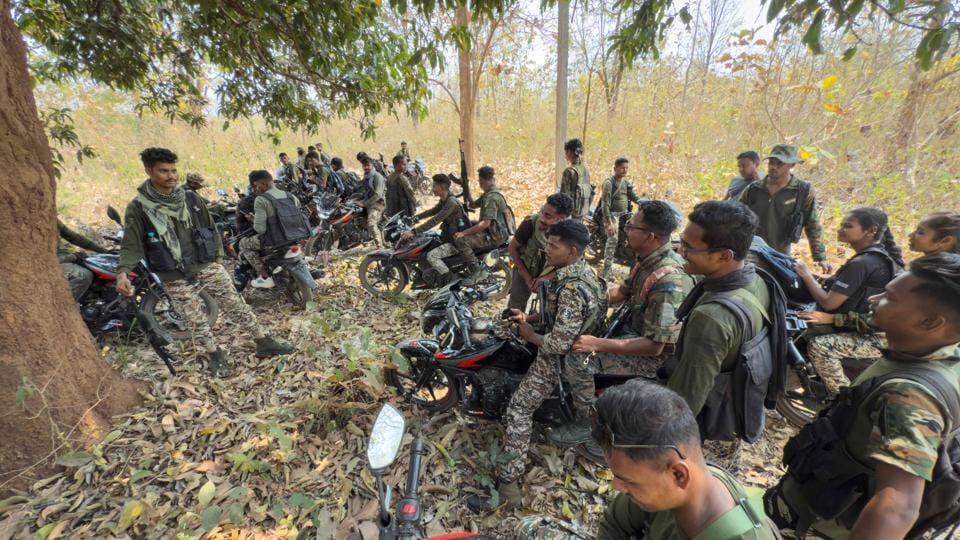
Palamu deputy inspector general Naushad Alam told news agency Press Trust of India: “Two security personnel were killed, and another was injured in the gunfight. The injured were admitted to Medinirai Medical College and Hospital.”
The gunfight was triggered after the security forces launched an operation based on information about the presence of TSPC commander Shashikant Ganjhu and his squad in the Kedal village. TSPC members started firing when the security forces reached the spot. Three security personnel were injured, and two of them were declared dead at the hospital.
The two security personnel were killed amid heightened anti-Maoist operations as the government has set a target of eliminating Maoism by next year. The proscribed Communist Party of India (Maoist) or CPI (Maoist) has suffered heavy losses in the intensified operations in Chhattisgarh.
A June 23 Maoist Central Committee document acknowledged the killing of 357 Maoists over the last year. Maoist chief Nambala Kesava Rao alias Basvaraju was killed on May 20 in Chhattisgarh. Basvaraju’s killing inside a dense forest marked the most significant success against the Left-wing insurgency in years.
Basvaraju, the general secretary of the Maoists and the backbone of the insurgency in central India, was accused of masterminding attacks, including an ambush that left 76 security personnel dead in 2010.
The Maoist movement began in 1967 in West Bengal’s Naxalbari village. It spread to what is now Chhattisgarh, Jharkhand, Bihar, Odisha, Andhra Pradesh, and Maharashtra. Maoism has been described as the biggest threat to India’s internal security. It has suffered setbacks, but retained the capacity to launch attacks.


