
 E-Paper



All 3 Lashkar terrorists involved in Pahalgam attack killed in Op Mahadev, Amit Shah tells Parliament
Home minister Amit Shah makes big announcement in the Lok Sabha during Operation Sindoor debate, that Pak terrorists who carried out Pahalgam attack eliminated

 Prefer HTon Google


Union home minister Amit Shah on Tuesday announced that three Pakistani Lashkar-e-Taiba (LeT) terrorists involved in the April 22 Pahalgam terror attack were killed on Monday in Dachigam near Srinagar after a two-month intelligence and security operation titled ‘Mahadev’.
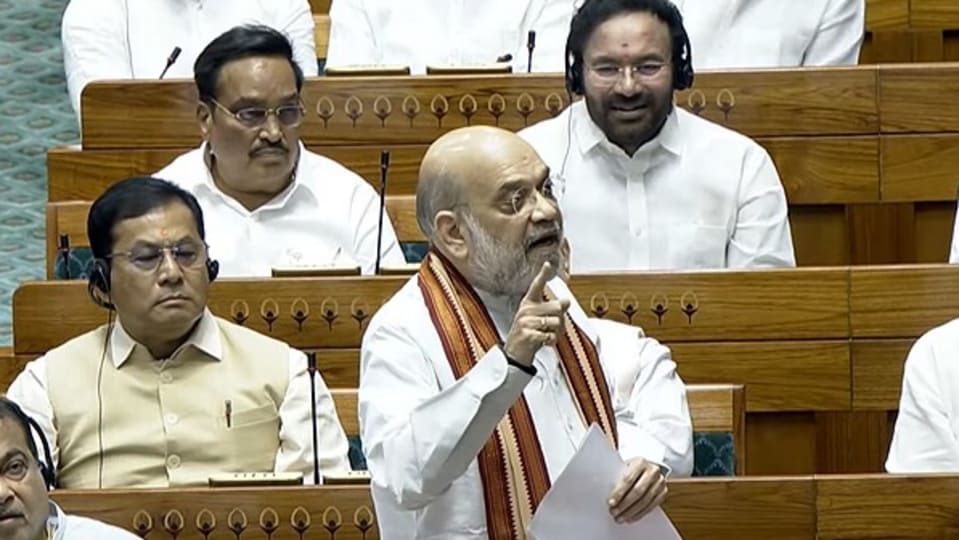
He told Parliament that the three, who shot dead 25 tourists and one pony operator at the Baisaran Valley, were identified as Suleiman, a Lashkar commander; Afghan, and Jibran.
Parvaiz Jothar and Bashir Jothar, who allegedly harboured them, confirmed their identities, Shah said.
Also read | Amit Shah explains how Operation Mahadev was carried out to kill 3 Pahalgam attackers
Shah said one M4 carbine and two AK-47S recovered from dead terrorists were the weapons used in the Pahalgam killings, citing ballistic tests conducted at Chandigarh’s Forensic Science Laboratory (FSL). “...security forces, the army, the Central Reserve Police Force (CRPF), and Jammu and Kashmir police (J&K), as part of Operation Mahadev, eliminated the three terrorists Suleiman, Afghan, and Jibran involved in the Pahalgam terror attack. Their masters were killed in Operation Sindoor earlier,” Shah said, referring to India's response to the April 22 terror strike.
India struck nine terror bases in Pakistan and Pakistan-occupied Kashmir on May 7, triggering a four-day military exchange.
Shah said Operation Mahadev began on May 22, when the Intelligence Bureau (IB) got information about the presence of the three terrorists in the Dachigam area.
“The IB and the army soldiers continuously worked on capturing signals of the ultra system [a Chinese encrypted communication system]. Finally, on July 22, the sensors established their exact location, and then the Army’s 4 Para, J&K police, and CRPF joined hands. They were finally killed yesterday [Monday],” Shah said.
“We sent human assets who had seen their faces, who identified their bodies and confirmed that they were the ones who shot innocent tourists in Baisaran Valley on April 22.”
Also read | Lok Sabha session live: Debate on Op Sindoor
He said on Monday night, the rifles recovered from three terrorists were checked at the Chandigarh forensic lab, and at 4am on Tuesday, the report came out positive.
Shah said two Pakistani voter IDs and chocolate packets made in Pakistan were recovered from the terrorists. The weapons they used came from a “western neighbour”, he added.
Shah said the National Investigation Agency (NIA) questioned 1,055 persons for 3,000 hours, which has been recorded.
Shah said Bashir and Parvaiz told the agency that the terrorists came to their home on April 21 and had food and tea and packed some provisions with them before leaving for Baisaran. The mother of Bashir Jothar and Parvaiz Jothar identified the terrorists as well.


