Indian tourists’ interaction with a pet tiger in Pattaya, Thailand, nearly cost a five-year-old girl her life.
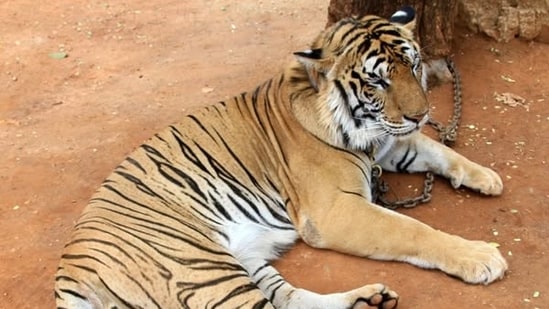
The incident took place in June when the family was visiting Thailand. During a visit to a park in Pattaya that houses tigers used as ‘photo props’, one of the animals scratched the little girl, causing her to develop life-threatening sepsis, The Times of India reported.
The girl was treated at a hospital in Thailand initially. However, she developed rashes on her thighs, face, and torso within two weeks of arriving in India, followed by high-grade fever and worsening health.
She was admitted to Max Hospital in Vaishali in Delhi on July 10 with fever, vomiting, severe abdominal pain, dangerously low blood pressure, high heart rate and respiratory complications, according to the report.
Dr Priyanka Sinha, from the hospital’s paediatrics and immunology department, said the girl needed broad-spectrum antibiotics, four to five days of ventilator support and intensive cardiovascular care. Her condition deteriorated on the fifth day when she developed a bacterial respiratory infection.
Principal director of paediatrics at the hospital, Dr Ramalingam Kalyan later said the girl's inflammatory markers gradually improved, and she was removed from the ventilator to high-flow oxygen by the seventh day.
The girl was gradually able to maintain her oxygen level on room air and cardiovascular support was also discontinued, Dr Kalyan said.
{{/usCountry}}The girl was gradually able to maintain her oxygen level on room air and cardiovascular support was also discontinued, Dr Kalyan said.
{{/usCountry}}She was discharged from the hospital after 13 days without any neurological deficits.
Calling the case “unusual”, doctors stressed the importance of getting even minor animal bites or scratches medically assessed, as they can potentially transmit life-threatening infections.
“Big cat bites and scratches transmit rare oral bacteria like Pasteurella multocida, Capnocytophaga species and Neisseria weaveri. These microbes live in the saliva of large felines and can cause rapid infections in humans. They can, rarely, also cause progressive systemic infection and septic shock,” Dr Sinha said.
Doctors advised that all animal bites and scratches, even minor ones, should be thoroughly washed with soap and water and promptly assessed by a medical professional. The doctor added that the same precaution should be taken for scratches from stray dogs, cats and monkeys.
This incident adds to the ongoing debate over the use of wild animals as props for entertainment and selfies, while also raising serious questions about the safety and welfare of both animals and tourists.