
 E-Paper



6 Rafale fighters to land in India on April 28, 4 more in May: Official
The IAF is trying to see if the 6 Rafale fighters can be flagged off by IAF chief Air Chief Marshal RKS Bhadauria during his visit to Paris later this month but it may not be possible.

 Prefer HTon Google


Six Rafale warplanes will land in India on April 28, enabling the Indian Air Force (IAF) to take the first steps to raise its second squadron of the fourth-generation-plus fighter jets at West Bengal’s Hasimara airbase, people familiar with the matter said on Thursday. Four more fighters are scheduled to reach next month.
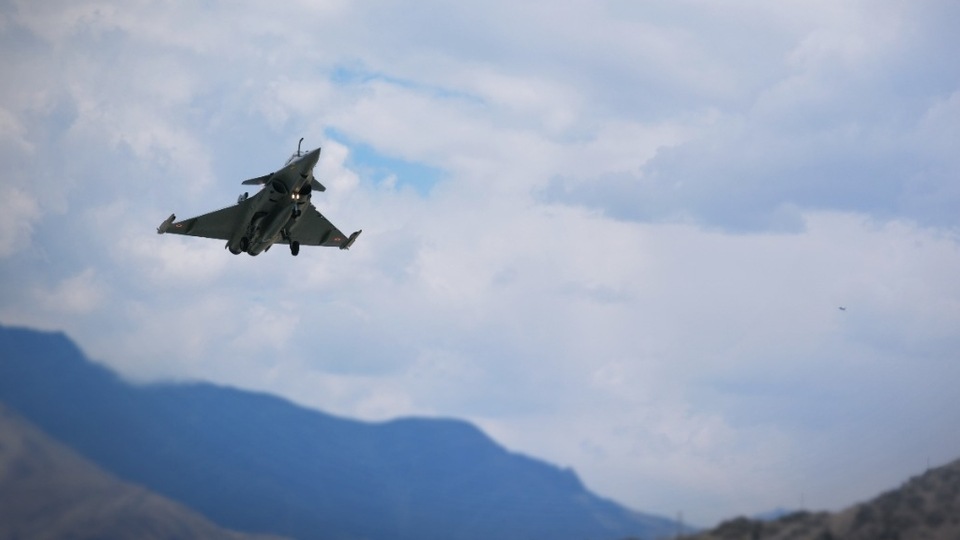
The 6 planes will allow the IAF to fully raise the No. 17 Squadron, also known as the Golden Arrows. The squadron, disbanded in 2016 after the IAF started phasing out of Russian-origin MiG 21 jets, was revived in September last year after the induction of the first batch of the French-origin warplanes. The squadron is based out of Ambala Air Force Station, India’s oldest airbase that is strategically located near India’s border with Pakistan and China.
A senior IAF official said induction of the 6 fighters will complete the Golden Arrows squadron - it currently has 14 fighters against a standard squadron strength of 18 - and enable the air force to induct 2 remaining planes from this batch in the second Rafale squadron to be raised at the Hasimara airbase in Bengal’s Siliguri corridor. The four planes expected in May will also be sent to the squadron in Hasimara which will cover central and eastern Tibet.
A second IAF official said the IAF was trying to see if the six Rafale fighters could be flagged off by IAF chief Air Chief Marshal RKS Bhadauria during his visit to Paris later this month. “But it looks difficult,” he said.
The arrival of 10 fighters in two batches by next month will raise the strength of the Rafales in the air force to 24. French ambassador Emmanuel Lenain told reporters last week that the delivery of all 36 Rafale jets will be completed by 2022 as per the contract.
India had inked a ₹59,000 crore ($8.7 billion) agreement with the French government to buy 36 Rafale fighter jets, replacing the previous United Progressive Alliance (UPA) regime’s decision to buy 126 Rafale aircraft, 108 of which were to be made in India by the state-owned Hindustan Aeronautics Ltd (HAL).
The deal was dragged into a controversy after the opposition led by the Congress claimed that the NDA government was buying the planes at an inflated price. The Supreme Court and the government’s top auditor, Comptroller and Auditor General, did not find any indication of malfeasance. But the controversy was reignited over the last week after a French online journal, Mediapart, claimed that Dassault Aviation, which manufactures the Rafale jet, paid €1 million to a Sushen Gupta, described as a “middleman”, in connection with the deal for 36 jets.
A French diplomat in Delhi said the French aviation giant, Dassault Aviation, and the government would issue an appropriate rebuttal to the ‘so-called expose’ by the online portal.
The diplomat cited a $3.7 billion deal between France and Greece for the sale of 18 Rafale jets including 12 used fighters to assert that this agreement sealed in Athens suggested that New Delhi had negotiated better terms.
The warplanes received by the IAF are equipped with India-specific enhancements including the Meteor beyond visual range air-to-air missiles, Mica multi-mission air-to-air missiles, Scalp deep-strike cruise missiles and the Hammer smart weapon.


