In south India, the lunar month of Aashaadha, which marks the beginning of the monsoon proper, also marks, traditionally, the dullest season for business. Considered an inauspicious month for weddings, housewarmings and business deals, Aashaadha is a time to stay put and take stock, with grey skies and wet breezes providing the perfect ecosystem for vegetating. This year, however, thanks to one Mumbai wedding, the month has been brilliant for hundreds of businesses big and small across the country and beyond, including our own Rameshwaram Cafe.
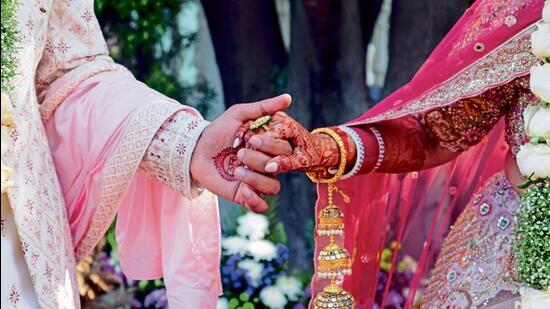
Given that that one event has left all of us mired, inescapably, in marriage talk, we might as well join the party. Instead of current business royalty, however, let us focus on royalty for real, the Mysore Wadiyars. A quick glance at the marital alliances of the Wadiyars since 1900, when Krishnaraja Wadiyar IV, 16, was married to an 11-year-old princess from the Kathiawar region, shows a significant number of princes and princesses from royal families of Gujarat and Rajasthan joining the royal Mysore bloodline, which, until then, had remained relatively ‘pure’, with royal spouses bring drawn mainly from the Wadiyars’ own Arasu (Urs) caste. How come? What changed in the 19th century that not only allowed but encouraged this kind of miscegenation?
Between 1831 and 1881, the British, having dismissed the young Krishnaraja Wadiyar III for incompetence, took direct control of the Mysore kingdom. In 1867, Queen Victoria, fearful of upsetting Indian rulers in the aftermath of the 1857 Revolution, approved the adoption of Krishnaraja III’s grandson, Chamarajendra Wadiyar X, as his heir. In 1869, Colonel GB Malleson, arriving in Mysore as Chamaraja’s British-appointed tutor, took the 6-year-old under his wing, and introduced the concept of the royal ‘tour.’ Where no Mysore Maharaja before had appeared in public except on two occasions each year – their birthday and the Dasara festival – Malleson, insisting that rulers needed an intimate understanding of their own kingdoms and a feel of the larger world beyond, chaperoned Chamaraja to places like Ootacamund and Jog Falls, and then, in 1875, to faraway Bombay, to meet the visiting Prince of Wales, Albert Edward, and attend several glittering durbars.
{{/usCountry}}Between 1831 and 1881, the British, having dismissed the young Krishnaraja Wadiyar III for incompetence, took direct control of the Mysore kingdom. In 1867, Queen Victoria, fearful of upsetting Indian rulers in the aftermath of the 1857 Revolution, approved the adoption of Krishnaraja III’s grandson, Chamarajendra Wadiyar X, as his heir. In 1869, Colonel GB Malleson, arriving in Mysore as Chamaraja’s British-appointed tutor, took the 6-year-old under his wing, and introduced the concept of the royal ‘tour.’ Where no Mysore Maharaja before had appeared in public except on two occasions each year – their birthday and the Dasara festival – Malleson, insisting that rulers needed an intimate understanding of their own kingdoms and a feel of the larger world beyond, chaperoned Chamaraja to places like Ootacamund and Jog Falls, and then, in 1875, to faraway Bombay, to meet the visiting Prince of Wales, Albert Edward, and attend several glittering durbars.
{{/usCountry}}Chamaraja, only 13 at the time, was entranced; Malleson was partly responsible, perhaps, for the modern, liberal monarch Chamaraja became. That exposure could have affected his thinking in other ways as well – although he was married in 1878 to Kempananjammanni Devi, scion of an Arasu family of neighbouring Nanjangud, his early brush with British imperial pomp possibly made him see himself as part of a global network, and seek an alliance from within it for his son, Krishnaraja Wadiyar IV.
Tragically, Chamaraja died when his son was only 10; his queen, keen to fulfil his wish, appealed to the British Resident in Mysore, WM Young, to play matchmaker. Young hit an unexpected roadblock – the proud Rajput royal families of the north, unsure of where the Arasu caste fit into their own classification, declared that the only way forward was for a Wadiyar princess to marry into their families first. That proposal was met with uproar in Mysore, both by the queen’s family and the princess in question, and had to be dropped.
Finally, a bride was found for Krishnaraja from the tiny principality of Vana in Kathiawar; perhaps it was the wealth and sophistication of the Mysore royals that made the Kathiawaris look beyond their unfamiliar caste, perhaps it was the fact that the Wadiyars, as always, refused the offer of a dowry.
Once that door had been opened, it stayed open. The current titular Maharaja, Yaduveer Krishnadatta Chamaraja Wadiyar, is married to Trishikha Kumari, scion of the erstwhile Dungarpur royal family of Rajasthan.
(Roopa Pai is a writer who has carried on a longtime love affair with her hometown Bengaluru)