It has been a year since the Medigadda barrage, the first of the three barrages of Kaleshwaram lift irrigation project built on Godavari river at a cost of ₹1 lakh crore, suffered major damages due to sinking of its pillars and the project continues to remain in limbo with the irrigation experts yet to come out with a lasting solution to restore the project.
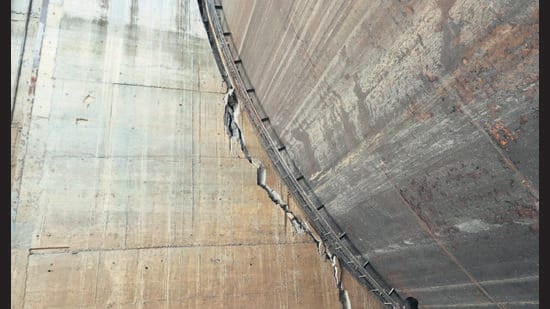
On the intervening night of October 21 and 22 last year that a part of the Medigadda barrage collapsed with loud sound due to the sinking of 20th pier in the 7th block. As a result, the panels and parapet wall of the bridge from pier No. 21 to 16 collapsed.
The authorities noticed that there was extensive damage to pier No. 20 with major cracks along its entire wall and it had a cascading effect on the adjacent piers in the block. Irrigation chief engineer Sudhakar Reddy in charge of the project, in his report to the state government in February, said pier 20 along with 18, 19 and 21 of Block 7 of the barrage had sunk.
A six-member committee of the National Dam Safety Authority (NDSA), under the Union ministry of Jal Sakthi, which visited the barrage on October 24 and submitted its report to the government on November 1, stating that the barrage had suffered damages due to defects in planning, design, quality, control and management.
The NDSA team also found several defects in the other two barrages – Annaram and Sundilla, which also suffered damages due to flooding of the Godavari river.
{{/usCountry}}The NDSA team also found several defects in the other two barrages – Annaram and Sundilla, which also suffered damages due to flooding of the Godavari river.
{{/usCountry}}Since then, the NDSA experts have visited the project site several times. After repeated reminders, the NDSA submitted an interim report to the state government in May this year, recommending several interim measures to be implemented before the monsoon season to maintain the current condition of the barrages.
“For Block-7 of Medigadda, the panel suggested monitoring cracks, adequately bracing piers 16 to 22 to prevent lateral movement, and rectifying or replacing defective pressure release valves in the raft. We managed to complete these interim works to a major extent spending over ₹60 crores,” a senior official of the state irrigation department said.
But as the monsoon season commenced and Godavari river began swelling with flood water in July, all further investigations, including geophysical and geotechnical studies, were suspended as the part of the barrage structures. “Till now, there is no clarity when the NDSA will submit its final report, so that works could be taken up and the project is restored,” the official said.
On October 11, the state irrigation department officials led by irrigation minister N Uttam Kumar Reddy held a meeting with NDSA experts committee chairman and former chairman of Central Water Commission Chandrasekhar Iyer and other committee members in New Delhi to take stock of the situation in Kaleshwaram.
“The NDSA experts committee clearly told the state authorities not to impound any water in all the three barrages till all the investigations are completed and the committee submits its final report. Any such impounding of water in the barrages for providing irrigation to the crops under the project is risky at this stage, as it might result in further collapse of the damages,” the official quoted above said.
The committee reportedly indicated to the state government that the final report is expected to be submitted by December end this year, explaining the reasons for the collapse of the barrages and suggesting remedial measures. “The committee asked the government to be ready with designs and drawings for the restoration of barrages, so that the water could be impounded by next monsoon,” the official said.
Meanwhile, the judicial commission headed by retired Supreme Court judge PC Ghose, appointed by the Congress government in April 2024 to probe into the alleged irregularities in the construction of Kaleshwaram project and fix the accountability on the engineers and political leaders responsible for the damages caused to the project, has also made little progress so far.
The Ghose commission held several sittings and grilled senior officials and engineers, including irrigation engineer-in-chief and Kaleshwaram Corporation managing director B Hari Ram, former engineer-in-chief C Muralidhar and others.
“Most of the engineers and officials tried to pass the buck to others and evade direct answers to several questions, including the change of designs, preparation of detailed project reports, relocation of the original site of Medigadda barrage and other issues,” the irrigation department official said.
The Ghose commission was expected to submit its report by August 31, but since it could not make any headway, its term was extended by another two months. “It is supposed to complete its task by October end, but might get further extension,” the official added.