Air India on Sunday said that the result of post-flight drug test conducted on the pilots of the turbulence-hit Phuket-Delhi flight have yet not been shared with them so far. The drug test, as per the protocol, was conducted after a Phuket-Delhi Air India flight experienced a massive drop of 300-feet in altitude while cruising on August 4.
The main cause of the loss of altitude has been attributed to mid-air turbulence that hit the AI2379 flight from Phuket to Delhi.
The Air India statement comes amid reports that claimed that a pilot failed the drug test.
“We are aware that a post-flight screening test was conducted on the pilots in accordance with applicable protocols. However, the results of the test have not been shared with Air India, and we are therefore not in a position to comment on any findings,” Air India said in a statement.
Also read: ‘Flight dropped 300 feet’: Woman recalls terrifying Air India Phuket-Delhi turbulence
The airlines further added that it regularly conducts drug testing of crew members in compliance with civil aviation regulations, independent of any specific flight or operational incident. “We will continue to cooperate with the relevant authorities as required,” Air India said.
{{/usCountry}}The airlines further added that it regularly conducts drug testing of crew members in compliance with civil aviation regulations, independent of any specific flight or operational incident. “We will continue to cooperate with the relevant authorities as required,” Air India said.
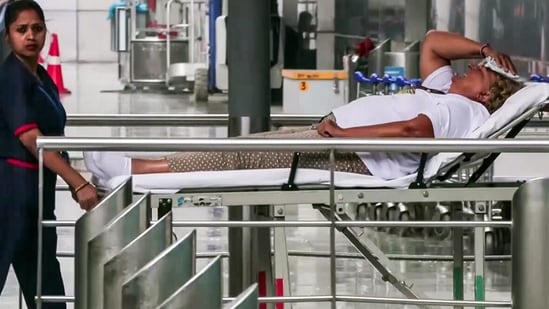
{{/usCountry}}On August 4, the Air India flight from Phuket to Delhi experienced a drop of 300 feet in its altitude, causing a mid-air scare for passengers onboard. Nearly 20 people, including crew members, were injured in the incident, though the plane landed safely at the Delhi airport later.
Visuals from the airport showed ambulances stationed outside the terminal gate, with several passengers seen being assisted out in wheelchairs, while others appeared with bandages on their heads before being taken for medical evaluation.
Passengers recount horror
On Friday, a passenger filed a complaint with the Directorate General of Civil Aviation (DGCA), alleging that the aircraft suffered a sudden drop during the flight and that two elderly members of his family sustained injuries, news agency ANI reported.
According to the complaint filed through the AirSewa portal, the Air India flight operating from Phuket to Delhi on August 4 was carrying the passenger's family of six when the aircraft experienced a sudden drop of around 300 feet at about 9:30 am IST.
The passenger alleged that passengers were thrown against the cabin ceiling during the incident. He said his 62-year-old mother-in-law, Renu Raniwala, suffered a rib injury and a suspected spinal injury, while his 64-year-old father-in-law, Mukul Raniwala, sustained bruises.
Another passenger Shilpi Jain shared a video on Instagram, recounting the frightening experience and claiming that several travellers and cabin crew members were injured during the incident.
Jain said she was seated on 23F when the incident happened. Recalling the moment, she said, “Jo flight Phuket se Delhi aa rahi thi, usme kaafi passengers injured hoye hain and cabin crew bhi injured hua hai. Uss flight mein main bhi thi.”
She claimed that the aircraft suddenly dropped, causing passengers to hit the ceiling and suffer injuries. “Kuch log mere aas paas the, woh idhar udhar ho rahe the,” she said while describing the chaos inside the cabin.
What the govt said
Meanwhile, Union minister of civil aviation Ram Mohan Naidu Kinjarapu on Saturday provided an update on the incident and assured the public that the situation is being handled with urgency and care.
He said the majority of injured passengers were treated and released shortly after landing.
"The turbulence incident that happened, most of the passengers in the first few hours only, were discharged from the hospital," Naidu stated. "Around 24 passengers were facing some kind of medical inconvenience. So they were taken to the hospital; thorough check-ups have been done for them, and most of them have been discharged."
With inputs from Neha LM Tripathi