The Supreme Court on Tuesday paved the way for an independent inquiry into allegations of police excesses as well as attacks on police personnel during the recent student protests, holding that allegations disclosed a prima facie case warranting a “thorough, fair and impartial” investigation by a high-powered panel, granting interim protection to protesting students and directing the immediate release of all detained minors without criminal antecedents.
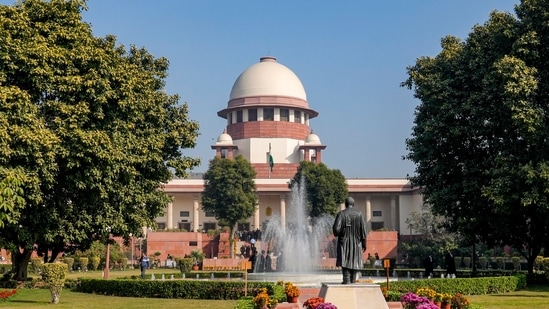
A bench of Chief Justice of India Surya Kant and justices Joymalya Bagchi and V Mohana issued notices to the Union government and the chief secretaries of Delhi, Maharashtra, Bihar, Assam, Kerala, West Bengal, Madhya Pradesh and Uttar Pradesh, observing that the competing allegations emerging from the nationwide protests could not be resolved without an impartial, evidence-based investigation.
“The allegations by petitioners make out a prima facie case for an independent probe,” recorded the court in its order, adding that such an inquiry must equally examine concerns raised by the families of injured police personnel and the submissions made by the Centre.
The court, however, deferred the constitution of the proposed committee, granting the Union and the concerned states time to place their versions on record before deciding its composition.
‘No coercive action’
In the meantime, it ordered preservation of all CCTV footage, drone recordings, body-worn camera footage, wireless communication records and PCR calls, directed police not to release protesters’ personal data or digital records into the public domain, restrained authorities from taking coercive action against protesting students even as probes could continue, and ordered the release of all detained protesters below 18 years of age and those who did not have criminal antecedents. The protection, the court clarified, would not extend to antisocial elements or persons with criminal antecedents.
{{/usCountry}}In the meantime, it ordered preservation of all CCTV footage, drone recordings, body-worn camera footage, wireless communication records and PCR calls, directed police not to release protesters’ personal data or digital records into the public domain, restrained authorities from taking coercive action against protesting students even as probes could continue, and ordered the release of all detained protesters below 18 years of age and those who did not have criminal antecedents. The protection, the court clarified, would not extend to antisocial elements or persons with criminal antecedents.
{{/usCountry}}The order came on a batch of petitions alleging excessive force during student protests , including the July 20 march to Parliament in Delhi and subsequent stirs in several states.
ALSO READ | 'Mere agitation can't justify lathi-charge': SC on July 20 student protest crackdown at Jantar Mantar
The proceedings saw the bench repeatedly underscore that peaceful protests enjoy constitutional protection, even as it acknowledged that violence by either side deserved equal scrutiny.
“It was completely a peaceful protest by students raising demands. Such a protest is permissible and protected under the Constitution,” observed the CJI, while cautioning that peaceful demonstrations often witness the entry of “uninvited guests with agendas” who end up becoming “co-hosts”.
“Why should there not be an independent probe into all of this?” the bench asked.
‘Law should deal with those who take it into their hands’
Appearing for petitioner Shailesh Mani Tripathi, senior advocate Gopal Sankaranarayanan catalogued allegations ranging from pellet gun injuries causing permanent loss of eyesight to the use of electric batons, assault on women protesters, attacks on journalists and violence by police personnel allegedly dressed in civilian clothes. His submissions were followed by senior counsel AM Singhvi, Shyam Divan, Shoeb Alam, Shadan Farasat and advocates Prashant Bhushan and Vrinda Grover, representing other petitioners and applicants in the matter.
The bench noted the “use of pellet guns, electric batons and lathi resulting in life-threatening injuries” and allegations regarding assaults on media personnel and women protesters required serious examination. “There are just some instances. Once the protocol is in place, whosoever has taken law into their own hands, committed atrocities against innocent people, law should deal with them. For that, a fair and impartial probe has to take place. A probe is meaningless if it does not fasten accountability. The court also flagged what it described as the need to revisit the legal framework governing police response to demonstrations. “The previous judgments, starting with Anita Thakur in 2026, with the passage of time may require some modifications and updations”, observed the bench, adding that the court intended to “collate all these principles” and strengthen earlier directions governing crowd-control measures, including the use of tear gas and other force.
Signalling that the exercise could culminate in fresh nationwide norms, the bench remarked that there may be a need for a standing mechanism capable of responding immediately whenever large-scale protests arise. “Perhaps, we need to have a mechanism so that as and when certain emergency situations arise, that mechanism can be immediately brought into force,” it added.
ALSO READ | Two rounds of pellets used during July 20 CJP protest march on orders of DCP, show police records
At one stage, the court observed that protective gear for police personnel was more important than offensive equipment, remarking that officers should, wherever possible, allow time before resorting to serious crowd-control measures such as tear gas.
The hearing also brought before the court allegations from Bihar, where counsel claimed AK-47 rifles were used during protests and minors had remained in detention beyond the permissible period. Farasat alleged that photographs of juvenile protesters was published in newspapers.
SC mulls high-powered panel to probe beyond Delhi
The bench responded by observing that it was contemplating a high-powered investigating committee capable of examining incidents extending beyond Delhi.
Solicitor general Tushar Mehta, appearing for the Centre and Delhi Police, stated that the government had no objection to an independent probe, while disputing allegations of excessive force.
He submitted that if students had suffered unlawfully, “the perpetrators have to be brought to book”, but emphasised that over 200 police personnel had also suffered injuries and that the morale of the police force could not be undermined. Mehta suggested that antisocial elements may have infiltrated the demonstrations, adding that he did not believe students were responsible for violence.
“There is always a danger of discrediting a peaceful movement,” remarked the court, stressing that accountability could emerge only through a “scientific and evidence-based probe”. The matter will now be heard on August 3, when the Centre and the states are expected to file their responses before the court considers the constitution of the independent investigative mechanism and the broader issue of nationwide protest-management guidelines.