
 E-Paper



Arihant class nuclear-powered submarine S4* likely to be named INS Arisudan
The names of all Indian nuclear submarines —Arihant, Arighaat, Aridhaman, and now, Arisudan — mean destroyer of enemies.

 Prefer HTon Google


The fourth and last of the Arihant class nuclear powered and long range ballistic missile equipped submarine S4*, launched by Defence Minister Rajnath Singh on October 16 last year, is likely to be named INS Arisudan with Arihant (destroyer of enemies) being the common name for all the nuclear submarines of India.
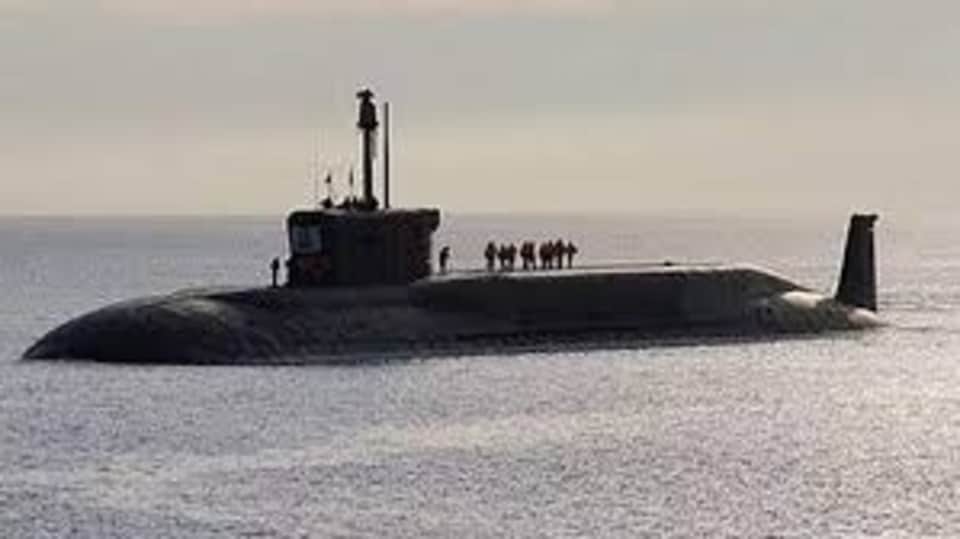
HT learns that the formal name of S4* will be proposed by the ship-naming committee of the Indian Navy, then cleared by the Defence Ministry and finally the President of India will give the approval with Arisudan expected to be commissioned in 2027.
While INS Arisudan’s predecessor INS Aridhaman is expected to be commissioned in the first half of 2026, work has also gained momentum for design and construction of two indigenous nuclear powered conventionally armed submarines or SSN after the Narendra Modi government gave the green signal to the P77 attack submarine on October 9, 2024. India is also expected to get a SSN of Akula class on lease from Russia latest by 2028 and HT also learns that Moscow offered to lease one more blue water boat to India ahead of the visit of Russian President Vladimir Putin to India on December 5, 2025.
The sub-surface nuclear deterrent is the most potent part of the nuclear TRIAD as submarines are crucial to the second strike capability of a country like India which professes no first use doctrine. While India’s neighbor China also has a no first use nuclear doctrine, Pakistan, which claims to be India’s arch rival, has first use nuclear doctrine.
While INS Arihant SSBN carries only K-15 750 km range nuclear missiles, all the remaining boats, which are bigger than the first of the class by 1000 tonnes, are expected to carry K-4 3500 km range missiles, which are currently undergoing test trials by the DRDO and Strategic Force Command. India needs submarines with unlimited range if it has to conduct deterrent and access denial patrols in the Indo-Pacific.
Names of warships, usually, follows a theme based on the name of the first of that class of ships. And, the class as a whole is named after the first ship.
Just as all Indian SSBNs have names that mean enemy killers, the diesel attack submarines of the Indian Navy conventionally carry the names of its decommissioned predecessors ; and all Kalvari class submarines are named after Russian Foxtrot submarines decommissioned in the past. The Indian Navy’s guided missile destroyers are named after cities of India like INS Delhi, INS Surat, INS Imphal, INS Kolkata, INS Mumbai, and INS Visakhapatnam, and Indian frigates are named after rivers and mountains like the Ganga class, the Brahmaputra class and the Shivalik class.


