The Indian Army and the Chinese People’s Liberation Army (PLA) have pulled back their forward deployed troops from Gogra, or Patrol Point-17A, which was one of the friction points on the contested Line of Actual Control (LAC) where forces from both sides were “in a face-off situation” since May last year.
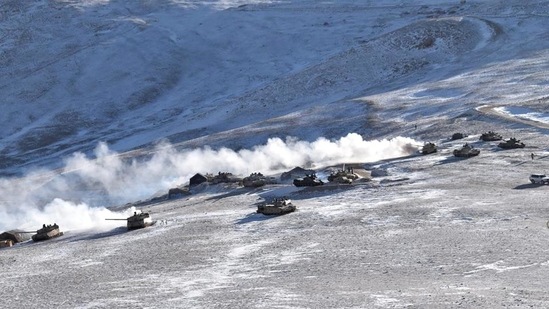
The breakthrough came after the 12th round of military talks held in the Ladakh sector last week, the Indian Army announced on Friday, and the disengagement process was carried out on August 4, 5. The development came almost six months after the two armies pulled back their front-line troops and weaponry from the Pangong Tso sector in mid-February after the ninth round of talks.
“As per the agreement (reached during the 12th round of talks on July 31), both sides have ceased forward deployments in this area (PP-17A) in a phased, coordinated and verified manner. The troops of both sides are now in their respective permanent bases,” the army said in a statement.
As part of the disengagement process, both armies have dismantled temporary structures erected by them along with allied infrastructure, with the actions being mutually verified. “The landform in the area has been restored by both sides to the pre-standoff period (April 2020),” it said.
India and China have been locked in a border row for 15 months, a phase that witnessed a deadly skirmish in the Galwan Valley and saw tensions spiral between the rival armies on the north and south banks of Pangong Tso last year. The two armies kicked off talks to cool border tensions in June 2020.
“This agreement ensures that the LAC in this area will be strictly observed and respected by both sides, and that there is no unilateral change in status quo. With this one more sensitive area of face-off has been resolved. Both sides have expressed commitment to take the talks forward and resolve the remaining issues along the LAC in the Western Sector,” the statement said.
{{/usCountry}}“This agreement ensures that the LAC in this area will be strictly observed and respected by both sides, and that there is no unilateral change in status quo. With this one more sensitive area of face-off has been resolved. Both sides have expressed commitment to take the talks forward and resolve the remaining issues along the LAC in the Western Sector,” the statement said.
{{/usCountry}}The current agreement removes a flashpoint from one of the areas and should be welcomed, said former Northern Army commander Lieutenant General DS Hooda (retd). “Hopefully, it could provide grounds for further disengagement in other areas. The real test will come when Depsang is discussed, and a breakthrough here could lead to a major de-escalation,” Hooda said.
On July 31, top Indian and Chinese commanders agreed to a speedy resolution of outstanding issues on the LAC at the 12th round of talks held at Moldo on the Chinese side of the LAC, with the dialogue focusing on disengagement of rival troops from the remaining flashpoints on the contested border.
“As an outcome of the meeting, both sides agreed on disengagement in the area of Gogra. The troops in this area have been in a face-off situation since May last year,” the army said. A joint statement issued after the 12th round described the talks as “a candid and in-depth exchange of views on resolution of remaining areas related to disengagement along the LAC in the Western Sector of India-China border areas.”
The latest round of talks was held following the meeting of the Indian and Chinese foreign ministers on July 14, in Dushanbe, and the 22nd meeting of the Working Mechanism for Consultation and Coordination on India-China Border Affairs (WMCC) on June 25.
Problems at Hot Springs and Depsang are yet to be resolved. To be sure, the problems at Depsang predate the current border standoff. “The focus will now be on resolving outstanding issues at other friction points,” said a senior officer.
Both armies have 50,000 to 60,000 troops each in the Ladakh theatre and the deployments haven’t thinned after the disengagement in the Pangong Tso sector.
“The Indian Army, along with Indo-Tibetan Border Police (ITBP), is totally committed to ensure the sovereignty of the nation and maintain peace and tranquillity along the LAC in the Western Sector,” the army statement added.
The Indian Army’s patrolling activity has been affected in Hot Springs (PP-15). The PLA’s forward presence in Depsang has also hindered access of Indian soldiers to routes including the ones leading to PP-10, 11, 11-A, 12 and 13.