
 E-Paper



As Delhi sets out to introduce TDRs, weighing the benefits and shortcomings
The Delhi Development Authority has proposed the concept of transferable development rights in the Master Plan of Delhi-2041, which is likely to be notified by the end of December

 Prefer HTon Google


New Delhi: Delhi is all set to get a new policy that will incentivise the conservation of privately-owned heritage properties and ecologically sensitive areas, and compensate people who give their land for essential infrastructure services.
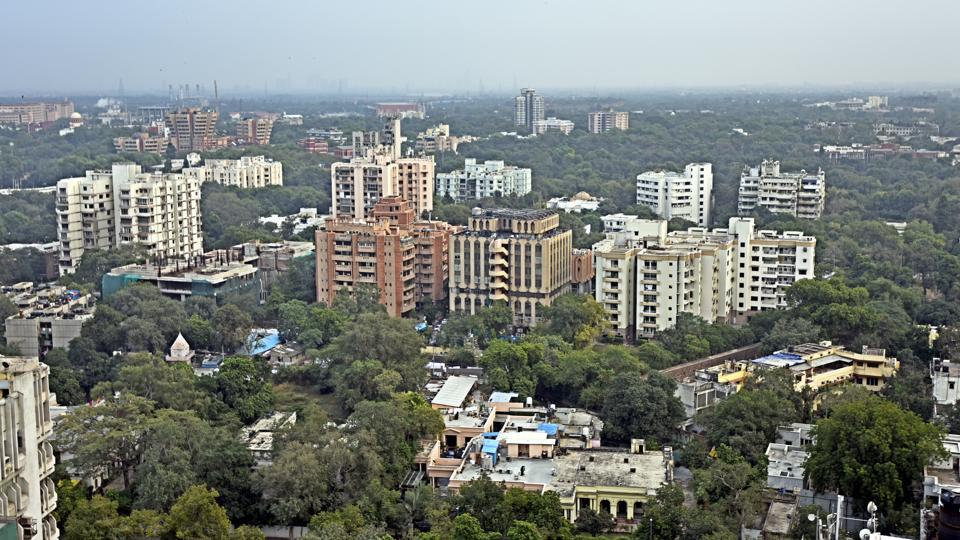
The Delhi Development Authority (DDA) has proposed the concept of transferable development rights (TDR) in the Master Plan of Delhi (MPD)-2041, which is likely to be notified by the end of December.
The concept has already been implemented in several cities across India.
In Mumbai, it was introduced in the early 1990s to obtain land for public services and slum redevelopment. In the past few years, several cities such as Chennai, Hyderabad, and Ahmedabad have introduced TDR for the conservation of heritage, the provision of essential infrastructure in densely populated areas, and slum redevelopment.
DDA plans to use the concept primarily for infrastructure development and the protection of heritage and ecologically sensitive areas. As per the MPD-2041, “TDR shall only be awarded where land/development right is forfeited for a public purpose such as provision of essential infrastructure, regeneration of historical areas, housing for urban poor, etc.”
The concept and its implementation
TDR is a planning tool that is used across the world for the development of cities. It allows property owners to monetise their unutilised floor area ratio (FAR).
For instance, if the permissible FAR — the total covered area of all floors divided by the plot area — in a residential area is 300 sq ft, and there is a heritage property in the area that is utilising just 150 sq ft, then the owner will be eligible to get TDR on the balance of the unutilised 150 sq ft. As per law, no new construction is allowed in notified heritage properties.
Similarly, a person will get a TDR certificate specifying the built-up area which they can sell in lieu of land forgone on account of surrendering it to government agencies for essential infrastructure services.
DDA recently approved additional development control norms for areas under the land pooling policy where TDR provision will be applicable. The TDR certificate will be issued by the DDA, which will also identify TDR receiving areas where property owners can sell their TDR to developers.
A senior DDA official said, “[The] DDA will set up a portal to facilitate this. We will also identify TDR receiving areas where owners can sell the TDR to earn money. We will formulate the detailed regulations for TDR. TDR receiving areas will largely be located on the outskirts of the city where land pooling policy will be implemented or the Transit-Oriented Development [TOD] zones.”
Jignesh Mehta, programme chair, master of urban planning at Centre for Environment Planning and Technology (CEPT) University, said that TDR is a good planning tool that has worked well in cities abroad such as New York, San Francisco, and Seattle, among others.
Mehta said, “For preservation and conservation of heritage properties, green and open spaces and to incentivise redevelopment of informal settlements, TDR concept can be really useful.”
Encouraging heritage TDRs
The heritage TDR provisions proposed in the draft MPD-2041 are on similar lines as that of Mumbai, experts say.
DDA officials said that it has been introduced to encourage heritage property owners to invest in the conservation of their property. “In privately-owned heritage properties, no new construction is allowed. Unlike their neighbours, these property owners can’t use the FAR permissible in the area as per the master plan. Heritage TDR concept is aimed at addressing this problem,” said a DDA official.
There are over 2,000 privately-owned heritage properties in the city, as per the DDA officials.
With no new development allowed, and strict norms even for basic repair and maintenance of privately-owned heritage properties — especially in the walled city, several owners in the Capital are struggling to maintain their properties.
Anil Pershad (77), co-owner of Chandni Chowk’s iconic privately-owned heritage property — Chunnamal Haveli — is happy that DDA, for the first time, has attempted to compensate for the loss of development rights to hundreds of heritage property owners like him in the Capital.
Pershad said, “This is a good provision and will help owners in the conservation of heritage and also yield some money, if implemented well. There should be a single-window system to avail the benefit of heritage TDR, and the norms should be clear.”
While it is a good concept, Mehta said, the issue with Heritage TDR in Indian cities is that there aren’t sufficient incentives for heritage property owners.
“The cost of repair and maintenance of heritage properties can be huge. In cities like Delhi, it is very likely that in heritage properties, the FAR available to be used under the proposed regulations as TDR is very less and might be insufficient to recover the cost of basic repair and maintenance,” said Mehta.
KT Ravindran, convener, INTACH, Delhi, said that there will be a double benefit of this policy. “This will save the heritage buildings and also act as a reward for people to invest in heritage conservation. They will be able to sell the unutilised FAR. But proper planning and monitoring are essential for this policy to be successful.”
Hyderabad’s success story
The Greater Hyderabad Municipal Corporation (GHMC) introduced TDR in 2006, and later revised it in 2012 and 2017. Officials say the planning concept has helped improve city infrastructure, especially roads. The TDR in the city is largely used for road or drain widening projects, said a municipal official. The corporation has set up a TDR bank along with a portal where buyers and sellers can contact each other.
“It is mostly in road or drain-widening projects where private land is taken from people. We are providing four times the value for the road infrastructure project. For instance, if someone gives up 100 sq m of area for a road infrastructure project, then the property owner gets TDR for 400sq m at the market rate that is applicable where their property is located. This is a huge incentive,” said a town planner with GHMC.
While residents say that it is a great concept as people get more value for the portion of land they give up for government projects, they want the system to be more transparent.
Basha Phatan, a real estate developer in Hyderabad who plans to buy TDR for a project, said, “It is a good concept, as people can buy additional development rights and construct an additional floor in areas earmarked by the corporation where TDR can be used. But there is a need to make the system more transparent and fast.”
Needed: Proper monitoring and transparency
While the TDR concept is being introduced for the first time in the MPD-2041, success in other cities, along with the shortcomings, should be paid attention to.
R Srinivas, senior town and country planner, Town and Country Planning Organisation, said, “In brownfield areas where there is little space for development, TDR will be beneficial. In cities such as Hyderabad, it has helped in providing public infrastructure.” In Vijayawada, it is being used to augment the city’s road infrastructure.
The TDR receiving zones are mostly the suburbs or urban extensions where land is available. A section of urban planners says that it creates an imbalance in density, as the load on infrastructure in suburban areas increases.
Urban planner AK Jain, former planning commission at DDA, said, “The new policy will further complicate the implementation of land pooling and TOD policies and also result in excessive load on services in TDR receiving areas. There will be parking problems in the new areas where TDR will be utilised. There is a need to plan the policy carefully.”
For the policy to be effective, it has to be structured properly to generate sufficient demand for it in the right places. “The TDR receiving areas or zones should be identified carefully, where there is a need to incentivise development or redevelopment such as in TOD areas with existing development as well as with greenfield sites in the land pooling areas”, said Mehta.
Mumbai-based urban planner, Vidyadhar Phatak, former dean of planning, CEPT university, said that TDR is a market-driven concept. He said that TDR was introduced in Mumbai for two main reasons: To obtain land for public purposes, and bring in private investment in slum redevelopment.
“Initially, it did help in boosting slum redevelopment and provided housing to poor people. But one has to see if there is demand for it or not. For TDR to be successful, detailed planning should be done for both TDR generating and receiving areas. Also, there should be proper policy in place to manage it,” said Phatak.


