
 E-Paper



As fact-check idea faces pushback, Karnataka says ready to work with independent unit
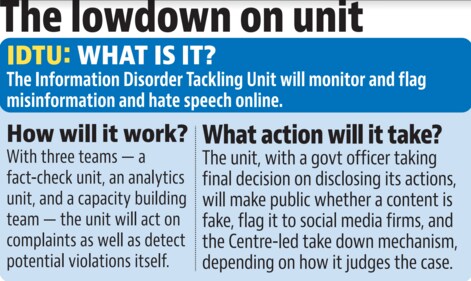
The state is working on setting up the IDTU, a unit that will fact-check information related to Karnataka on social media, which has spurred controversy.

 Prefer HTon Google


The Karnataka government is willing to work with the Independent Fact-Checking Network (IFCN) to make its Information Disorder Tackling Unit (IDTU) more compatible with the IFCN’s code of principles, according to an email that the IFCN director Angie D. Holan sent to Indian IFCN signatories.

The state is working on setting up the IDTU, a unit that will fact-check information related to Karnataka on social media, but the effort has been mired in controversy. At the heart of it are two issues --- the lack of editorial independence, and the inclusion of a state government-appointed review single point of contact (SPOC) to oversee all fact checks.
HT reported about these concerns on October 17, and in the days after that, the state held a meeting with the IFCN director Holan, people aware of the matter said, asking not to be named.
The deadline for submitting IDTU proposals has been extended to November 2, according to the Karnataka Public Procurement Portal. The original deadline was October 16, and 19 of the 20 current and former IFCN signatories had told HT that they would not apply, citing lack of editorial independence and state interference.
An IFCN affiliation was listed as an added advantage for anyone applying to be part of the fact-checking function of the IDTU.
Holan, according to people aware of the matter, briefed the government officials about the IFCN’s code of principles that says a signatory status cannot be granted to any organisation whose editorial work is controlled by a state, a political party, or a politician.
On this, the government officials are believed to have told Holan that they were open to making concessions to make the call for proposals (CfP) for the IDTU more palatable, people aware of the IFCN’s director’s email to other members stated.
When asked about these discussions, Priyank Kharge, Karnataka’s IT minister, told HT: “We are agnostic. … If IFCN or anyone is interested in combatting misinformation, they should work with us.”
“They [IFCN signatories] should give it a shot. We are seeking help. We don’t understand this. People who understand this are not helping us. It is up to them. We cannot force anyone to apply,” he said, adding that the government was open to having IFCN members as part of an oversight committee, but added that the SPOC would be appointed from the Home Department. It is understood that the government officials told Holan that the activities of the IDTU would need to be overseen by the government as the IDTU is a government-funded unit.
Kharge also said that the government was open to listening to the fact-checking community on the shape of the oversight committee, which is proposed to oversee the functioning of the IDTU.
Holan met Karthik Rao Bappanad and Shivaling Salakki of the Centre for Excellence in Cyber Security (CySecK) and Darshan HV, the director of the department of electronics, IT and biotechnology of government of Karnataka.
“No IFCN signatory could agree to such a plan and still meet the code’s principles,” Holan had earlier told HT.
In her email, Holan told the fact checkers that she took the meeting after consulting with Bharat Gupta, CEO of Jagran New Media, and Govindraj Ethiraj, founder of FactChecker and Boom.
Gupta and Ethiraj are the only Indian members of the IFCN’s board. Jagran New Media’s Vishvas News, and Ethiraj’s FactChecker and Boom are IFCN signatories.
Despite not being explicitly stated, the undercurrent of Holan’s email made it clear: if IFCN signatories violated the code of principles, they would attract greater scrutiny which could lead to the loss of their signatory status, several fact checkers who received the email told HT.
In her interaction with the government, Holan cited the European Union’s attempts to fight misinformation by giving grants to credible fact-checking organisations without interfering in their editorial processes. She also cited India’s Misinformation Combat Alliance to the government as an avenue for discussing their concerns with Indian fact checkers, or for getting in touch with other organisations. The MCA, established in March 2020, is a cross-industry collaborative of multiple Indian fact checkers and is currently presided by Gupta.
Since the central government first proposed the controversial fact check amendment to the IT Rules 2021, and subsequently notified them in April 2023, MCA has been working on developing a self-regulatory organisation for fact-checkers in India.
In her email to the fact checkers, Holan made it clear that in her interaction with the officials from Karnataka government, she did not “speak for the fact-checkers of India who know their own concerns and context better than I do, but that IFCN and the fact-checkers of India share the concern that we must maintain the principles of our code, especially independence, in our fact-checking”.
Given the blowback, is changing the CfP possible to let more organisations apply for the IDTU? Kharge said no but added that exceptions may be sought for agencies with credibility and history of having worked with government agencies in the past. “Some companies told us that they started operations only two years ago and thus are ineligible under the CfP. We will simplify the CfP. If they are credible, have worked with other government agencies earlier, we will seek an exemption for them…”
“If a company has IP in pre-empting habitual offenders of perpetuating fake news, and where they have worked with the Home Department or piloted a project with the NIA, we can go to the government. Or maybe they are a company that is just one-and-a-half years old but have the technology to decipher hate speech and fake news in vernacular languages, [we will go to the government],” he said.


