The use of facial recognition technology by the Telangana police as part of their smart policing mission, reportedly to profile criminals and keep a watch on their activities has now come under legal scrutiny.
Acting on a public interest litigation petition filed by a social activist S Q Masood, a division bench of the state high court comprising chief justice Satish Chandra Sharma and Justice Abhinand Kumar Shavili on Monday issued a notice to the state government and the Hyderabad
The use of facial recognition technology by the Telangana police as part of their smart policing mission, reportedly to profile criminals and keep a watch on their activities has now come under legal scrutiny.
Acting on a public interest litigation petition filed by a social activist S Q Masood, a division bench of the state high court comprising chief justice Satish Chandra Sharma and Justice Abhinand Kumar Shavili on Monday issued a notice to the state government and the Hyderabad city police commissioner, seeking an explanation on the propriety of the use of this technology and whether it infringes on privacy in public places. The case has been posted for January 15 for further hearing and a response has been sought from the Telangana police as well.
The genesis of the case
Masood in his petition claimed that on the night of May 19 last year, he was stopped by a group of policemen while he was returning home. The police allegedly forced him to remove his mask and took his picture without his consent. The next day, he wrote to the Hyderabad police commissioner asking him why the police had taken his photographs, where they were stored and who would have access to them.
When there was no response from the police, Masood sent a legal notice with the help of the NGO Internet Freedom Foundation on May 31. Subsequently, he moved the high court.
The petitioner argued that he had found out that his photograph was being used by the police as part of ‘profiling’ using facial recognition technology (FRT). He said it was arbitrary and an infringement on the right to privacy of an individual. He said it had no inbuilt safeguards for citizens, no redressal mechanism, no legal backing, and that there were no guidelines in place for the implementation of the FRT. Unlike the 12-digit biometric-based unique identification number called Aadhaar, which is mandated through an act of Parliament, there is no such regulation for FRT.
Masood further said the police had discretionary powers to use the FRT on anyone, apart from covertly capturing photographs through CCTV cameras. The technology is not for a specific purpose but is used for mass surveillance, he alleged, a view of also several pro-privacy activists.
WHAT IS FRT?
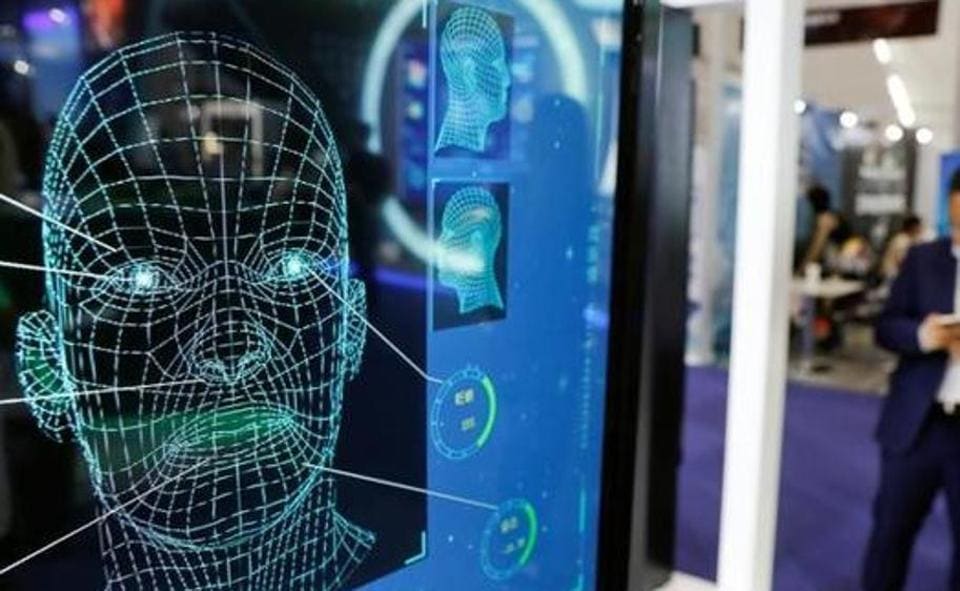
According to Ramesh Kanneganti, executive director of the Centre for Human Security Studies and an expert on internal security issues, FRT involves processing digital images of individuals' faces for verification or identification of those individuals using artificial intelligence.
“It extracts specific data from a face, based on facial expressions or hairstyle or shape of the face and uses the data to compare with the images of the persons who have already been profiled in their database,” he said.
Launched in August 2018, the FRT, by design, requires external cameras to capture sensitive personal data and photographs which are compared with those maintained on pre-existing lists compiled for purposes of either identification or verification of persons. The deployment of FRT is being done through an existing setup of Close-Circuit Television (CCTV) cameras, without giving notice to individuals about them being subjected to surveillance and without providing them information about the manner in which their sensitive personal data is stored, shared, and used.
Alternatively, the police on the ground can also capture pictures of people on their smartphones and send them to the database using a mobile-phone-based application “TSCOP." According to the Telangana government, there are nearly six lakh CCTV cameras across the state, but mostly in the state capital region. According to the year-end data released by the police, there are 4,40,299 CCTV cameras in Hyderabad alone, followed by 1,26,760 in Cyberabad and 23,700 in Rachakonda police commissionerate limits.
In its report released in November 2021, Amnesty International declared Hyderabad as one of the most surveilled cities in the world. “Hyderabad is on the brink of becoming a total surveillance city. It is almost impossible to walk down the street without risking exposure to facial recognition,” said Matt Mahmoudi, Amnesty International’s AI and Big Data researcher in the report.
He said in addition to CCTVs, a matter of concern was the way the police are using tablets to stop, search and photograph civilians that could be used for facial recognition.
Masood, in his petition filed in the high court, pointed out that the images captured by the CCTV cameras and analysed using FRT, were being linked to the Crime and Criminal Tracking Network and Systems (CCTNS) under the Union ministry of home affairs, a national database with biometrics of persons apprehended by state and central law enforcement agencies in connection with any case.
“The use of the FRT and other such biometric data is a gross violation of the right to privacy and right to freedom as per the Supreme Court judgement in 2017. We strongly oppose the same,” said noted lawyer and human rights activist Ch Prabhakar.
Internal security expert Kanneganti said though the FRT can be an effective prevention and pre-emptive measure to contain many law and order challenges but law enforcement agencies must maintain caution and respect the privacy laws of the citizens.
“There is every possibility of the technology being misused, as it depends on what data one would feed. Even if there are 10-15% of similarities between an innocent and criminal in terms of facial features, there is a scope for the police harassing the innocents,” he explained.
He said the police should not use the technology in racial, religious and caste-based profiling in the name of national security.
Hyderabad police commissioner C V Anand allayed fears of the misuse of FRT being used by the police. “We don’t infringe into the privacy of any individual, as we are not barging into anybody’s house to take pictures. The technology is being used only to keep surveillance on criminals or suspected criminals,” he said.
He claimed that the FRT was also serving as a deterrent for criminals, especially those from other states indulging in crimes in Hyderabad. “Three years ago, there were more than 1,300 such criminals caught based on the CCTV footage in a year. It has come down to around 300 now, thanks to the technology,” he said.
Activists however said that the police needs to understand that people have the right to privacy in public spaces too. “The Supreme Court in its Aadhaar ruling clearly defined privacy as a fundamental right which a person exercises at his home and also in public places. One has a right to move freely without being watched by the state,” said Apar Gupta, a lawyer who is also executive director of Internet Freedom Foundation, a Delhi-based advocacy group.
One Subscription.
Get 360° coverage—from daily headlines
to 100 year archives.
Archives
HT App & Website