It is a basic right of citizens to know what goes on in the courts of the country, justice Dhananjaya Y Chandrachud said on Saturday, as the Supreme Court judge underlined the importance of live-streaming judicial proceedings in the interest of transparency and accountability.
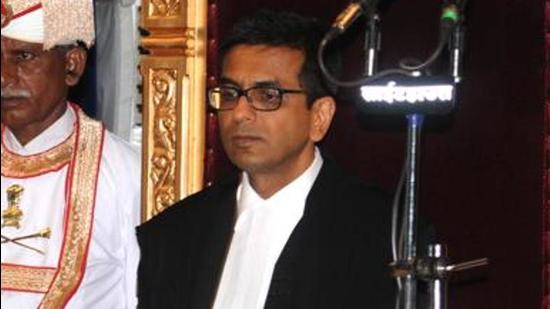
“We have formulated live-streaming rules so that cases can be live-streamed... the hearings before a court can be live-streamed for the rest of the country. Because I do believe that citizens are entitled to know what goes on in the courts. They are entitled to know why cases are adjourned. They are entitled to know whether judges sit from morning till evening in deciding cases. It is the basic right of the citizens to know,” emphasised justice Chandrachud.
The judge was speaking at the inaugural ceremony of two new wings of a building of the Aurangabad bench of the Bombay high court when he mentioned how the Supreme Court e-committee, of which he is the chairperson, is on a mission to use technology to pave the way for moving into the future.
Stressing the need to digitise the court records, including orders, judgments and filings, justice Chandrachud said that the Phase 3 document of e-courts project is going to focus on digitisation of 3,100 crore court documents while simultaneously laying emphasis on e-filing of cases.
{{/usCountry}}Stressing the need to digitise the court records, including orders, judgments and filings, justice Chandrachud said that the Phase 3 document of e-courts project is going to focus on digitisation of 3,100 crore court documents while simultaneously laying emphasis on e-filing of cases.
{{/usCountry}}The judge added that the government being the largest litigant in India, he has written to all high court chief justices recently that by January, 2022, all cases of the Centre and state governments must be e-filed in district courts and high courts. “Let the government of India and state governments make the beginning,” appealed justice Chandrachud.
He said that the e-committee is looking into data privacy and has provided access to the differently abled so that they can access the court website. “And finally, under the interoperable criminal justice system, we are linking every aspect of the administration of criminal justice, namely, prisons, courts, the police station and the forensic science laboratory,” said justice Chandrachud.
Referring to the data available on the National Judicial Data Grid (NJDG), justice Chandrachud said that while pendency of cases is indeed a reason of concern, there is also a reason to celebrate some achievements of the judiciary.
“Four crore cases are pending, but we have 11 crore cases on the NJDG which have been disposed of and of which orders are available. The high courts have 56.02 lakh cases pending, but 3.17 crore cases have been disposed of. During the Covid-19 pandemic, 2.18 crore cases were registered in India and 1.48 crore cases were disposed of by the district judiciary in India,” he added.
Justice Chandrachud also highlighted the “flip side” of the work judges do. “Sitting in the Supreme Court, you are confronted with the extent of justice and the extent of injustice all over the country when citizens come to us. A convict who has been in prison for 35 years has not been released, an undertrial who is in jail for 12 years and against whom charges have not been framed. These are some of the realities of the Indian judiciary which we have to confront,” he pointed out.
Talking about the homogeneity between the judges and the lawyers, justice Chandrachud said that they both dress in black and white because they represent one mission, which is the mission to achieve justice to the common citizen.
“The human relations which we unravel as judges and lawyers are deeply influenced by our social ethos; by the cultural traditions of the work that we do; of the historical ethos; of the histories of discrimination which many of our people, not just in the state, but across the nation have suffered. So, it is in this quest for justice that we unify today as judges and lawyers,” said the judge.