Maharashtra has witnessed a spike in human-bear conflicts this year outside protected forest areas of Buldhana. From no case in 2015, the area this year has recorded 20 conflict cases that killed four people and injured 19 severely.
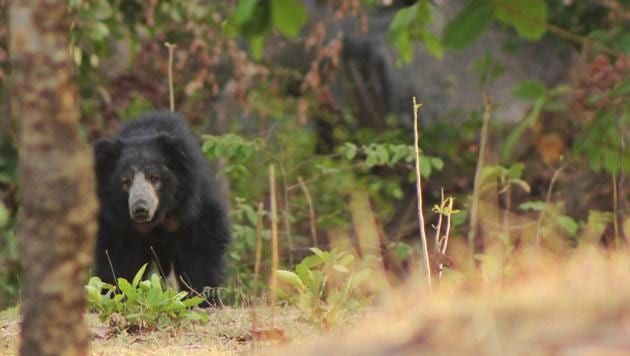
“Sloth bears stray outside the protected forest areas in search of food and often end up being face-to-face with humans. In a bid to protect themselves, they attack humans,” said Ganeshrao Zole, range forest officer, Dnyanganga Wildlife Sanctuary. “Almost 15 sloth bears are outside the protected forest currently”, he said.
Rapid urbanisation and encroachment on forest land are the main reasons for such conflict situation. Data presented in Parliament on November 29, 2016 showed that 1,360 people died in animal attacks between 2013 and 2016.
There are over a thousand sloth bears in the state, mainly across Chandrapur, Melghat, Gondia and Buldhana districts in Vidharba region. The 3,000 hectare Dnyanganga Wildlife Sanctuary is home to almost 60 free-roaming sloth bears, protected under schedule I of the Wildlife Protection Act, 1972 and are considered ‘vulnerable’.
Concerned over the increase in the number of such attacks, the state forest department has approached the International Union for Conservation of Nature (IUCN), an international organization working for nature conservation.
{{/usCountry}}Concerned over the increase in the number of such attacks, the state forest department has approached the International Union for Conservation of Nature (IUCN), an international organization working for nature conservation.
{{/usCountry}}IUCN officials said a team of two Indian scientists, wildlife experts from Gujarat and wildlife ecologist Thomas Sharp from Utah, USA will begin the study from April 20.
“The situation is very critical and poses a serious threat to a large population living close to the forest areas. We have been invited by the state forest department to undertake this study for a year,” said Nishith Dharaiya, co-chair, IUCN sloth bear expert team.
On Wednesday, a sloth bear was spotted at an abandoned railway station located close to the Dnyanganga wildlife sanctuary. “The sanctuary is surrounded by agricultural land. The crop this year has been good and the farmlands have become a good place for these bears to hide and find food,” said Gaur Sanjeev, former chief conservator of forest, Buldhana.