
 E-Paper



Bengal assembly approves bill to replace governor with CM as chancellor
The West Bengal University Laws (Amendment) Bill, 2022, says that the chief minster will not only be the chancellor of state-aided universities, but will also preside over their respective senates and courts.

 Prefer HTon Google


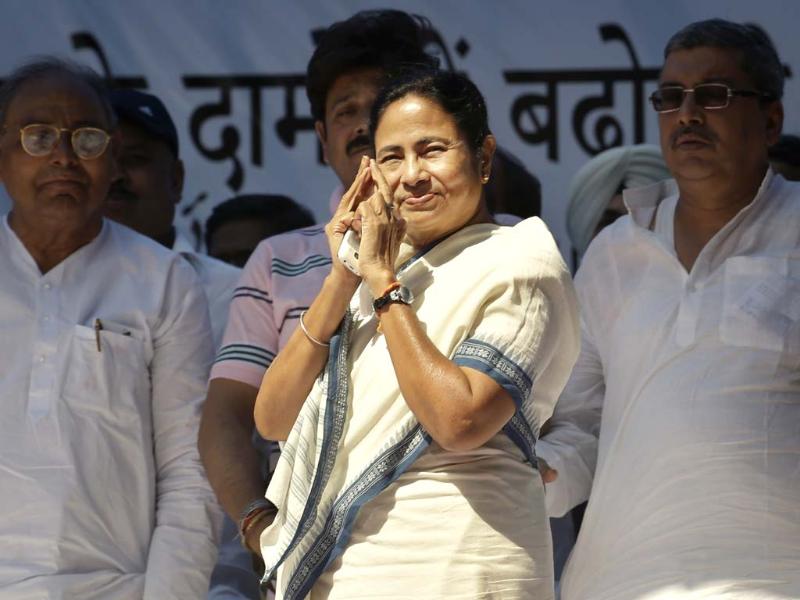
The West Bengal assembly on Monday passed the West Bengal University Laws (Amendment) Bill, 2022, which seeks to make chief minister Mamata Banerjee chancellor of all 31 state-aided universities and institutes of science and technology.
Among these, governor Jagdeep Dhankhar is chancellor of 17 institutions, such as Calcutta University, according to British-era norms. The position is not assigned by the Constitution of India.
The draft legislation was passed with 182 Trinamool Congress (TMC) legislators voting in favour and 40 Bharatiya Janata Party (BJP) members opposing it.
Education is a subject in the concurrent list of the Constitution, meaning the Centre has equal say on issues related to it.
The Bill referred to the report of the Punchhi Commission set up by the Centre under the chairmanship of justice Madan Mohan Punchhi, former Chief Justice of India, in April 2007 to look into changing scenarios and new issues relating to Centre-state relations after the subject was reviewed by the Sarkaria Commission formed in 1983.
“The Punchhi Commission in its report recommended that to be able to discharge the Constitutional obligations fairly and impartially, the governor should not be burdened with positions and powers which are not envisaged under the Constitution and which may expose the office to controversies or public criticism,” the Bill said in its statement of objects and reasons.
“Making the governor the chancellor of the universities and thereby conferring powers on him which may have had some relevance historically has ceased to be so with the change of the circumstances. The Commission is also of the view that governor should not be assigned functions casually under any Statues. His role should be confined to the Constitutional provisions only,” the Bill said.
The state government’s decision, which was officially cleared by the cabinet on June 6 in the presence of Banerjee, is set to further heighten tensions between the state government and Raj Bhawan.
While introducing the Bill before the House, education minister Bratya Basu said: “A government wants universities to run smoothly, and there is no harm in changing old rules.”
Alleging that governor Dhankhar violated protocols on multiple occasions, causing inconvenience for the administration, Basu countered recent arguments that politicians should not head educational institutions.
“If the Prime Minister can be the chancellor of Bengal’s Visva Bharati, which is a central university, why cannot the chief minister be the chancellor of state-aided universities?” Basu asked.
To be sure, India’s Prime Minister is the chancellor of only Visva Bharati University by default. It is West Bengal’s only central university and was founded by Rabindranath Tagore. In other central universities, the post is enjoyed either by the President of India or the Vice President, or eminent persons, according to decisions taken by concerned university councils.
The Bengal assembly is the first one in the country to pass such a Bill, although it cannot become law without the governor’s assent. TMC ministers have said they may move ordinances if Dhankhar does not clear the bill despite the fact that ordinances, too, need to be cleared by the governor.
Tamil Nadu and Gujarat are the only two states that have passed laws empowering the state governments to appoint vice-chancellors of state-funded universities, but the governors continue as chancellors in both states. Tamil Nadu passed the legislation in April, while the Gujarat bill was passed in 2015.
The West Bengal University Laws (Amendment) Bill, 2022, says that the chief minster will not only be the chancellor of state-aided universities, but will also preside over their respective senates and courts.
“The constituting Acts of each university has provided some statutory duties and functions upon the honourable chancellor of the university. It is not out of place to mention that the hobourable governor holding the Constitutional post has to discharge various Constitutional functions as enshrined under the Constitution,” the Bill said.
Dhankhar has already made it clear that the government will not be able to pass the law easily.
While touring north Bengal on May 29, Dhankhar said the move to replace him as chancellor is a ploy to divert attention from the School Service Commission (SSC) recruitment scam that is being probed by the Central Bureau of Investigation (CBI) under the direction of the Calcutta high court.
“Who becomes chancellor and whether the role of the governor can be curtailed are things that I will examine when the paper comes to me. This is a ploy, tactics to generate media optics, to divert attention from what is happening in the recruitment scam. It is the mother of all scams,” he said.
Prominent educationists and intellectuals have also opposed the move, saying eminent personalities should be made chancellors.
The TMC government also wants to make Bratya Basu visitor of nine private universities, replacing the governor. This, too, has been approved by the cabinet.
A number of BJP legislators opposed the Bill on Monday.
During the debate, Agnimitra Paul said: “The TMC government wants to control each and every institution. The Bill has been placed to ensure political control over educational institutions, more so because Mamata Banerjee has failed to answer crucial questions raised by the governor.”
Leader of the opposition in the Bengal assembly, Suvendu Adhikari, and six other BJP legislators were barred from attending official proceedings during the last session by speaker Biman Banerjee on disciplinary grounds. They held a protest outside the House, condemning the bill and the ban on their attendance.
“We will urge the governor to send the Bill to the Centre since education is a subject in the Concurrent List. Mamata Banerjee’s goal to become chancellor will remain an unfulfilled dream,” Adhikari said.
Though the BJP won 77 of Bengal’s 294 assembly seats in 2021, its strength has effectively come down to 70 as it lost two seats in the by-polls and five legislators joined the TMC, although they have not resigned from the BJP yet. The TMC’s official strength is 217.


