A study found that children of mothers exposed to the 1984 Bhopal gas tragedy were born with heart, liver, kidney and other defects, but that information was not made public due to questions raised over the quality of data, organisations working for the survivors said Thursday.
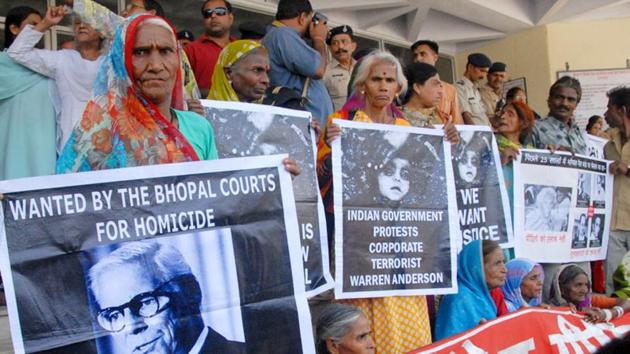
The leakage of methyl isocyanate, which took place on the night of 23 December, 1984, at the Union Carbide India Ltd’s pesticide plant in the Madhya Pradesh city, claimed around 3,000 lives.
A study was done by the Indian Council for Medical Research (ICMR) and the National Institute for Research in Environmental Health (NIREH) in Bhopal between January 2016 and June 2017, but that was not made public, alleged Rachna Dhingra, convener of the Bhopal Group for Information and Action.
She said the study has been accessed through a Right to Information (RTI) reply to a query filed earlier this year and shared a copy with HT. Queries sent to ICMR and NIREH went unanswered till press time. Minister of Bhopal Gas Tragedy Relief and Rehabilitation, Arif Aqueel, said he was not aware of such a study.
In January 2019, the Supreme Court issued notices to the Centre on a curative petition seeking additional compensation of ~7,844 crore to the victims of the gas tragedy, in addition to ~700 crore Union Carbide has paid. “The study found out birth defects in babies of gas exposed mothers to be several times higher compared to those of non-exposed women,” Dhingra said ahead of the 35th anniversary of the tragedy.
{{/usCountry}}In January 2019, the Supreme Court issued notices to the Centre on a curative petition seeking additional compensation of ~7,844 crore to the victims of the gas tragedy, in addition to ~700 crore Union Carbide has paid. “The study found out birth defects in babies of gas exposed mothers to be several times higher compared to those of non-exposed women,” Dhingra said ahead of the 35th anniversary of the tragedy.
{{/usCountry}}Dhingra said investigations found that 9% of the 1,048 babies born to mothers exposed to the gas had congenital malformations “while in 1,247 babies born to unexposed mothers, only 1.3% had congenital malformations”.
The study were presented at ICMR’s Scientific Advisory Committee meeting in December 2017, and members expressed concerns on the high incidents of malformed children recorded in it and raised queries related to quality control, Dhingra said. Later, it was recommended due to inherent flaws, the data should not be put in public domain.