A major policy change might be headed towards the free Unified Payments Interface (UPI), with Finance Minister Nirmala Sitharaman introducing the Taxation and Other Laws (Amendment) Bill, 2026, in the Lok Sabha.
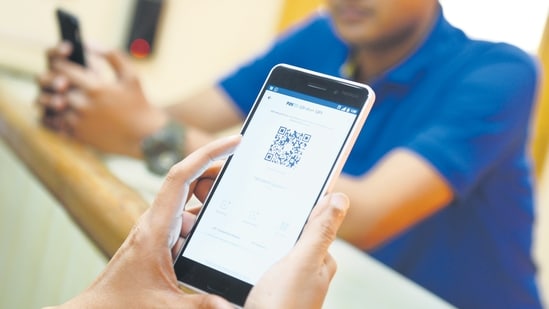
UPI, one of the world's largest real-time payment interfaces, processed 23.6 billion transactions worth ₹29.9 trillion in July, as per official data.
The bill intends to further amend the Payment and Settlement Systems Act, 2007, the Income-tax Act, 2025, and the Finance Act, 2026.
ALSO READ | HT Insight: India’s UPI revolution’s becoming a global export
While amendments have been proposed to different parts of the bill, the aim remains the same -- making India a more attractive and predictable place for global capital, manufacturing, and businesses to come to and remain in the nation, news agency PTI reported, citing finance ministry sources.
What's key for UPI?
Regarding a policy change in UPI, the main focus among the proposed amendments is the amendment to the Payment and Settlement Systems Act, 2007.
{{/usCountry}}Regarding a policy change in UPI, the main focus among the proposed amendments is the amendment to the Payment and Settlement Systems Act, 2007.
{{/usCountry}}The bill seeks to remove the existing legal provision that prevents banks and payment service providers from charging a fee, known as the Merchant Discount Rate (MDR), on notified electronic payments.
MDR is a fee that merchants pay to banks and payment service providers for processing digital transactions.
Relevant changes have been sought in Section 10A of the Payment and Settlement Systems Act, 2007, and Section 269SU of the Income Tax Act, requiring large businesses with a turnover exceeding ₹50 crore to accept payments via specific electronic modes, including BHIM-UPI QR codes and RuPay debit cards.
So far, no bank or payment system provider has imposed any charge on anyone, either directly or indirectly, for using the electronic modes of payment prescribed under Section 269SU of the Income Tax Act, 1961.
The latest amendment bill, however, proposes to expand the scope of what could be notified under modes of payment that attract no charges.
While no charge on UPI payments would be imposed immediately, the bill does give the government the flexibility to introduce MDR at any time.
The proposed amendments may result in the Centre setting an MDR fee below 0.5 per cent, which would apply to transactions above ₹2,000, Moneycontrol reported, citing sources. But this charge may be valid for merchants with an annual turnover above ₹1.5 crore.
This means that consumers may not have to pay any additional charges, and small businesses may also continue to enjoy the UPI facility free of cost.
Another option is that an MDR would be determined based on transactions above a certain limit, Reuters reported.
ALSO READ | India’s journey to digital dominance: From Aadhaar to UPI and beyond
However, no final decision has been made on the rate or the transactions that would be covered under this amendment.
Why was there no fee on UPI payments?
In December 2019, the Centre issued a circular to clarify that, based on Section 10A of the Payment and Settlement Systems Act 2007, no charges, including MDR, shall be applicable on or after January 1, 2020, on the payment made through prescribed electronic modes.
The prescribed modes are:
- Debit Card powered by RuPay
- Unified Payments Interface (UPI) (BHIM-UPI)
- Unified Payments Interface Quick Response Code (UPI QR Code) (BHIM-UPI QR Code)
According to a March 2026 report from the Standing Committee on Finance, the objective of zero MDR was to make digital transactions more affordable and widely accessible.
ALSO READ | UPI kardo: From mandir to baraat, there’s a QR code for everything in India
The committee was told by the Department of Financial Services that the policy aimed to encourage wider acceptance of UPI and RuPay payments, including by smaller businesses.
However, it noted that the absence of a fee was making the UPI ecosystem "financially unstable." The committee observed that a structural funding gap was impacting long-term infrastructural investment.
The committee observed that while government schemes are necessary to democratise digital payments in Tier 3-6 cities, it urged DFS to explore a self-reliant, tiered revenue model.
"The Committee would like to emphasise that establishing a viable revenue mechanism is critical to ensuring the UPI ecosystem achieves financial sustainability without perpetually straining the government exchequer," the report stated.