
 E-Paper



India’s UPI revolution’s becoming a global export
This article is authored by Narinder Kumar, RV University, Bengaluru and Kiran Sood, Chitkara University, Punjab.

 Prefer HTon Google


At a time when many nations are searching for affordable and scalable financial systems, India is no longer only participating in the global technology conversation, through the Unified Payments Interface (UPI), it is shaping it. When it started, in April 2016, UPI processed 20,000 transactions. By April 2026, India’s UPI ecosystem has over 500 million active users, making it one of the world’s largest real-time digital payment networks. Few technologies have scaled at this pace, reached this many people, and then gone on to influence financial systems beyond their home country. UPI has done all three. Despite its rapid growth, the UPI revolution remains uneven.
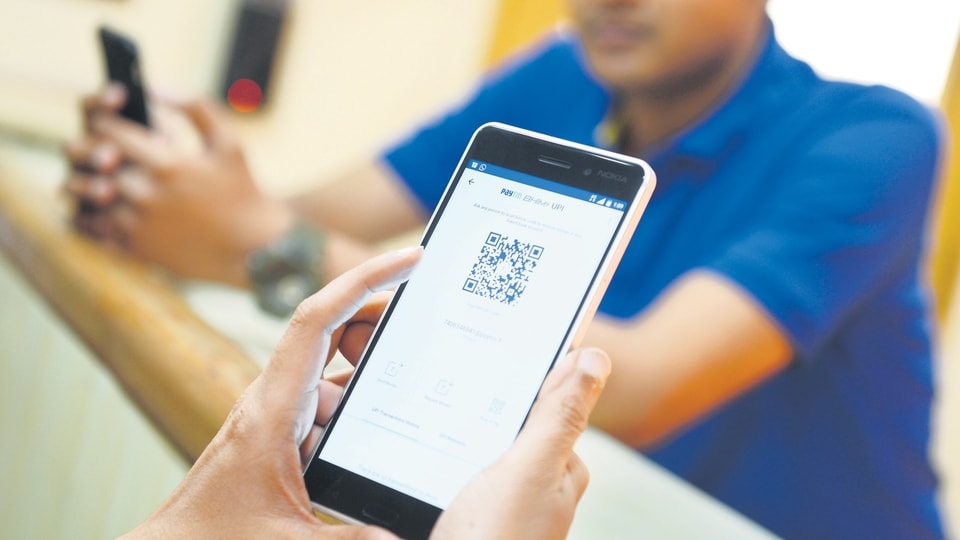
Nine years after its first transactions, UPI is no longer just India’s payment system. It has become proof that large-scale financial innovation can emerge from the Global South. Much like Aadhaar transformed digital identity in India, UPI has transformed digital payments. It has shown that public digital infrastructure can be fast, inclusive and globally relevant.
What makes UPI remarkable is not only its scale, but its design. Unlike many private payment ecosystems, UPI was built as open digital infrastructure. It allows competing apps to operate on the same payment rails. Users and merchants can transfer money instantly with no transaction fees. A QR code, a PIN and a smartphone are often all that is required.
Today, UPI accounts for nearly 66% of all digital payment volumes in India. Projections suggest it could handle more than 90% of the country’s retail digital payments by 2028–29. For millions of Indians, UPI is no longer simply a payment method. It has become part of everyday life.
India is now exporting the infrastructure it built. Through NPCI International, UPI has expanded into several countries and is being integrated into global payment ecosystems.
In the UAE, Indian travellers can make payments at malls and supermarkets using familiar UPI apps. In Singapore, UPI has been linked with the country’s PayNow system across thousands of merchants. France became the first European country to adopt UPI, allowing visitors to purchase Eiffel Tower tickets directly through their phones without currency conversion.
Countries such as Nepal, Mauritius, Sri Lanka, Bhutan and Cyprus have also adopted or integrated the system in various forms. Meanwhile, Malaysia, Thailand, Qatar and the UK remain in different stages of collaboration and rollout.
For the nearly 380 million Indians already using UPI domestically, their payment systems are increasingly travelling with them.
This expansion is not only about convenience. It is also strategic. Lower remittance costs, stronger trade relationships and the global acceptance of Indian financial technology standards all strengthen India’s international economic position. UPI is becoming a form of digital diplomacy.
What India has demonstrated through UPI is that governments can build digital public infrastructure that competes successfully with private systems, not by excluding companies, but by creating an open platform on which they can compete fairly.
That model matters, especially for developing economies. Many countries continue to struggle with expensive remittances, low banking penetration and fragmented payment systems. UPI offers a low-cost and scalable alternative that can support financial inclusion while encouraging innovation.
Its simplicity is also central to its success. The technology works as efficiently at a vegetable market in Bengaluru as it does inside a corporate office in Mumbai. This accessibility has helped digital payments move from urban convenience to mass adoption.
Large parts of rural India still depend heavily on cash. Limited internet access, low digital literacy and long-standing payment habits continue to slow adoption in several regions. Cyber fraud and financial scams have also weakened trust among first-time users.
For elderly users and individuals more comfortable in regional languages, digital payment interfaces can still feel unfamiliar. Offline payment systems, which are critical in areas with weak connectivity, remain underdeveloped.
International expansion also comes with challenges. Data sovereignty concerns, cybersecurity risks and diplomatic tensions may affect long-term technology agreements between countries.
The larger question is whether UPI can maintain its openness, security and accessibility while scaling globally.
Much like Aadhaar transformed digital identity, UPI has transformed payments. In less than a decade, India has shown that affordable, inclusive and scalable financial innovation can emerge from the Global South and increasingly shape the world
(The views expressed are personal)
This article is authored by Narinder Kumar, RV University, Bengaluru and Kiran Sood, Chitkara University, Punjab.


