Association for Democratic Reforms, an NGO which monitors political parties in India, released a report on incomes of national parties for 2016-17 last month.
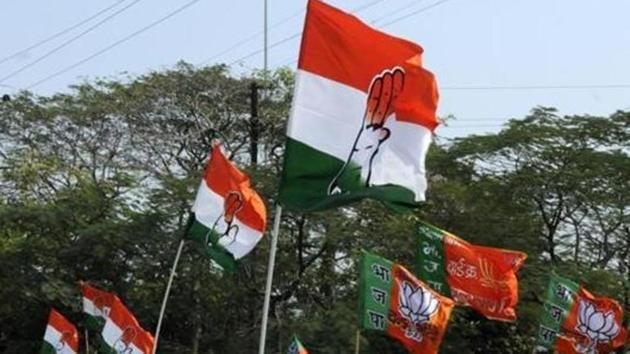
The Bharatiya Janata Party’s (BJP) total reported income of Rs 1,034.27 crore was 4.6 times that of the Congress’s figure, according to the report. An ADR report released on Wednesday adds another dimension to this asymmetry in incomes of the two major political parties in India. In 2016-17, the BJP got Rs 532.27 crore in donations above Rs 20,000, which is more than 12 times the money Congress got in similar donations.
A BJP spokesperson declined to comment. Congress spokesman RPN Singh said his party had questioned the introduction of electoral bonds and maintained that the biggest beneficiary of these bonds will be the ruling party, which will “coerce and threaten” the people for donations. “Everybody knows why BJP gets highest donations. The suit-boot government that has waived off loans worth Rs 1.2 lakh crore of big industrialists will obviously get more donations,” he told reporters.
ADR collects these statistics from income tax declarations by political parties. Political funding laws in India do not require disclosure of a donor’s identity for donations below Rs 20,000. Hence, it has been a practice to take declared donations above this amount as a proxy for genuine corporate political funding.
These statistics suggest that BJP’s ability to garner funds becomes even bigger when it is dealing with big business. The fact that Rs 251.22 crore of the BJP’s Rs 532.27 crore worth of donations in this category has come from just one source, Satya Electoral Trust, buttresses this argument.
{{/usCountry}}These statistics suggest that BJP’s ability to garner funds becomes even bigger when it is dealing with big business. The fact that Rs 251.22 crore of the BJP’s Rs 532.27 crore worth of donations in this category has come from just one source, Satya Electoral Trust, buttresses this argument.
{{/usCountry}}A long-term analysis of these statistics gives another interesting insight. It is expected that the party in power will have a greater income than the one in opposition as it can run patronage networks more effectively. This was the case from 2004-05 to 2012-13, when the Congress always reported greater income than the BJP. The BJP overtook the Congress in 2013-14, which too is understandable given the fact that the BJP was widely seen a party which would win the 2014 general elections.
BJP’s excess income over the Congress in the next two fiscal years was in keeping with earlier trends during the United Progressive Alliance government’s term. By 2016-17, the latest year for which data is available, the income gap between the BJP and the Congress reached an abnormally high level.
What is also interesting is the fact that the BJP has mostly been ahead of the Congress in terms of income from corporate donations (those above Rs 20,000) even when it was in the opposition. It trailed the Congress in this category in only two of the 10 years even when the UPA government was in power. Once the BJP captured power in 2014, its lead vis-à-vis the Congress in terms of income of corporate donations has been increasing continuously, which was not the case for the Congress when the UPA was in power.
“Among big business, the BJP has been the favored child because of its ‘pro-business’ image. Many business houses were turned off with the Congress’ social activism and relative inattention to the prototypical market-reform agenda,” said Milan Vaishnav, senior fellow and director of the South Asia program at the Carnegie Endowment for International Peace.
He added that the one-sided gap tells you a simple story: privately Indian business may grumble about the Narendra Modi government’s economic record, but they fear the alternative even more