Ruling Bharatiya Janata Party (BJP) leader CT Ravi on Tuesday called for a population control policy in Karnataka on the lines of two other states ruled by his party--Assam and Uttar Pradesh--even as differences on the issue surfaced between ruling National Democratic Alliance (NDA) partners in Bihar.
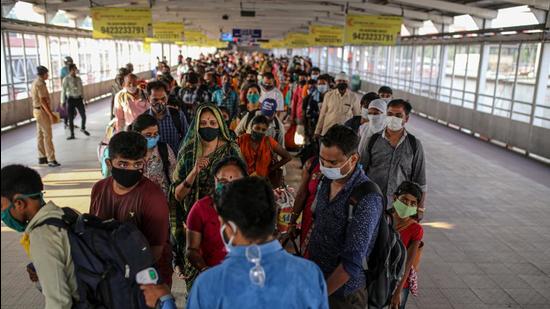
“It is high time Karnataka brings in a new population policy on the lines of Assam and Uttar Pradesh to control its growing population,” tweeted Ravi, a BJP national general Secretary and Karnataka assembly member. “With the limited natural resources available, it will be difficult to meet the needs of every citizen if there is a population explosion.”
State law minister Basavaraj Bommai said a decision will be taken after discussion and deliberation. “We would look into the (population control) bill proposed by Uttar Pradesh,” he said.
Also Read | Two-child policy: Experiments, legal jurisprudence on population check in India
Yogi Adityanath, the Uttar Pradesh chief minister, on Sunday introduced a policy to stabilise the state’s population. This came days after the draft of the Uttar Pradesh Population (Control, Stabilization and Welfare) Bill was put up on the website of the Uttar Pradesh State Law Commission inviting suggestions from the public by July 19.
The bill proposes to bar people with more than two children from contesting local polls, applying for government jobs or receiving any subsidy. It also seeks to bar government employees having more than two children from promotions. Assam chief minister Himanta Biswa Sarma earlier said large families were likely to lose certain state benefits.
{{/usCountry}}The bill proposes to bar people with more than two children from contesting local polls, applying for government jobs or receiving any subsidy. It also seeks to bar government employees having more than two children from promotions. Assam chief minister Himanta Biswa Sarma earlier said large families were likely to lose certain state benefits.
{{/usCountry}}Congress leader Salman Khurshid said politicians should declare how many children they have. “I will also declare how many I have and then it should be discussed.”
Samajwadi Party (SP) Member of Parliament Shaqfiqur Rahman Barq called the proposed legislation in Uttar Pradesh “election propaganda” before next year’s assembly polls in the state. SP lawmaker Iqbal Mehmood described it as a “conspiracy” against Muslims.
Janata Dal (United), an ally of the BJP in Bihar, has expressed reservations over the proposed legislation. Bihar chief minister Nitish Kumar said he believes it is not possible to ensure population control with a law. He insisted population control can happen only “when women are aware and educated.”
Union minister Nityanand Rai, who is from Bihar, said the state government should consider a population control policy as benefits of welfare measures have not resulted in desired economic results due to “population explosion”.
Opposition Rashtriya Janata Dal and the Congress supported Kumar on the issue saying the BJP wants to target minority communities through such a policy.
The Centre told the Supreme Court in December 2020 that it was “unequivocally against coercion in family planning” and data showed that “couples, on average, do not want more than two children”.
“Family Welfare Programme in India is voluntary in nature, which enables couples to decide the size of their family and adopt family planning methods... without any compulsion,” it said in an affidavit in response to a Public Interest Litigation filed by BJP leader Ashwini Upadhyaya seeking introduction of a two-child norm or framing a new law to control births.
As per National Family Health Survey, the total fertility rate (TFR) is higher among the poor and that it decreases as incomes increase. TFR is the average number of children a woman bears in her lifetime.
The Centre’s affidavit also said TFR was on the decline. It added 25 of 36 states and Union Territories have achieved the target TFR of 2.1.
According to the UN projections, India’s population will increase by a multiple of 1.09 between 2021 and 2031. This number was 1.25 between 1981 and 1991. From 2060 onwards, India’s population will start falling, which happens when the fertility rate falls below replacement levels. By 2100, which is as far as UN population projections go, India’s population will be 1.45 billion after having peaked at 1.65 billion in 2059.
With inputs from agencies