
 E-Paper



Black box of Air India plane recovered from building it crashed into in Ahmedabad
The Digital Flight Data Recorder (DFDR), commonly referred to as the blackbox, was found on the rooftop of the building the plane crashed into.

 Prefer HTon Google


Black box of the Air India aircraft that crashed in Gujarat's Ahmedabad on Thursday was recovered from the hostel building the plane plummeted into, Aircraft Accident Investigation Bureau (AAIB) confirmed on Friday.
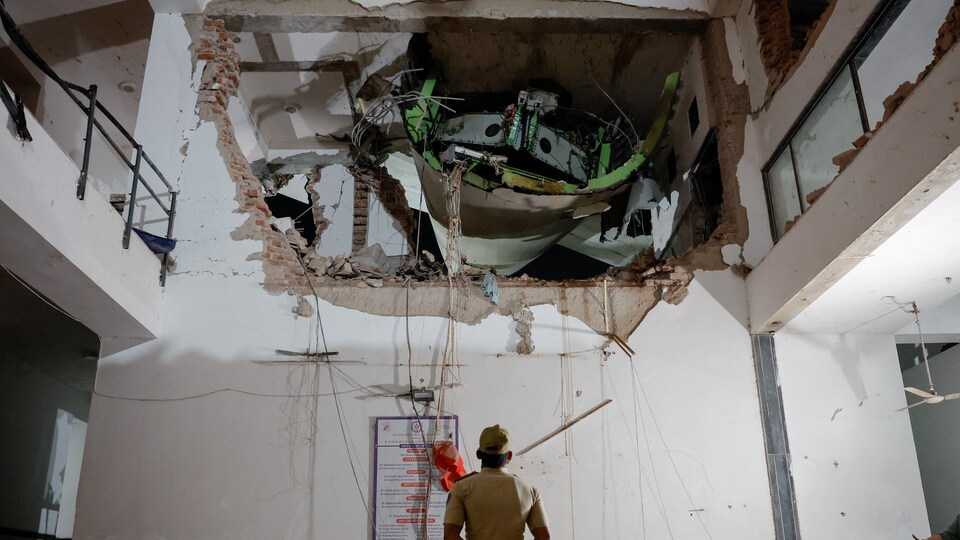
The Digital Flight Data Recorder (DFDR), commonly referred to as the blackbox, was found on the rooftop of the building. Follow Ahmedabad plane crash live updates
The Ministry of Civil Aviation clarified that, contrary to circulating reports, a video recorder that had been recovered at the crash site was not the DFDR.
Civil aviation minister Ram Mohan Naidu Kinjarapu said on X that the Flight Data Recorder (black box) was recovered within 28 hours from the accident site in Ahmedabad by AAIB. “This marks an important step forward in the investigation. This will significantly aid the enquiry into the incident,” he added.
The AAIB has launched a full-scale investigation into the crash, with over 40 staff from the Gujarat State Government joining efforts to support the Ministry of Civil Aviation teams on the ground.
What is a black box?
A black box is a small machine that records information about an aircraft during its flight. This bright orange or yellow rectangular box is crafted to withstand explosions, fire, water pressure, and high-speed crashes.
Black box contains flight and cockpit recordings, and flight data, which help in zeroing in on the real cause of the plane crash. Soon after an accident, authorities first try to locate the equipment to discover what led to the crash.
The black box is now under analysis to determine the cause of the tragedy that killed 241 of the 242 people on board, including former Gujarat chief minister Vijay Rupani.
Authorities expect the data stored on the DFDR to offer vital clues into the final moments of Flight AL-171, a Boeing 787-8 bound for London’s Gatwick Airport that went down minutes after takeoff from Ahmedabad International Airport.
The aircraft departed from Runway 23 at 1:39 pm and issued a ‘Mayday’ call to Air Traffic Control (ATC) shortly afterward. Communications were abruptly lost, and within moments, the plane crashed outside the airport perimeter, sending thick plumes of black smoke billowing into the sky.
Air India said the plane was carrying 242 people, including 169 Indian nationals, 53 British nationals, seven Portuguese nationals, and one Canadian national. Only one person survived the crash — a British national of Indian origin identified Vishwashkumar Ramesh, who was seated on 11A, a left-side window seat near an emergency exit in the economy section.
The aircraft was being flown by Captain Sumeet Sabharwal, a Line Training Captain with 8,200 flying hours, and First Officer Clive Kundar, who had logged 1,100 hours.
The Air Accidents Investigation Bureau (AAIB), with support from MoCA and local authorities, has launched a full-scale probe into the disaster.


