The Supreme Court on Monday cracked down on the use of black money and other inducements in elections, directing the completion of probes into electoral offences within a year, asking high courts to designate special courts for their speedy disposal, and making their approval mandatory before a prosecution against candidates is withdrawn during a particular election cycle.
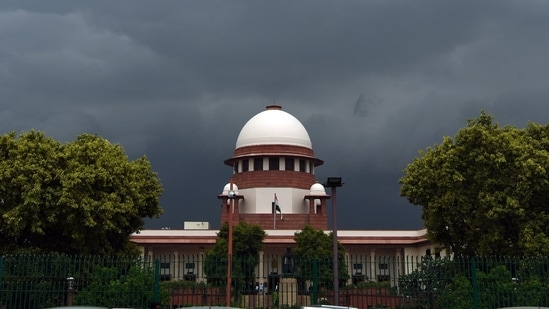
A bench of justices Sanjay Karol and N Kotiswar Singh also directed authorities seizing cash or other assets suspected to be linked to an electoral offence to report the seizure to the jurisdictional district magistrate, additional district magistrate or competent court within 24 hours, along with written reasons showing a prima facie nexus with the suspected offence.
The court issued the directions while deciding an appeal arising from a 2015 Karnataka High Court order which had quashed an FIR against Prathik Parasrampuria, a candidate in the 2014 Lok Sabha bye-election from Bellary. The FIR followed a raid during which ₹20.48 lakh in cash, a laptop, cheque books, loose cheque leaves and a pen drive were seized on allegations that the money was meant to bribe voters. The high court had quashed the FIR on the ground that the complaint did not specify whom the accused intended to bribe or the manner in which the alleged bribery was to be carried out.
While dealing with the appeal, the Supreme Court expanded the proceedings to examine the larger systemic problem of money power in elections and sought responses from the Election Commission of India, the Union government, states and Union territories. Senior Advocate Gaurav Aggarwal and advocate Swapnil Tripathi were appointed as amici curiae to assist the court.
{{/usCountry}}While dealing with the appeal, the Supreme Court expanded the proceedings to examine the larger systemic problem of money power in elections and sought responses from the Election Commission of India, the Union government, states and Union territories. Senior Advocate Gaurav Aggarwal and advocate Swapnil Tripathi were appointed as amici curiae to assist the court.
{{/usCountry}}Also Read | The X Files: See how black money distorts your sense of wealth, earnings - and self
Court warns money power threatens democracy
The bench underlined that voting is the citizen’s one direct opportunity to influence governance and warned that if this choice is tainted by external influences, “the very essence of democracy” is compromised. It said an electoral choice influenced by such factors ceases to be the voter’s own choice and becomes “somebody else’s choice being thrust upon them.”
“Democracy”, the bench said, “the rule of law, and the electoral process” are inextricably linked and any compromise in one affects all three. It relied on Justice HR Khanna’s observations in Indira Nehru Gandhi v Raj Narain that democracy can function only on the faith that elections are free and fair and are not “rigged and manipulated”. It also referred to the Constitution bench ruling in the Anoop Baranwal case (2023), which had observed that “the ballot is more potent than the most powerful gun.”
The court traced concerns over money power in elections to several decades of electoral reform efforts, even as the Election Commission’s data placed before the bench highlighted the scale of the problem. For the 2024 Lok Sabha elections, 3,87,430 FIRs were registered. Of these, 1,66,044 cases had resulted in convictions, while 1,06,841 were pending trial, 7,930 remained under investigation, and 76,987 closure reports had been filed. The Commission’s figures put the conviction rate at 42.9%.
For assembly elections held between 2019 and 2025, 2,01,894 FIRs were registered. Of these, 40,155 resulted in convictions, while 79,148 cases remained pending trial, 4,665 were under investigation and 53,126 closure reports had been filed.
The court was particularly concerned about the pendency of election-related prosecutions and the possibility of such cases being withdrawn after a change in the political dispensation.
Also Read | Techie says he can’t afford 2BHK despite being among top 2% of India: ‘There’s a parallel black economy’
The Election Commission had told the court that election-related prosecutions were the responsibility of state governments and that unilateral withdrawal of cases after a change in government was a “problematic reality”. The Commission had earlier warned that even serious cases involving bribery were sometimes sought to be withdrawn, sending a signal that electoral offenders could act with impunity because the cases might subsequently be withdrawn.
HC approval mandatory to withdraw cases
The Supreme Court has now sought to place a judicial check on such withdrawals. “For withdrawal of cases against candidates in a particular election cycle, the approval of the concerned High Court is mandatory,” directed the bench, relying on its earlier decisions.
The bench said that extending this protection to candidates was significant because it would put candidates and prospective candidates on the same footing as sitting MPs and MLAs in relation to criminal prosecutions. Once prosecution was initiated, a mere change in political dispensation would not allow them to escape the process, it said.
The court also ordered that investigating officers make “every possible endeavour” to complete investigations within one year from registration of the FIR. If the deadline is breached, reasons must be recorded and communicated to the Election Commission. Investigating officers must additionally submit quarterly status reports on such probes to the Commission through a nodal officer, after approval by the concerned senior superintendent of police or deputy commissioner of police.
The bench further directed that when Static Surveillance Teams detect cash exceeding ₹10 lakh, the information must be forwarded to the income-tax authorities.
Also Read | 163 Black Money Act probes conducted in 9 years
Special courts for speedy disposal
On trials, the court said all efforts must be made for expeditious disposal of cases against candidates and sitting MPs and MLAs, keeping in mind the recurring five-year election cycle. It directed high courts to designate courts, following their respective procedures, for prompt hearing and disposal of such cases.
The court also specifically directed courts dealing with cases arising from the 2024 Lok Sabha elections and assembly elections held between 2019 and 2025 to take them to their logical conclusion “with utmost expedition”, noting the large percentage of pending cases.
The Election Commission and respective state governments have been directed to file a compliance report on the implementation of the directions by November 18, 2026.