E-Paper



Budget 2022-23: Incentives for solar, green bonds in low carbon plan
Risks of climate crisis are the strongest negative externalities that affect India and other countries, says finance minister Nirmala Sitharaman

 Prefer HTon Google


Climate crisis is among the strongest negative externalities to affect India, finance minister Nirmala Sitharaman said on Tuesday while announcing several steps that will help the country transition to a low carbon economy.
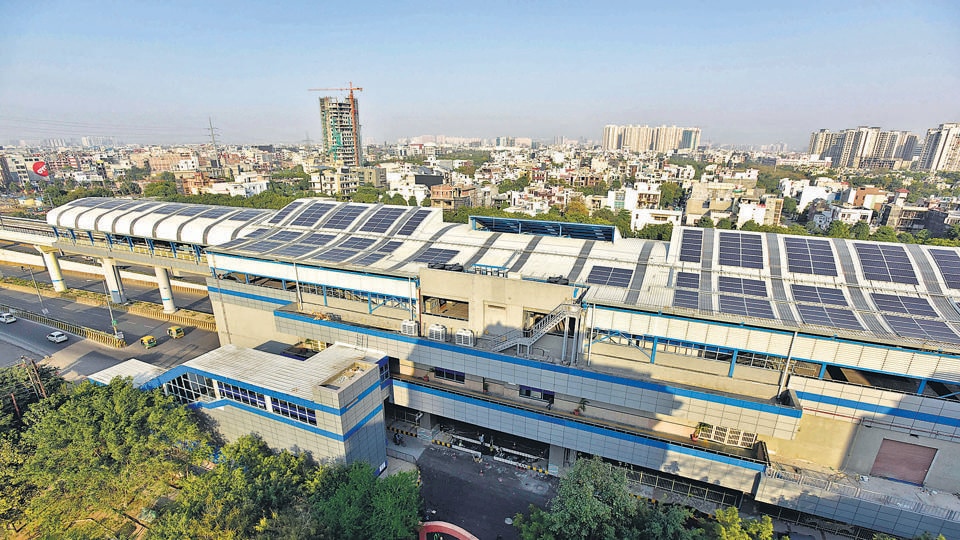
Among the key actions announced by the minister during her Budget speech is an additional allocation of ₹19,500 crore for Production Linked Incentive (PLI) for manufacture of high efficiency solar modules to fully integrated manufacturing units that can transition from polysilicon to solar PV modules. This is to facilitate domestic manufacturing for implementation of 280 GW of installed solar capacity by 2030.
The finance minister also announced sovereign Green Bonds under the government’s overall market borrowings in 2022-23, which will be used to mobilise resources for green or climate-friendly infrastructure. The proceeds from these bonds will be deployed in public sector projects that help in reducing the carbon intensity of the economy, she said.
Speaking at the Glasgow climate summit on November 1, Prime Minister Narendra Modi announced that India’s non-fossil energy capacity will reach 500 GW by 2030, meeting 50% of the country’s energy requirements by then. He said that India will reduce its total projected carbon emissions by one billion tonne by 2030, reduce the carbon intensity of its economy by 45% by 2030, over 2005 levels, and achieve net-zero emissions by 2070.
Modi also pointed out that the ambitious action will be impossible without adequate climate finance from developed nations, calling on rich countries to make $1 trillion available as climate finance “as soon as possible”.
The Prime Minister on August 15 said India has already installed 100 GW of renewable energy and that it is the only country among G20 nations that is progressing rapidly to meet its climate goals.
“The risks of climate change are the strongest negative externalities that affect India and other countries. As Hon’ble Prime Minister said at the COP26 summit in Glasgow last November, ‘what is needed today is mindful and deliberate utilisation, instead of mindless and destructive consumption’…This strategy opens up huge employment opportunities and will take the country on a sustainable development path. This budget proposes several near-term and long-term actions accordingly,” Sitharaman said on Tuesday.
Other proposed actions in the Budget that target the environment include: The circular economy transition which is expected to help in productivity enhancement in a sustainable manner. The action plans for ten sectors such as electronic waste, end-of-life vehicles, used-oil waste, and toxic and hazardous industrial waste are ready; 5% to 7% biomass pellets will be co-fired in thermal power plants resulting in CO2 savings of 38 MMT annually. This will also help avoid stubble burning in northern states, according to the Budget document released by the government.
Additionally, energy-efficiency and savings measures will be promoted. This will be done in large commercial buildings through the Energy Service Company (ESCO) business model; four pilot projects for coal gasification and conversion of coal into chemicals will be established, and agro-forestry and private forestry will be implemented. Financial support will be provided to farmers belonging to Scheduled Castes and Scheduled Tribes who want to take up agro-forestry under the scheme.
Climate and energy experts welcomed the announcements on the transition to a low carbon economy.
“By referring to climate action as a sunrise sector and employment generator, the Union Budget 2022 has sent an important signal to markets, financial institutions and the workforce. We now need the power of government incentives, aggregation and de-risking for clean energy to be complemented by standards for low-carbon materials, skilling for battery recycling, and consultative processes for green infrastructure projects. Biomass pellets, energy efficient buildings, coal gasification and agroforestry are just the start of the transition to a carbon-neutral economy. The upcoming green hydrogen mission and circular economy action plans can initiate a deep shift towards industrial decarbonization,” Ulka Kelkar, director, Climate programme, World Resources Institute (WRI) India, said.
“The budget proposal to issue sovereign green bonds has several benefits, principal among which is signalling the country’s seriousness in pursuing climate action. India will now join a select group of countries, primarily European, which have issued such bonds. We can also expect this move to catalyse the development of the domestic corporate green bond market. Green bond issuances by Indian companies in the overseas debt capital markets have considerably lagged so far. If sovereign green bonds price at lower yields compared to their non-green counterparts, it will also provide an added signal for the private sector to direct their own capital towards green investments,” Gagan Sidhu, director, CEEW Centre for Energy Finance (CEEW-CEF), said.