The June 12 Air India crash's preliminary investigation report has reignited a decades-old debate over installation of video cameras inside cockpits to monitor pilot actions along with the voce and flight data recorders that are already used by investigators.
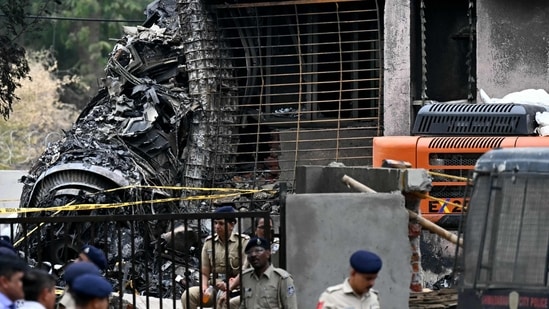
On June 12, an Air India Boeing 787-8 aircraft, with callsign AI171, bound for London's Gatwick Airport crashed shortly after takeoff from Gujarat's Ahmedabad and plummeted into a medical hostel building close to the airport. The crash killed 260 people, including all but one passengers.
Also Read | Air India crash report: 10 points on pilots’ conversation, fuel cut, engine speed
One of the aviation industry's most influential voices, International Air Transport Association head Willie Walsh, a former airline pilot, said on Wednesday there was a strong argument for video cameras to be installed in airliner cockpits to monitor pilot actions to complement voice and flight data recorders already used by accident investigators.
As of now, "based on what little we know now, it's quite possible that a video recording, in addition to the voice recording would significantly assist the investigators in conducting that investigation on the issue of mental health," Reuters quoted Walsh as saying.
{{/usCountry}}As of now, "based on what little we know now, it's quite possible that a video recording, in addition to the voice recording would significantly assist the investigators in conducting that investigation on the issue of mental health," Reuters quoted Walsh as saying.
{{/usCountry}}This comes after the Air India crash preliminary report, with probe findings by India's Aircraft Accident Investigation Bureau (AAIB), found that in cockpit voice recording, one of the pilots is heard asking the other why did he cutoff.
The other pilot responded that he did not do so, according to the AAIB report.
While those advocating for cockpit video cameras say the footage could fill in gaps left by the audio and data recorders, those opposing say concerns about privacy and misuse can outweigh what they argue are marginal benefits for investigations.
Also Read | Air India flight 171 crash: What AAIB preliminary report reveals – and doesn’t
An aviation safety expert, Anthony Brickhouse, said that as an accident investigator, he is in backs cockpit video, but acknowledged that commercial pilots have real concerns.
Video on Air India flight 171 "would have answered lots of questions," Reuters quoted Brickhouse as saying.
Air India, however, has not yet commented on the matter.
US pilots' unions such as the Air Line Pilots Association (ALPA) and Allied Pilots Association (APA) say the voice and data recorders already give enough information to determine the cause of a crash and that the cameras would be an invasion of privacy and could be misused.
Also Read | Air India crash report found no mechanical or maintenance issue, says airlines' CEO
"I can understand the initial reaction of the more information, the better," but investigators already have enough data to adequately determine an accident's cause, leaving no need for cameras," said APA spokesperson Dennis Tajer, an American Airlines pilot.
The Air India flight crash report by AAIB said that the Engine 1 and Engine 2 fuel cutoff switches “transitioned from RUN to CUTOFF position one after another with a time gap of 01 sec”.
“The Engine N1 and N2 began to decrease from their take-off values as the fuel supply to the engines was cut off,” the report read.