
 E-Paper



Air India crash report: 10 points on pilots’ conversation, fuel cut, engine speed
The report said both engines' N2 values fell below minimum idle speed, as per data from the Engine and Flight Recorder (EAFR).

 Prefer HTon Google


The Aircraft Accident Investigation Bureau (AAIB) has released its 15-page preliminary report on the Air India crash that took place in Ahmedabad on June 12.
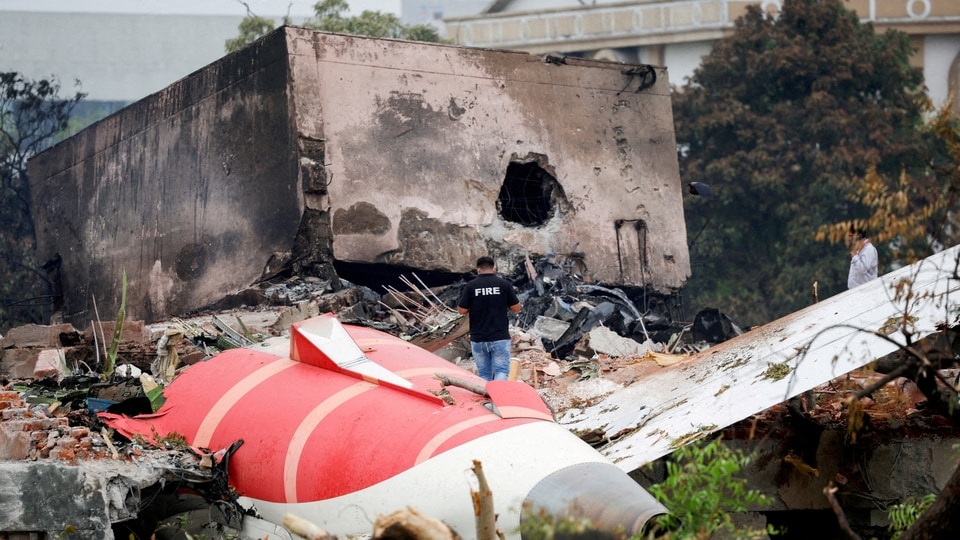
The report, which examines the sequence of events and engine behaviour leading up to the incident involving a Boeing 787-8 aircraft, offers the first official insight into what transpired.
Here are the 10 key takeaways:
- Fuel cutoff switches activated: At 13:38:42 IST (08:08:42 UTC), the aircraft reached 180 knots IAS. Immediately after, both engines’ fuel cutoff switches moved from 'Run' to 'Cutoff'.
- Attempted relight: Fuel switches for engines 1 and 2 were returned to ‘Run’ within seconds. EGTs for both engines rose, indicating relight efforts.
- Cockpit voice recording: One pilot asked, “Why did you cut off?” The other responded, “I did not do so,” suggesting possible miscommunication.
- Engines speed down: Engine and Aircraft Flight Recorder (EAFR) data confirmed that N2 values in both engines fell below minimum idle speed during the incident.
Also read | What happens when fuel switches flip from ‘run’ to ‘cutoff’ during takeoff
- Engine 1 showed signs of recovery: Engine 1’s core deceleration halted, reversed, and began progressing toward recovery after initial failure.
- Engine 2 failed to stabilise: Engine 2 relit but could not arrest core speed deceleration, despite repeated fuel reintroduction attempts.
- Combustion during attempts: Engine and Aircraft Flight Recorder (EAFR) data showed a rise in Exhaust Gas Temperature (EGT) in both engines following the fuel switchback to ‘Run’, indicating combustion during relight attempts.
- Back flight recorder too damaged to get data: However, the aft Engine and Aircraft Flight Recorder (EAFR) was found to be substantially damaged in the incident and could not be downloaded using conventional methods, the AAIB said.
- No safety recommendations yet: At this stage, the AAIB has not issued any safety recommendations for Boeing 787-8 aircraft or GE GEnx-1B engine operators and manufacturers.
- Investigation continues: The AAIB said further evidence is being sought from stakeholders and will be reviewed in the next phase of the probe.
The Boeing 787-8 Dreamliner operated by Air India crashed shortly after take-off from Ahmedabad on June 12, while en route to London. Of the 242 people onboard, including 230 passengers and 12 crew members, 241 lost their lives.
The sole survivor was a British national identified as Vishwash Kumar Ramesh. The crash also caused major ground casualties, as the aircraft struck a hostel at BJ Medical College, killing 19 people and injuring around 67 others.

The agency hasn't recommended any action for the manufacturer or operators of the B787-8 aircraft at the current stage of the investigation. The development comes amid a huge backlash against Boeing over the deadly crash.
Also read | Air India flight AI171 crash: Here's the full probe report
General Electric, the manufacturer of the GE GEnx-1B engine, has also received a similar relief, for now.
Meanwhile, Boeing issued a statement saying, “We will defer to the AAIB to provide information about AI171, in adherence with the United Nations International Civil Aviation Organization protocol known as Annex 13.”


