
 E-Paper



Cockpit recording reveals exchange between Air India pilots seconds before Ahmedabad crash
The Ahmedabad Air India crash killed 260 people, including 241 onboard and 19 on the ground, making it India’s deadliest aviation accident in decades.

 Prefer HTon Google


The Aircraft Accident Investigation Bureau (AAIB) has revealed in its preliminary report that cockpit voice recordings from the June 12 Air India crash in Ahmedabad captured a brief but critical exchange between the two pilots during the engine failure sequence.
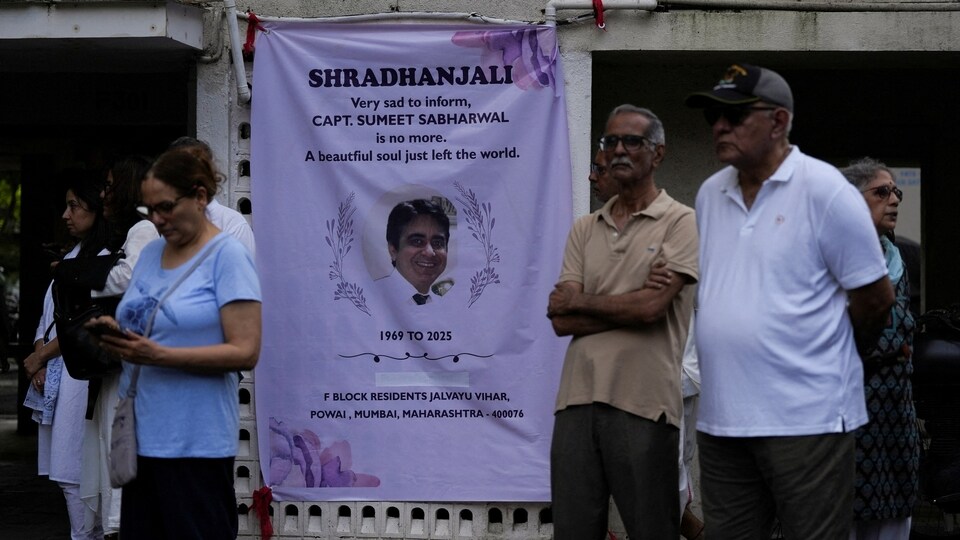
According to the 15-page report, one pilot was heard asking, “Why did you cut off fuel?” to which the other replied, “I did not do so.” The exchange took place moments after both engine fuel cutoff switches transitioned from 'Run' to ‘Cutoff’ at 13:38:42 IST (08:08:42 UTC), just as the Boeing 787-8 Dreamliner reached a maximum speed of 180 knots indicated airspeed.
The two pilots at the controls of flight AI171 were Captain Sumeet Sabharwal and first officer Clive Kunder. Captain Sabharwal, 56, was a highly experienced pilot with over 15,600 flying hours, including more than 8,500 on the Boeing 787.
First officer Kunder, 32, had accumulated over 3,400 flying hours and had been with Air India since 2017. Both were licensed and qualified to operate the Boeing 787 aircraft.
The report outlines a chain of technical events that unfolded in the final moments before the aircraft, operating as flight AI 171 to London Gatwick, crashed into the hostel complex of B J Medical College shortly after take-off from Ahmedabad airport.
The crash killed 260 people, including 241 passengers and crew onboard and 19 on the ground, making it India’s deadliest aviation accident in decades. One passenger survived.
The report said that engine 1's switch was moved back to ‘Run’ at 13:38:52 IST (08:08:52 UTC), followed by engine 2 at 13:38:56 IST (08:08:56 UTC). The engine and Aircraft Flight Recorder (EAFR) showed a rise in Exhaust Gas Temperature (EGT) for both engines, suggesting relight activity.
Engine 1’s core deceleration halted and began recovering. However, engine 2 failed to stabilise despite repeated fuel reintroduction attempts. Both engines’ N2 values, a key indicator of core rotor speed, had fallen below the minimum idle level.
Both engines recovered and kept for examination, says AAIB
“Both engines were retrieved from the wreckage site and quarantined at a hangar in the airport,” the AAIB said. “Components of interest for further examinations have been identified and quarantined,” it added.
The AAIB added that wreckage site operations, including drone photography and videography, have been completed, and the wreckage was moved to a secure location.
The aft section of the EAFR was found to be substantially damaged in the crash and could not be downloaded using conventional methods, the agency noted.
No safety recommendations have been issued yet for Boeing 787-8 aircraft or GE GEnx-1B engine operators and manufacturers. “Additional evidence is being sought from stakeholders and will be examined,” the report added.
The ministry of civil aviation had earlier released a status report on the crash on June 26. The final AAIB report will be issued following further analysis.


