
 E-Paper



Ahmedabad Air India plane crash initial probe report shows fuel cutoff to both engines
The 15-page report gives the first official account of the Ahmedabad Air India crash, the deadliest air accident in India in decades.

 Prefer HTon Google


The Aircraft Accident Investigation Bureau released its preliminary report into the Air India flight 171 crash shortly after midnight on Saturday, revealing dramatic cockpit voice recordings that reveal one pilot realising the fuel had been cut off to both engines during takeoff, with his colleague denying he had not initiated the action.
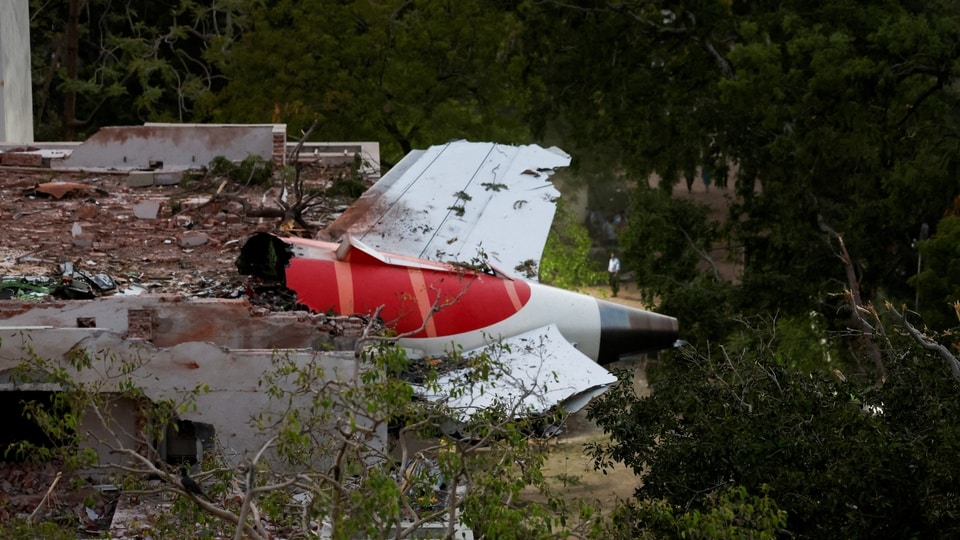
The 15-page report, published exactly one month after the disaster that killed 260 people, provides the first official account of the final moments of India’s worst aviation accident in decades and raises new questions about what caused the simultaneous dual engine failure.
“Why did you cutoff,” one pilot was heard asking the other on the cockpit voice recording. “I did not do so,” the other pilot responded, according to the AAIB report.
The exchange suggests one pilot had noticed the fuel cutoff and was seeking clarification, with his colleague confirming he had not performed the action—pointing to the mystery of what caused both engines to lose fuel simultaneously.
Meanwhile, a statement issued by Boeing said, "We will defer to the AAIB to provide information about AI171, in adherence with the United Nations International Civil Aviation Organization protocol known as Annex 13."
“Our thoughts remain with the loved ones of the passengers and crew on board Air India Flight 171, as well as everyone affected on the ground in Ahmedabad. We continue to support the investigation and our customer,” it further added.
Critical timeline revealed
The report provides a precise timeline showing that at 08:08:42 UTC, the aircraft reached its maximum recorded speed of 180 knots before both engine fuel cutoff switches “transitioned from RUN to CUTOFF position one after another with a time gap of 01 sec.”
Crucially, the pilots attempted to restore fuel flow within seconds, with Engine 1’s fuel switch moved back to “RUN” at 08:08:52 UTC and Engine 2’s switch restored at 08:08:56 UTC. Both engines began relight sequences, with Engine 1 showing signs of recovery, but insufficient time and altitude prevented successful restart before the aircraft crashed at 08:09:11 UTC.
The Ram Air Turbine—an emergency backup power source—was deployed and captured on airport CCTV footage, confirming the complete failure of both engines.
Other key findings include:
- Flap handle found in correct 5-degree takeoff position
- Landing gear lever in “DOWN” position
- Thrust levers found near idle but flight data shows they remained forward until impact
- Good weather conditions with light winds
- Aircraft weight within normal limits
- No evidence of bird strike
No fleet-wide safety concerns
Importantly, the report states there are “no recommended actions to B787-8 and/or GE GEnx-1B engine operators and manufacturers” at this stage, suggesting investigators have not identified systemic issues that would affect the global fleet of over 1,100 Dreamliners in service.
The report notes that fuel samples from airport bowsers tested satisfactory, though very limited fuel samples were recovered from the aircraft and are still being analysed.
The report says that in 2018, the US Federal Aviation Administration (FAA) had issued a special safety bulletin regarding potential issues with the locking mechanism on engine fuel control switches in Boeing 737 aircraft. This locking feature prevents the switches from being moved unintentionally.
However, the FAA did not classify it as a major safety concern and did not make inspections mandatory. Similar switches are used in the Boeing 787-8, including the crashed VT-ANB.
The report says Air India informed the investigators it did not carry out the suggested inspection, as the FAA’s guidance was advisory. Maintenance records show that the aircraft’s throttle control module was replaced in 2019 and 2023, but not due to fuel switch concerns. No defects have been reported with the fuel control switch since 2023, the AAIB report said.
The preliminary report stops short of determining the cause of what it describes as the “transition” of fuel switches that led to the catastrophic dual engine failure. The investigation continues with analysis of additional evidence, including detailed examination of postmortem reports and statements from the sole survivor.
The investigation was led by AAIB chief GVG Yugandhar, comprising Investigator-in-Charge Sanjay Kumar Singh, Chief Investigator Jasbir Singh Larhga, and three other investigators. The team has been assisted by subject matter experts, including pilots, engineers, an aviation medicine specialist, an aviation psychologist, and flight recorder specialists.


