The tensions between India and Canada escalated after Ottawa expelled a top Indian diplomat over the killing of top Khalistani terrorist Hardeep Singh Nijjar on Monday. The expulsion comes amid probe into what Canadian prime minister Justin Trudeau calls it a ‘credible allegations of link’ between the agents of the Indian government and the slain Khalistani leader.
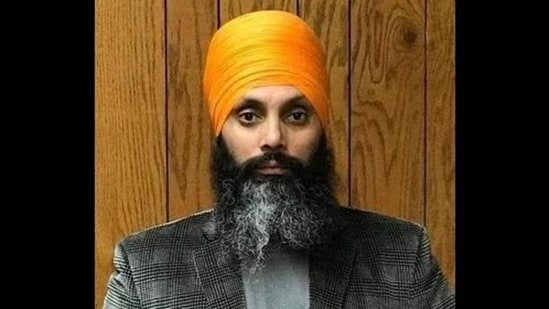
“Over the past number of weeks, Canadian security agencies have been actively pursuing credible allegations of a potential link between agents of the Government of India and the killing of a Canadian citizen, Hardeep Singh Nijjar”, Trudeau said in a statement. Canada expels Indian diplomat over pro-Khalistan Nijjar's killing: LIVE coverage
Who was Hardeep Nijjar?
Hardeep Singh Nijjar, the founder of Khalistani terrorist group Khalistan Tiger Force (KTF) was gunned down on June 18 outside a Sikh cultural centre in Surrey, British Columbia. He was involved in acts of identifying, connecting, training, and funding Khalistani cells in India, being named in over 10 FIRs against him. Read more
India-Canada tensions escalate
It is no secret that the relations between India and Canada are strained in wake of the increasing activities of Khalistani extremists in the North American country. There have been instances of vandalism at Hindu temples in Canada, besides the controversial tableau depicting former prime minister Indira Gandhi's assassination on Operation Bluestar anniversary in June. During his bilateral meet with Canadian prime minister Justin Trudeau after the G20 Summit, Prime Minister Narendra Modi had conveyed to the former about India's concerns regarding the continuing anti-India activities of extremist elements in Canada as they are promoting secessionism and inciting violence against Indian diplomats and threatening the Indian community in that country.
Pro-Khalistan activities surge in Canada
{{/usCountry}}It is no secret that the relations between India and Canada are strained in wake of the increasing activities of Khalistani extremists in the North American country. There have been instances of vandalism at Hindu temples in Canada, besides the controversial tableau depicting former prime minister Indira Gandhi's assassination on Operation Bluestar anniversary in June. During his bilateral meet with Canadian prime minister Justin Trudeau after the G20 Summit, Prime Minister Narendra Modi had conveyed to the former about India's concerns regarding the continuing anti-India activities of extremist elements in Canada as they are promoting secessionism and inciting violence against Indian diplomats and threatening the Indian community in that country.
Pro-Khalistan activities surge in Canada
{{/usCountry}}The tensions between the two countries are clearly visible. Last week, Canada indefinitely postponed a trade mission to India scheduled next month. A senior Indian official told Hindustan Times that they came to know about the decision only through the media. The officials in New Delhi had said that trade talks with Canada have been suspended till subversive activities are allowed in Canadian territory.On September 12, a pro-Khalistani secessionist group Sikhs for Justice (SFJ) had carried out a controversial ‘referendum’ at a gurdwara in Surrey town of Canada's British Columbia, hours after PM Modi had conveyed his concerns to Trudeau in New Delhi. Gurpatwant Singh Pannu, a designated terrorist and founder of the banned SFJ, was also present at the controversial exercise in the gurdwara.
‘Communicated deep concern over killing of Nijjar to Modi’
Canadian prime minister Justin Trudeau had said he had communicated ‘deep concern’ over Hardeep Nijjar's killing to PM Modi when they met in New Delhi
“Any involvement of a foreign government in the killing of a Canadian citizen on Canadian soil is an unacceptable violation of our sovereignty. It is contrary to the fundamental rules by which free, open, and democratic societies conduct themselves," the Canadian prime minister had said, calling it ‘unacceptable’.
India calls allegations ‘absurd, motivated’
New Delhi has rejected Ottawa's allegation of being involved in Nijjar's killing. “Allegations of Government of India's involvement in any act of violence in Canada are absurd and motivated. Similar allegations were made by the Canadian Prime Minister to our Prime Minister, and were completely rejected. We are a democratic polity with a strong commitment to rule of law”, the external affairs ministry said in a statement.
“Such unsubstantiated allegations seek to shift the focus from Khalistani terrorists and extremists, who have been provided shelter in Canada and continue to threaten India’s sovereignty and territorial integrity. The inaction of the Canadian Government on this matter has been a long-standing and continuing concern. That Canadian political figures have openly expressed sympathy for such elements remains a matter of deep concern”, the MEA statement added.
“The space given in Canada to a range of illegal activities including murders, human trafficking and organised crime is not new. We reject any attempts to connect Government of India to such developments. We urge the Government of Canada to take prompt and effective legal action against all anti-India elements operating from their soil”, MEA added.