The Central Bureau of Investigation (CBI) on Friday filed its first charge sheet in the Delhi excise policy case naming seven people, including Aam Aadmi Party communication strategist Vijay Nair, Abhishek Boinpally, a businessman who alleged lobbied for retail liquor licences for South India based companies, three other businessmen and two former officials of the excise department of Delhi.
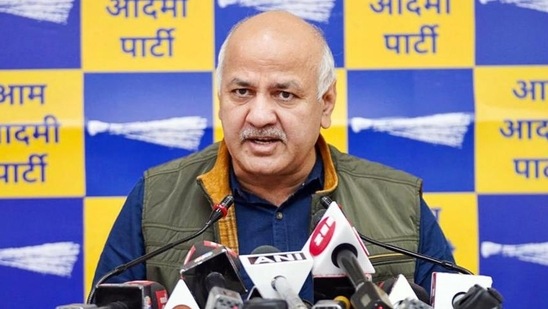
Delhi’s deputy chief minister Manish Sisodia, who was named as accused in the CBI first information report (FIR) on August 17, has not been named in the charge sheet and investigation against him and others and into the alleged cartelisation of liquor trade in Delhi is “continuing”, the agency said. Supplementary charge sheets could be filed in future depending of the evidence, it added.
Delhi chief minister Arvind Kejriwal called the case “fake”, and said that attempts were being made to frame Sisodia even though the central agency found nothing against the AAP leader.
“Manish’s name is not in the CBI chargesheet. The whole case is fake. Nothing was found in the raids. A total of 800 officers found nothing in the probe for four months. Manish offered hope of a good future to crores of poor children in the country through a revolution in education. I am sorry that a conspiracy was hatched to defame such a person by implicating him in a false case,” Kejriwal said in a tweet in Hindi.
The Bharatiya Janata Party, however, maintained that Sisodia was the “prime accused” in the case alleging that the seven people named in the charge sheet were his close associates.
“CBI has filed the charge sheet. Seven people have been named in the preliminary stage. However, AAP is trying to escape the blame by saying Manish Sisodia’s name has been not been included. The fact is he still remains the prime accused and seven people named in the charge sheet are close aides of Shri Manish Sisodia. This is not the end and investigation will further dig to find more evidences to name more people in the charge sheet. Also charge sheet also signifies that there was scam in Delhi excise policy and accused have been identified,” BJP MP Parvesh Sahib Singh said.
Without divulging details of the charge sheet, CBI said it registered a first information report (FIR) in the matter on August 17 to probe alleged irregularities in framing and implementation of the excise policy of the Delhi government. “It was further alleged that irregularities were committed including in modifications in excise policy, extending undue favours to the licencees, waiver/reduction in licence fee, extension of L-1 (wholesaler) licence without approval etc. It was also alleged that Illegal gains on count of these acts were diverted to concerned public servants by private parties by making false entries in their books of accounts,” CBI Spokesperson R C Joshi said in a statement.
{{/usCountry}}Without divulging details of the charge sheet, CBI said it registered a first information report (FIR) in the matter on August 17 to probe alleged irregularities in framing and implementation of the excise policy of the Delhi government. “It was further alleged that irregularities were committed including in modifications in excise policy, extending undue favours to the licencees, waiver/reduction in licence fee, extension of L-1 (wholesaler) licence without approval etc. It was also alleged that Illegal gains on count of these acts were diverted to concerned public servants by private parties by making false entries in their books of accounts,” CBI Spokesperson R C Joshi said in a statement.
{{/usCountry}}“Further investigation is continuing to investigate the role of FIR-named accused and other persons on various allegations including conspiracies with other licensees, money trail, cartelization and larger conspiracy in the formulation and implementation of the excise policy,” he added.
Besides Nair and Boinpally, others named in the charge sheet on Friday include Sameer Mahendru (managing director of Jor Bagh based liquor distributor Indospirit Group), Arun Ramchandra Pillai (Telangana-based businessman and an associate of Boinpally), Mootha Gautam (managing director of India Ahead News) and two government employees, Kuldeep Singh (former deputy excise commissioner of Delhi) and Narendra Singh (former assistant excise commissioner).
Nair was arrested by CBI in September while Boinpally was taken into custody the following month. Mahendru was arrested by the Enforcement Directorate (ED) in September. Gautam, Pillai and two former excise officers have not been arrested in the case.
The accused have been charged for criminal conspiracy and prevention of corruption act for their role in formulation and implementation of the Delhi excise policy 2021-22, which allegedly benefitted certain liquor manufacturers and wholesalers and led to cartelisation of liquor trade in Delhi.
Dinesh Arora, a named accused in the case and alleged associate of Manish Sisodia, had turned an approver in the case and recorded his disclosure statement before the probe team earlier this month.
While challenging Nair’s bail before the Delhi high court this week, CBI said that “Vijay Nair and other other accused are vital part of this conspiracy... The money was transferred to Nair through hawala channels and the ill-gotten benefits generated in lieu of the same were transferred to the other co-accused persons by routing it through various bank accounts to hide the actual nature of transactions”.
The agency said Nair, by influencing public servants, arranged undue benefits for other co-accused, which is a fraud played on public at large.
It further said that Nair, along with several co-accused, “hatched a conspiracy pursuant to which tens of crores of rupees were received by him through hawala in lieu of which he promised to get benefit to the other co-accused through formulation and implementation of the excise policy”.
“It has also come in evidence collected so far that a sum of ₹20-30 crores (approximately) was received by Nair between dates from July 2021 and October 2021,” CBI said in the high court.
The agency also said that Nair had two meetings with co-accused in the case, one in Delhi and another at Hyderabad, in which consideration of receiving money through hawala was fixed at ensuring that a “suitable” excise policy is issued.
“The evidence showed that a commission in the range of about ₹90-100 crores a year was fixed/promised,” it added in its plea in the HC.
ED claimed on November 10 after arresting Aurobindo Pharma’s promoter P Sarath Chandra Reddy and wine and spirits company Pernod Ricard’s senior executive Benoy Babu that the details of excise policy 2021-22 were leaked to certain manufacturers at least 45 days before they were made public.
It also claimed that 34 “important persons” including Delhi’s deputy chief minister Manish Sisodia, liquor barons and senior government officials changed as many as 140 mobile phones (worth ₹1.20 crore) with an intention to destroy the digital evidence.
ED has pegged a loss of ₹2,631 crore to the excise department in heads such as loss of license fee, increased profit margin of wholesaler, etc.
The Delhi government’s 2021-22 excise policy aimed to revitalize the city’s flagging liquor business. It aimed to replace a sales-volume based regime with a license fee one for traders, and promised swankier stores, free of the infamous metal grilles, ultimately giving customers a better buying experience. The policy also introduced discounts and offers on the purchase of liquor, a first for Delhi.
The plan, however, came to an abrupt end, with Delhi’s lieutenant governor Vinai Kumar Saxena recommending a CBI probe into alleged irregularities in the regime. This ultimately resulted in the policy being scrapped prematurely and being replaced by the 2020-21 regime, with the Aam Aadmi Party (AAP) alleging that Saxena’s predecessor sabotaged the move with a few last-minute changes that resulted in lower-than-expected revenues.