E-Paper



CBSE defends Class 12 OSM paper-checking system, suggests what students can do next
Acknowledging the wave of posts on social media, CBSE said on X that the OSM system ensured stepwise marking, while auto-calculating totals to minimise error.

 Prefer HTon Google


The Central Board of Secondary Education (CBSE) on Friday issued a statement defending its newly introduced on-screen marking (OSM) system; and reaffirmed students' right to seek re-evaluation of their answer books. This came as anxiety and criticism mounted on social media following a sharp drop in Class 12 pass percentage this year, to 85.2, by 3.19 percentage points. That's the lowest in seven years.
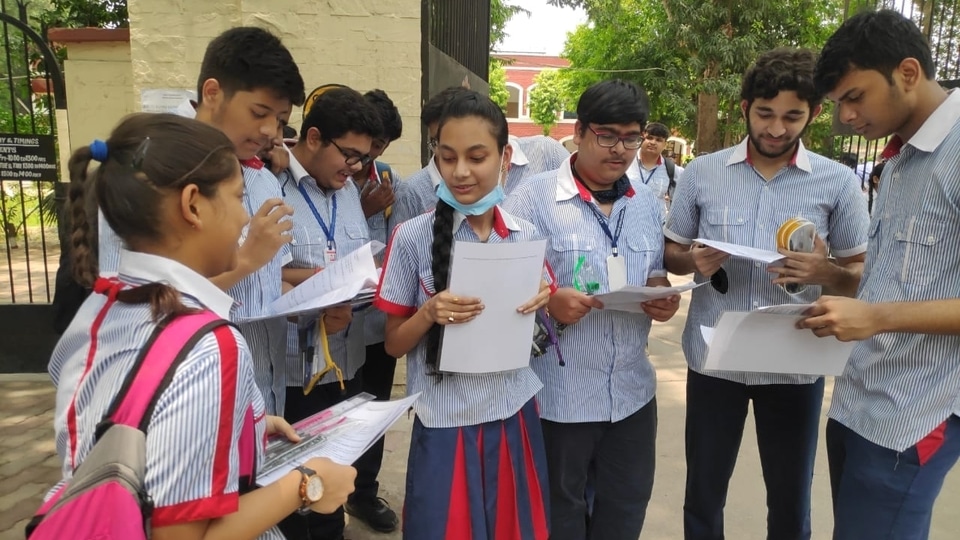
The fall has disproportionately affected students in science subjects, with social media sites flooded with complaints particularly around marks in Physics, Chemistry, Biology and Mathematics.
What CBSE said
Acknowledging the wave of posts on social media, the CBSE said on X that it had “observed” concerns being raised. It said the OSM was introduced to enhance "transparency, fairness, and consistency" in evaluation, highlighting that the system ensured stepwise marking, while auto-calculating totals to minimise human error.
Crucially, the board confirmed that the re-evaluation window would remain open this year.
Students dissatisfied with their results can apply for copies of their evaluated answer books and, upon finding any discrepancy, request corrective action through the board's prescribed mechanism, it added.
How OSM was deployed
This year, 1.77 million (17.7 lakh) students appeared for the CBSE Class 12 examinations, which was 76,000 more than last year, making the dip in pass percentage more significant in absolute terms. A total of 98,66,622 answer books were evaluated under the OSM system, marking its first full-scale deployment at the Class 12 level.
Under the new system, answer scripts were scanned and uploaded to a digital portal where teachers assessed them on computer screens; entered marks digitally and annotated responses online; while totals were auto-calculated to minimise human error.
What teachers said
School principals and teachers, speaking with HT just after the results, offered differing explanations behind the pass percentage dip.
A principal of a Delhi-based school, requesting anonymity, alleged that the rollout was rushed and teachers were not adequately trained.
“Many teachers, particularly in government schools, were not sufficiently familiar with the technology. Ideally, OSM should have been implemented next year after wider preparation,” the principal said.
However, a Delhi government school teacher involved in Class 12 evaluation said the process reduced chances of errors.
Jyoti Arora, principal of Delhi-based Mount Abu School said the decline is “reflecting stricter competency-based evaluation and greater emphasis on conceptual understanding under the National Education Policy (NEP) 2020, rather than the marking system under OSM alone".