
 E-Paper



FSSAI bans plastic, foil packaging for pan masala under new rules
Moving forward, pan masala can only be sold in eco-friendly packaging or traditional rigid containers.

 Prefer HTon Google


India’s food safety regulator, FSSAI, has updated its packaging rules to ban plastic and foil packaging for pan masala. Under the new Food Safety and Standards (Packaging) Amendment Regulations, 2026, manufacturers can no longer use plastic-based materials, plastic laminates, aluminum foil, or metallised layers to pack pan masala.
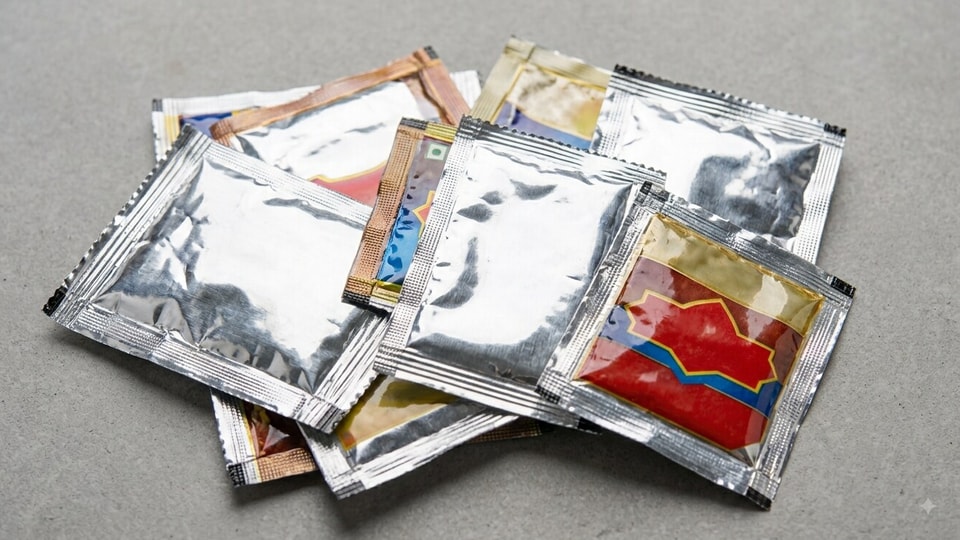
Moving forward, pan masala can only be sold in eco-friendly packaging or traditional rigid containers.
The new rules have been notified as the Food Safety and Standards (Packaging) Amendment Regulations, 2026 and will come into force from the date of their publication in the Official Gazette, according to a press release.
Deep Dive

ALSO READ | Rotten meat, fungus on veggies: Bengaluru's 3-star, 5-star hotels in soup over food safety violations
What packaging will be allowed?
Under the amended regulations, pan masala can be packed using paper, paper board, cellulose or other naturally derived materials.
That said, these materials must be completely free of plastic, including polyethylene, polypropylene, polyester, polyvinyl chloride (PVC) and other synthetic polymers, copolymers or laminates. Tin and glass containers have also been listed as permitted packaging materials for pan masala.
ALSO READ | Manimahesh Yatra: Sale of small plastic bottles, snack packets banned along yatra route
Plastic waste rules will also apply
The amendment further states that relevant provisions under clauses (f) and (i) of Rule 4(1) of the Plastic Waste Management Rules, 2016, will also apply to pan masala packaging.
The FSSAI issued the amendment under the powers granted by the Food Safety and Standards Act, 2006, with the prior approval of the Central Government.
What other plastic packaging is banned?
India already prohibits plastic sachets used to store, pack or sell gutkha, tobacco and pan masala under the Plastic Waste Management Rules, 2016. The latest FSSAI amendment specifically lays down permitted materials for pan masala packaging and excludes plastic-based and plastic-laminated materials.
ALSO READ | Delhi high court stays FSSAI ban on Dabur selling food products with '100 per cent' claims
Earlier, the government completely banned plastic sachets used for storing, packing or selling gutkha, tobacco and pan masala under the Plastic Waste Management Rules, 2016. The Plastic Waste (Management and Handling) Rules, 2011 prohibited the use of plastic sachets for storing, packing or selling gutkha, tobacco and pan masala. They also said plastic material in any form could not be used for packing these products.
India also prohibits plastic carry bags and plastic sheets below 50 microns under the Plastic Waste Management Rules. The rules were introduced in 2016 and increased the minimum thickness for plastic carry bags from 40 microns to 50 microns.
Plastic wrapping or packing films around sweet boxes, invitation cards and cigarette packets are also prohibited under the Plastic Waste Management Rules.


