New Delhi: The Union government on Thursday decided to remove the Armed Forces Special Powers Act (Afspa) from large swathes of Nagaland, Assam and Manipur, the first time in years that the controversial anti-terror legislation has been pulled back at such a scale in India’s northeastern region.
The decision -- which doesn’t mean that Afspa has been completely withdrawn from the North-East-- came after months of protests against the law and a botched operation in Nagaland that resulted in the deaths of 14 people in December 2021.
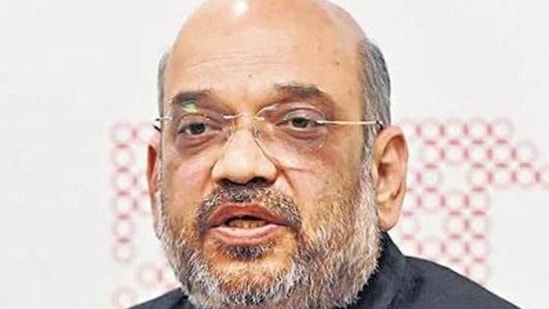
“The reduction in areas under AFSPA has come as a result of the improved security situation and fast-tracked development due to consistent efforts and several agreements to end insurgency and bring lasting peace in North-East by the government led by Prime Minister Narendra Modi,” Union home minister Amit Shah said, while announcing the decision through a tweet.
{{/usCountry}}“The reduction in areas under AFSPA has come as a result of the improved security situation and fast-tracked development due to consistent efforts and several agreements to end insurgency and bring lasting peace in North-East by the government led by Prime Minister Narendra Modi,” Union home minister Amit Shah said, while announcing the decision through a tweet.
{{/usCountry}}A British-era law enacted in 1942 in response to the Quit India movement, Afspa empowers security forces to conduct operations and arrest anyone without any prior warrant, besides giving immunity from arrest and prosecution if a person is killed in an operation. The law, which has been blamed by activists for killings and assault by forces, was first enforced in the North-East as a measure to battle the Naga insurgency in the then undivided state of Assam.
Also Read | After partial repeal of Afspa, North-East hopes for a new era of peace
“Due to the significant improvement in the situation after Narendra Modi became the Prime Minister in 2014, now Afspa is being removed with effect from April 1 completely from 23 districts and partially from one district of Assam,” the Union home ministry said in a statement. The disturbed area notification was in force in the whole of Assam since 1990.
Assam chief minister Himanta Biswa Sarma welcomed the order. “I wholeheartedly welcome adarniya PM Shri @narendramodi ji’s decision to withdraw AFSPA from all areas of Assam barring nine districts and one subdivision,” the chief minister said in a series of tweets. “It is a testimony to the significant improvement in law and order in the state. With peace getting primacy, North-East is now on a new trajectory of growth and development.”
In Manipur, where the disturbed area declaration was in force (except Imphal Municipality area) since 2004, the Centre decided to remove Afspa from 15 police station areas of six districts.
“This historic decision is a result of the robust development and improved security situation under various initiatives taken up by Hon’ble PM Shri @narendramodi Ji in the North East. This decision will lead to a new era of peace, prosperity and development in Manipur yet again,” Manipur chief minister N Biren Singh tweeted.
In Nagaland, where Naga groups have battled security forces for years and the disturbed area notification was in force since 1995, the Centre accepted the recommendation of a committee constituted for the withdrawal of Afspa in a phased manner. Starting Friday, Afspa will be removed in Nagaland from 15 police stations in seven districts, the MHA said.
“Grateful to GoI under the leadership of @PMOIndia Shri @narendramodi ji & @AmitShah ji for reducing disturbed areas under AFSPA in the states of Nagaland, Assam & Manipur. This is a significant development towards bringing stability, security & prosperity to the North-East region,” Nagaland chief minister Neiphiu Rio tweeted.
The government has reduced Afspa in phases from other states as well since 2015. For example, in 2015, Afspa was in force in three districts of Arunachal Pradesh, a 20km belt along the Assam border, and in 16 police station areas in nine other districts of the state.
Currently, Afspa is applicable only in three districts, and two police station areas in one other district of Arunachal Pradesh. It was completely removed from Tripura in 2015 and Meghalaya in 2018.
For years, civil society groups and several political parties have demanded the complete withdrawal of the law from both the Northeast as well as Jammu & Kashmir, saying it allowed the security forces to operate with impunity.
The demands for the withdrawal of Afspa from the region were renewed in December last year after the killings of 14 people in a botched up operation in Nagaland’s Mon. On December 4, army personnel gunned down seven coal mine workers after mistaking them for insurgents. Soon after the incident, angry villagers reached the spot and set ablaze two security vehicles, sparking off another round of firing by forces to control the situation in which several villagers and a soldier died. The incident sparked widespread protests in the region, and demands from the state government and chief minister to withdraw the law from the state.
The government then formed a committee on December 26 to review the disturbed areas in the state. Later, on March 7 this year, on the directions of Shah, Union home secretary Ajay Bhalla wrote to chief secretaries of Nagaland, Arunachal Pradesh, Assam and Manipur asking for their views on discontinuation of Afspa.
“To realise Prime Minister Narendra Modi’s vision of a peaceful and prosperous North-East region, Union home minister Amit Shah has held dialogue with all the states of the North-East on a regular basis. As a result, most of the extremist groups have laid down their arms expressing their faith in the Constitution of India and the policies of the Modi government. Today, all these persons have become a part of the democratic process and are participating in the development of the North-East,” the home ministry statement said.
The ministry added that around 7,000 militants surrendered in the last few years in the region.
In comparison to 2014, there was a reduction of 74% in militancy incidents in 2021. Similarly, deaths of security personnel and civilians also came down by 60% and 84% respectively during this period, said the ministry. According to data available on the home ministry’s website, insurgency related incidents reduced from 1,749 in 1999 to only 209 in 2021 in the entire northeastern region.
There was no response from the Army on the development.
MP Bezbaruah, retired union secretary and former member of North Eastern Council, hailed the decision. “This will bring relief and satisfaction in the people of north-east. There has been a feeling that insurgency should be controlled but human rights violations should not take place, but because of AFSPA there was no trust between the people and the army. If there is trust, then the development activities could also be better implemented.”