
 E-Paper



‘Let's have tea, they said’: Seechewal on why he didn't exit AAP with Raghav Chadha, is now party's lone RS MP in Punjab
He recalled an earlier overture, during the April 16-18 parliament session: “They said, 'Baba ji, let's have some tea together.' I told them: You drink it."

 Prefer HTon Google


When seven Aam Aadmi Party Rajya Sabha MPs announced their merger with the BJP on Friday, six of them were from Punjab. One name from the state that AAP currently rules was conspicuously absent from the list. Balbir Singh Seechewal, the Padma Shri-winning environmentalist-spiritual leader from Jalandhar district, stayed put. He has now spoken about what he knew beforehand and why he said no.
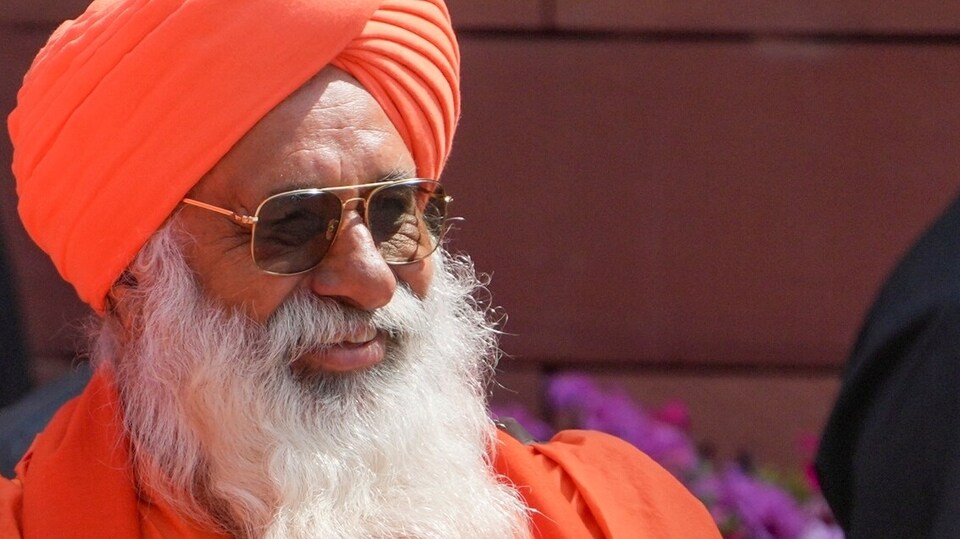
A call from Sahney: ‘Many have signed’
Seechewal told local media that he’d been directly approached before the defection.
"Vikram Sahney called. He said they were forming an independent group, and many had signed on. He asked me to sign too," Seechewal told at least two web channels on Saturday.
"I said no. I had no desire for that," he said.
He also said Sahney told him that several members who’d signed included "the university one" — a reference to Ashok Kumar Mittal, founder of Lovely Professional University, who flanked group leader Raghav Chadha, along with Sandeep Pathak, at the switch announcement on Friday.
Tea invite: ‘They never asked me before’
Amid reports of some discussions over tea with Chadha, Seechewal recalled an earlier overture, during the April 16-18 parliament session.
“Unhaan ne keha, 'Baba ji, tuhanu aapan chaa piaiye, baith ke,” he told Punjab Tak. ("They said, 'Baba ji, let's have some tea and sit together.'") He said he told them to have it on their own: "Asi keha, ‘pee lo tusi’.”
He said this was the first time they had given an invitation for tea, “never before”. On whether there had ever been any discussion about defection: "No, no one did — if someone tells you otherwise, they are lying.”
The Chadha group has said they left the AAP because it had “strayed from its principles”, with Chadha even calling its leaders“corrupt and compromised”.
On Chadha and Pathak's hold over Punjab
Seechewal was particularly candid about the roles Chadha and Pathak had played in Punjab — and how prominent they were. “I was very surprised, especially regarding Sandeep Pathak and Raghav Chadha.”
“Because both of them had full state-level responsibility in Punjab. Sandeep Pathak looked after the party, and on the administrative side, for about two to three years, it was Raghav Chadha,” Seechewal said.
“At that time, he was the supremo of Punjab, and all the eyes of the administration — especially the officers — were on House No 50,” Seechewal further said. House No 50 in Sector 2, Chandigarh, was the accommodation for Chadha. It is otherwise a camp office-cum-guesthouse for the Punjab CM.
Even CM Bhagwant Mann had used it in a jibe at Chadha earlier in the month: “A Rajya Sabha member who is now feeling suffocated in AAP due to personal interests had enjoyed the fruits of power in Kothi Number 50.”
The Opposition often made references to how Chadha was acting as “super CM” in Punjab — words that have returned ever since Chadha deserted the party.
AAP Lok Sabha MP Malwinder Singh Kang has also said Chadha, essentially a Delhi resident though culturally a Punjabi Hindu, had “too much power” in the state.
Seechewal did not expressly say such a thing. Asked about what could have gone wrong for Pathak and Chadha, among others, to defect, he said: “What the reason was, why there was disappointment — only they can say.”
On ‘gaddar’, what comes next
Asked about the word ‘gaddar’ — traitor — being spray-painted on the homes and offices of defecting MPs across Punjab on Saturday, Seechewal declined to use it. He quoted from the Gurbani — “Nanak phikka boliye, tan man phikka hoye” — to say that by speaking harsh words, one’s own mind and body become harsh too.
On ‘Operation Lotus’ — AAP's term for what it says was a BJP-engineered split, referencing its poll symbol — he was measured: "Every political party thinks of its own benefit.”
He said he had received no approach or pressure from the BJP.
“If someone had come to us, we would have just passed it forward — that's why they don't.” he told The Indian Express. On any message for those who left, he said: “Now that they have gone, may Waheguru keep them in Chardi Kala (high spirits).”
‘Never asked for this post’
Seechewal noted that he had been nominated to the Rajya Sabha by CM Bhagwant Mann — “not by the Delhi leadership’ — and had declined such an offer multiple times before accepting. “I am not afraid of losing any position, neither within the party nor outside. I never asked for this post,” he said.
He added that the now-defector group “never considered me their colleague” and that his working style made them uncomfortable.
“My presence in the Rajya Sabha, my questions on Punjab's issues, and my work on the ground did not suit many of them,” he told IE.
He claimed he had never been allowed to speak on bills in Parliament by the party's own deputy leader in the Rajya Sabha — an indirect reference to Chadha, who was removed from that post on April 2.
Seechewal is best known for mobilising volunteers to clean the 165-km Kali Bein, a rivulet sacred to Sikhs as the site of Guru Nanak's spiritual revelation. He received the Padma Shri for the work. Since entering the Rajya Sabha in 2022, he has maintained one of the highest attendance records among Punjab's MPs. He is now AAP's sole remaining Rajya Sabha MP from the state. The other two that remain, from Delhi, are Sanjay Singh and ND Gupta.


