
 E-Paper



Chhattisgarh: Amit Jogi sentenced to life imprisonment in 2003 murder of NCP leader
The trial court convicted 28 people for the murder of NCP leader Ramavatar Jaggi in 2007 but had acquitted Amit Jogi due to lack of evidence

 Prefer HTon Google


The Chhattisgarh high court has sentenced Amit Jogi, son of former chief minister Ajit Jogi, to life imprisonment in connection with the 2003 murder of Nationalist Congress Party (NCP) leader Ramavatar Jaggi.
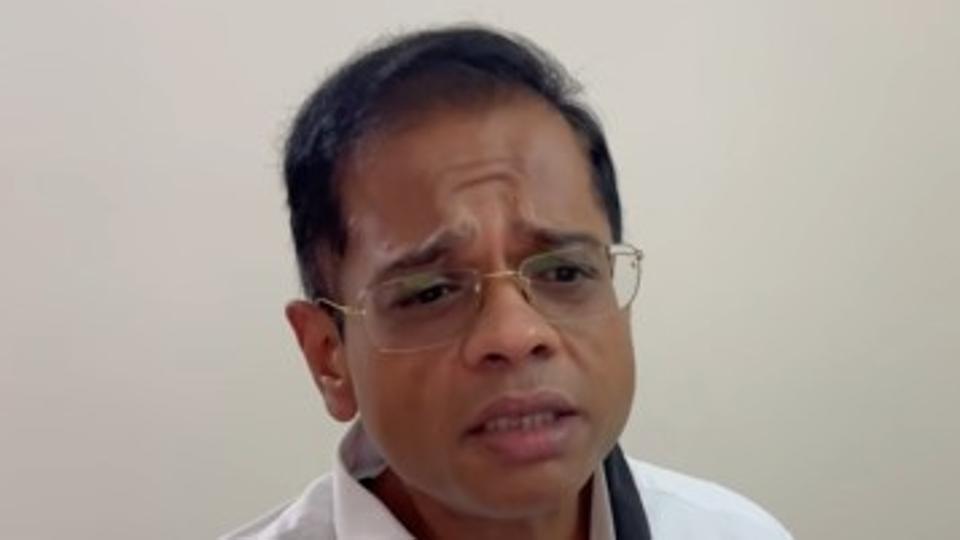
Amit Jogi was acquitted by the trial court in 2007. The high court order comes a month after the bench reopened the case following directions of the Supreme Court, which decided to condone the delay by the Central Bureau of Investigation (CBI) in filing an appeal.
“We are of the considered opinion that the judgment passed by the learned trial judge acquitting the accused Amit Jogi is palpably illegal, wrong, perverse, contrary to the evidence available on record and without any concrete basis,” a bench of chief justice Ramesh Sinha and justice Arvind Kumar Verma said in its order of April 2.
The high court order, which reversed the acquittal and handed down a life sentence, was posted on the high court’s website on Monday.
Setting aside the trial court’s 2007 verdict, the bench held Amit Jogi guilty under sections 302 (murder) and 120-B (criminal conspiracy) of the Indian Penal Code and sentenced him to life imprisonment.
Jaggi, a leader of the Nationalist Congress Party, was murdered on June 4, 2003, when Amit’s father, Ajit Jogi, was serving as the state’s chief minister. According to the prosecution, Jaggi, treasurer of the NCP’s Chhattisgarh unit, was shot dead by the accused as part of a conspiracy to disrupt a rally being planned by the party.
The case was initially probed by the state police and later handed over to the Central Bureau of Investigation, which filed a chargesheet against multiple accused, including Amit Jogi.
In its 2007 verdict, a Raipur trial court convicted 28 accused, holding that the prosecution had proved its case, but acquitted Amit Jogi. The Chhattisgarh government appealed against the verdict because the case was prosecuted by the CBI.
The CBI subsequently challenged the acquittal; however, its plea was dismissed by the high court in 2011 on the grounds of delay. Appeals filed separately by the state government and Jaggi’s son, Satish Jaggi, also failed.
The case saw a fresh turn in November last year when a three-judge bench of the Supreme Court directed the high court to take up the CBI’s plea, noting that there was a delay in filing the appeal, but the charges against Amit Jogi were “very grave”, involving a conspiracy to murder a political rival, and warranted consideration on merits.
Reacting to the high court order on April 2, Amit Jogi said this was injustice and he was hopeful that he would get justice from the Supreme Court.
“Dear friends and well-wishers, today the Hon’ble High Court accepted the CBI’s appeal against me in just 40 minutes, without giving me an opportunity to be heard. I regret that a person who had been acquitted by a court has now been declared guilty without even a single chance for a hearing. This has never happened before,” he said in a post on X on April 2.
Satish Jaggi, son of Ramavatar Jaggi, who had also appealed against Jogi’s acquittal, welcomed the April 2 verdict. “Truth has prevailed,” he said.
-kW0H-U20214218012MgB-250x250%40HT-Web.jpg)


